Author

admin

Browsing

Here we go again.

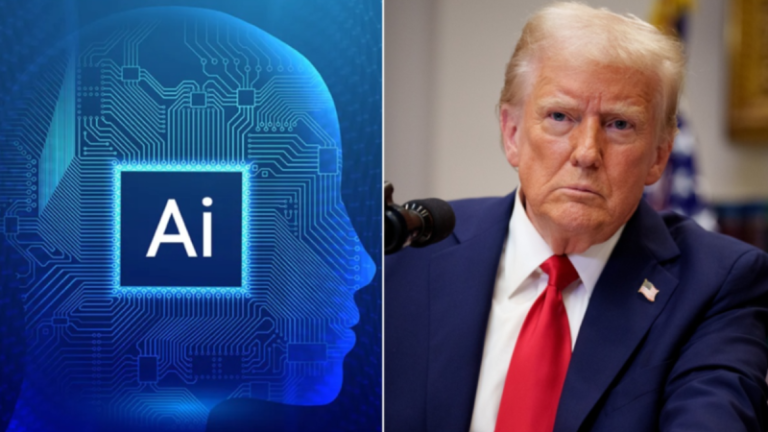
After a resounding 99–1 defeat in the Senate earlier this year, the Big Tech oligarchs are hard at work doing what they do best: trying to sneak a massive corporate giveaway into must-pass legislation in the dead of night. This time, they’re targeting the National Defense Authorization Act, a bill essential to our military and national security, as the vehicle for decade-long AI amnesty. Or another must-pass bill, if the NDAA doesn’t work for them. Or even a legally questionable executive order, as their Hail Mary.

They tried this in July. And now, led once again by Sen. Ted Cruz, R-Tex., they want to ram through a federal takeover of AI with zero meaningful rules or even guardrails. They call it ‘federal preemption.’ But let’s be blunt: federal preemption with no federal rules is not governance. It’s amnesty. Total, blanket, corporate amnesty for trillion-dollar Big Tech monopolists who have spent decades crushing competition, shuttering small businesses, canceling conservatives and harming children.

If their idea is so great, why are they terrified of public debate? Why are they running from votes? Why do they only try to pass this through 9,000-page must-pass bills in the dead of night?

Because they know the truth: If the American people ever saw what’s really in these proposals, the answer would be the same as last time: Hell. No.

Big Tech already showed us exactly what it does with immunity. Section 230 created a legal shield for Google, Amazon, Facebook and Apple. These trillion-dollar monopolists used their government-granted amnesty to censor conservatives, manipulate elections, destroy competition and turn the Internet into a surveillance empire. Now they want the same deal for AI. But bigger. And more dangerous.

This ‘AI amnesty’ blocks states from protecting their own citizens. No state rules. No local safeguards. And absolutely no federal guardrails. A total vacuum, and the perfect playground for tech oligarchs who want to scrape every work of American creativity, censor every voice they dislike, experiment on children’s developing minds with unsafe AI tools and plant data centers wherever they please while working-class families foot the energy bill.

Big Tech insists this is necessary to ‘compete with China.’ That is nonsense. These companies spent years doing China’s bidding. Google killed America’s Project Maven, our drone AI program, because its woke employees protested helping the U.S. military. At the same time, Google was running Project Dragonfly, a censorship system built for the Chinese Communist Party. They wouldn’t help our troops, but they were happy to help the CCP censor its own citizens.

And now these same companies claim they’re our last defense against China? Please.

Their real concern isn’t China. It’s profit. They want carte blanche to steal every copyright in America, train their machines on it and cash in, all without paying a dime to the creators whose work built this country’s entertainment, journalism and cultural industries. They want to replace America’s creative economy with a copy-paste machine. And they want Congress to bless it.

The American people deserve better, and President Trump consistently demonstrates the leadership needed to stop this scam. When Big Tech and its lobbyists pressured him to accept AI amnesty earlier this year, he stood firm. He refused to sell out the American people to Silicon Valley. And that courage helped kill the deal 99–1.

The American people understand what’s at stake. We know Big Tech can’t be trusted, not with our data, not with our elections, and certainly not with artificial intelligence. We know we can’t ‘steal like China to compete against China,’ nor can we become digital sharecroppers on our own soil just to pad corporate profits.

If Congress wants to discuss federal preemption, fine. But it must get done through regular order. Public hearings. Public debate. Up-or-down votes. And only after legislation is drafted that protects the people Big Tech has targeted for years: conservatives, children, creators and communities. The 4 Cs must get protection in any AI deal.

Conservatives must finally gain protection from the censorship that these monopolists weaponized for decades. We must protect children from predatory AI systems, including chatbots that have advised depressed minors to kill themselves – and their parents. Or AI teddy bears – Pedo Bears – that speak in sexually explicit terms to kids. Creators deserve protection from the copyright theft that Big Tech openly admits it needs to train its models. And we must safeguard our communities from data centers that raise energy costs, drain water supplies and bulldoze residential neighborhoods, so Silicon Valley can build another server farm.

These are not radical demands. These are basic, commonsense protections in a free society. But Big Tech insists that any safeguards, any at all, will ‘slow innovation,’ ‘harm national security,’ ‘hurt competitiveness’ or even ‘help China.’ Those talking points are as dishonest as they are insulting.

Big Tech executives think they can buy Congress, hide behind fake national-security arguments and bully America into agreeing to their terms. They thought they could get away with it last time. They were wrong. With President Trump’s leadership, with grassroots conservatives mobilized, and with the sunlight of exposure, we beat them. And we will beat them again.

But only if Congress hears loud and clear: No AI amnesty. Not in the NDAA. Not in any other must-pass legislation. Not in an executive order. Not ever.

The Big Tech oligarchs spent hundreds of millions of dollars chasing Trump out of office in 2020. They’ve censored, silenced, de-platformed and canceled Trump, his aides and his allies. If we give these Big Tech oligarchs AI amnesty, it’s only so they can continue to censor conservatives, prey on children, drive-up electricity and water bills in communities and rip off creators.

If the tech oligarchs want a debate, they can step into the arena. They can defend their ideas in the open. They can answer for the children harmed, the conservatives censored, the creators robbed and the communities exploited. They can stop hiding behind lobbyists and must-pass bills and make their case like everyone else.

Until then, Congress must reject any attempt to slide this corporate giveaway into the NDAA, any other must-pass legislation or any executive order. No shortcuts. No back-room tricks. No surrender to the Silicon Valley oligarchy.

The stakes are too high. The consequences are too great. And the American people are watching.

Hell no to AI amnesty. Protect our children. Protect our creators. Protect our communities. Protect our country.

This post appeared first on FOX NEWS

Outages on Shopify’s e-commerce platform have been resolved, the company said late Monday, bringing to an end a daylong glitch on the annual ‘Cyber Monday’ shopping day.

Some merchants that use Shopify’s service to sell goods online said they experienced issues with checkouts through the company’s point-of-sale system.

Businesses that run on Shopify also had trouble logging into their administrative portals.

In a statement, Shopify said: ‘We had a system degradation that has now been mitigated.’

Throughout the day, business owners posted angry messages directed at the company on X, where Shopify President Harvey Finkelstein had posted ‘HAPPY CYBER MONDAY! Let’s finish strong!’ earlier in the day, with an emoji of a flexed arm.

One business, Costack Spices, based in London, replied: ‘How??? [We] cannot fulfill orders or log on,’ with three red-faced emojis. In a follow-up, the company posted, ‘This is unbelievable.’

Another user wrote, ‘@ShopifySupport I haven’t been able to access it for the last couple hours.’

Shopify replied to most users on X with the same message: ‘We are aware of an issue with Admins impacting selected stores, and are working to resolve it.’

In 2024, merchants using Shopify services recorded $11.5 billion in sales from Black Friday through Cyber Monday, the company said, with more than 76 million customers buying from businesses powered by the platform.

Shopify provides website design tools, online checkout services and digital advertising products to businesses of all sizes. The company says that millions of merchants use its services.

While Shopify’s share of Cyber Monday sales may be limited, smaller businesses that rely on the company to process their transactions may have missed out on crucial sales at the start of the all-important holiday season.

Total Cyber Monday sales are expected to be more than $53 billion, according to Salesforce.

Shopify stock ended the trading day down 5.9%.

This post appeared first on NBC NEWS

MILAN — The Prada Group announced Tuesday that it has officially purchased Milan fashion rival Versace in a 1.25 billion euro (nearly $1.4 billion) deal that puts the fashion house known for its sexy silhouettes under the same roof as Prada’s “ugly chic” aesthetic and Miu Miu’s youth-driven appeal.

The highly anticipated deal is expected to relaunch Versace’s fortunes, after middling post-pandemic performance as part of the U.S. luxury group Capri Holdings.

Prada said in a one-line statement that the acquisition had been completed after receiving all regulatory clearances.

Prada heir Lorenzo Bertelli will steer Versace’s next phase as executive chairman, in addition to his roles as group marketing director and sustainability chief.

The son of co-creative director Miuccia Prada and longtime Prada Group chairman Patrizio Bertelli has said he doesn’t expect to make any swift executive changes at Versace. But Bertelli has said that the company, which places among the top 10 most recognized brands in the world, has long been underperforming in the market.

Prada has underlined that the 47-year-old Versace brand offered “significant untapped growth potential.’’

Versace has been in the midst of a creative relaunch under a new designer, Dario Vitale, who previewed his first collection during Milan Fashion Week in September. He had previously been head of design at Miu Miu, but his move to Versace was unrelated to the Prada deal, executives have said.

Capri Holdings, which owns Michael Kors and Jimmy Choo, paid $2 billion for Versace in 2018, but had been struggling to position Versace’s bold profile in the recent era of “quiet luxury.″

Versace represented 20% of Capri Holdings 2024 revenue of 5.2 billion euros. An analyst presentation for the Prada deal said that Versace would represent 13% of the Prada Group’s pro-forma revenues, with Miu Miu coming in at 22% and Prada at 64%. The Prada Group, which also includes Church’s footwear, reported a 17% boost in revenues to 5.4 billion euros last year.

The Prada Group has already begun preparations to incorporate crosstown rival Versace into its Italian manufacturing system, a point of pride for the group.

“Making a bag for one brand or another, the know-how is the same,″ Bertelli told reporters last week at the group’s Scandicci leather goods factory, which already makes bags for the Prada and Miu Miu brands and will soon add Versace.

The Prada Group’s has invested 60 million euros in its supply chain this year, including a new leather goods factory near Siena, a new knitwear factory near Perugia as well as increasing production at its factory Church’s footwear factory in Britain and expanding another Tuscan factory. That’s on top of 200 million euros in investments from 2019-24.

Prada’s efforts include an academy that has trained some 570 new artisans over the last 25 years in an in-house training academy operating in the Tuscany, Marche, Veneto and Umbria regions.

Last year, Prada hired 70% of the 120 artisans who trained in the academy. The number of trainees rose by 28% to 152 this year.

This post appeared first on NBC NEWS

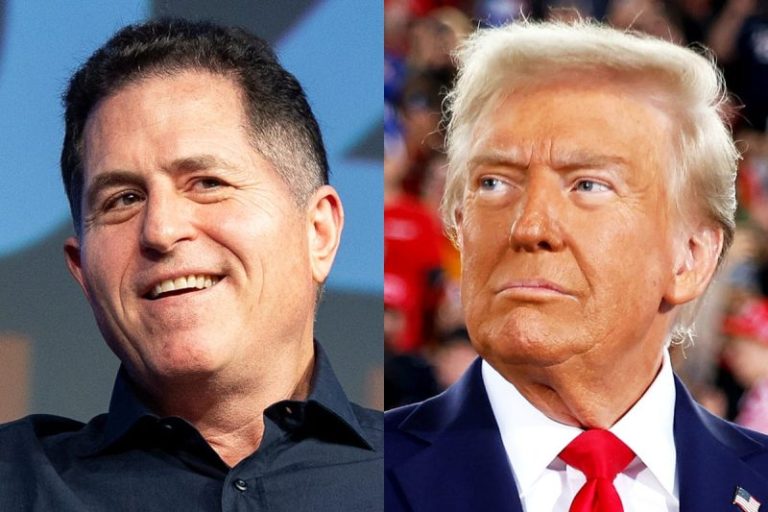
Tech billionaires Michael and Susan Dell announced Tuesday that they are pledging $6.25 billion to create some 25 million additional ‘Trump Accounts’ for children across the country.

These accounts will be seeded with $250 each, and available for children who missed the eligibility cutoff for the $1,000 federally funded ‘Trump Accounts’ for babies born after Jan. 1, 2025.

Children living in ZIP codes with median incomes below $150,000 will be the first to receive the funds, the White House said.

‘The greatest investment that we could possibly make is in children,’ Susan Dell said alongside President Donald Trump at the White House.

‘It’s really an amazing moment that two people would do that kind of a contribution,’ Trump said.

The president said he was also talking to other wealthy donors and friends to potentially make similar contributions.

Michael Dell; President Donald Trump.Errich Petersen; Chip Somodevilla / Getty Images

Asked how this donation came to be, Michael Dell said: ‘We started talking about Texas only at the beginning. And then we thought about it some more, and we went back and forth, as we do on these things, and this is where we ended up.’

The Dells said they considered making the pledge for a long time. But they said they didn’t want the pledge to be the end of their involvement.

Michael Dell encouraged states to ‘really grow financial literacy’ to help educate families about how the accounts and markets work.

‘These deposits will reach the accounts of most children age 10 and under who were born prior to the qualifying date for the federal newborn contribution,’ the Dells said in a statement issued by their foundation.

‘Children older than 10 may benefit, too, if funds remain available after initial sign-ups,’ the Dell family said. ‘It is an incredibly practical and direct step to help families begin saving today.’

The Dells say they ‘believe this effort will expand opportunity, strengthen communities, and help more children take ownership of their future.’

The Dell family gift “is expected to reach nearly 80% of children age 10 and under across 75% of U.S. zip codes,” according to the nonprofit Invest America.

Children born after Jan. 1 and until Dec. 31, 2028, will receive an account infused with a $1,000 investment from the U.S. Treasury, as part of the recently passed One Big Beautiful Bill.

The accounts will open and begin accepting contributions starting on July 4, 2026. The accounts will initially be held by a financial firm designated by the Treasury Department, but later will be able to be transferred to any brokerage firm.

Those accounts will also be eligible for additional contributions of up to $5,000 per year until the beneficiary child reaches age 18. Withdrawals from the accounts are not permitted until the children reach that age.

Trump accounts can be invested only in low-cost index funds or ETFs that either mirror the S&P 500 or ‘another American stock index,’ according to the White House Council of Economic Advisers.

‘These investment accounts are simple, secure, and structured to grow in value through market returns over time,’ the Dell family said.

‘Trump Accounts represent a potentially valuable tool for building up savings and tapping the power of compound growth for the young,’ Charles Schwab tax planning director Hayden Adams recently wrote.

If a family could contribute and invest the maximum $5,000 per year in the accounts, and with a reasonable growth rate of about 6%, ‘by age 18, the child’s account would hold around $191,000 in assets.’

Once a child turns 18, the accounts are eligible to be converted to a traditional individual retirement account, ‘meaning it could continue to accumulate potential gains on a tax-free basis’ for many years.

The Dells are one of the wealthiest families in America, with a fortune of nearly $150 billion, according to Bloomberg Billionaires. The family’s primary source of wealth is Dell Technologies, the company founded by Michael Dell in 1984.

In recent years, the value of Dell shares have been fueled by the booming AI revolution, for which Dell is a supplier of servers and other technology.

This post appeared first on NBC NEWS

Starbucks will pay about $35 million to more than 15,000 New York City workers to settle claims it denied them stable schedules and arbitrarily cut their hours, city officials announced Monday.

The company will also pay $3.4 million in civil penalties under the agreement with the city’s Department of Consumer and Worker Protection. It also agrees to comply with the city’s Fair Workweek law going forward.

A company spokeswoman said Starbucks is committed to operating responsibly and in compliance with all applicable local laws and regulations in every market where it does business, but also noted the complexities of the city’s law.

“This (law) is notoriously challenging to manage and this isn’t just a Starbucks issue, nearly every retailer in the city faces these roadblocks,” spokeswoman Jaci Anderson said.

Most of the affected employees who held hourly positions will receive $50 for each week worked from July 2021 through July 2024, the department said. Workers who experienced a violation after that may be eligible for compensation by filing a complaint with the department.

The $38.9 million settlement also guarantees employees laid off during recent store closings in the city will get the chance for reinstatement at other company locations.

The city began investigating in 2022 after receiving dozens of worker complaints against several Starbucks locations, and eventually expanded its investigation to the hundreds of stores in the city. The probe found most Starbucks employees never got regular schedules and the company routinely reduced employees’ hours by more than 15%, making it difficult for staffers to know their regular weekly earnings and plan other commitments, such as child care, education or other jobs.

The company also routinely denied workers the chance to pick up extra shifts, leaving them involuntarily in part-time status, according to the city.

Starbucks Workers United members and supporters picket outside a Starbucks in New York on Nov. 21.Michael Nagle / Bloomberg via Getty Images

The agreement with New York comes as Starbucks’ union continues a nationwide strike at dozens of locations that began last month. The number of affected stores and the strike’s impact remain in dispute by the two sides.

This post appeared first on NBC NEWS

(TheNewswire)

Additional Financing Closes

NOT FOR DISTRIBUTION TO UNITED STATES NEWS WIRE SERVICES OR FOR DISSEMINATION IN THE UNITED STATES

Vancouver, British Columbia TheNewswire – December 3rd, 2025 Prismo Metals Inc. (‘ Prismo ‘ or the ‘ Company ‘) (CSE: PRIZ,OTC:PMOMF) (OTCQB: PMOMF) is pleased to announce it has received assay results for samples recently taken at the Silver King Project from two exploration targets located on the east side of the property, namely the Black Diamond replacement target and the newly named Crown porphyry intrusion target (Fig. 1).

Figure 1 .  Map showing the location of the Black Diamond replacement and Crown porphyry intrusion exploration targets at the Silver King project.  Claim boundaries are shown in yellow.

The assays show high grade copper mineralization present at Black Diamond (Fig 1). The rock chip samples yielded generally high copper assays with several samples analyzing in excess of 1 % Cu and two samples in excess of 5 % Cu (Table 1, Fig. 2).  Gold is generally anomalous for the Black Diamond samples.

Rock chip samples from the Crown porphyry intrusion generally exhibited lead and zinc values with elevated silver and low copper and gold (Table 2).  Importantly, however, two samples of vein material from the stockwork target yielded high gold values of 4 and 5 g/t (Fig. 2). The mineralization in the stockwork veining at Crown provides impetus to complete additional exploration in the area.

Table 1. Assay results for samples from the Black Diamond replacement target.

Sample

Location

Easting

Northing

Width m

Au g/t

Ag g/t

Cu %

Pb %

Zn %

544572

Black Diamond

492601

3687624

1.5

0.007

0.30

0.18

0.009

0.02

544573

Black Diamond

492601

3687625

1.5

0.052

0.34

0.29

0.013

0.03

544574

Black Diamond

492603

3687623

1.5

0.008

0.47

0.12

0.009

0.02

544575

Historic adit 3

492642

3687624

0.5

1.08

0.15

5.56

0.013

0.03

544576

Historic adit 3

492641

3687625

0.5

0.045

1.08

0.44

0.022

0.02

544577

Historic adit 3

492643

3687621

1.0

0.012

0.76

0.07

0.014

0.02

544578

Historic adit 1

492670

3687639

0.8

0.285

12.43

6.02

0.01

544581

Historic adit 1

492672

3687640

1.1

0.125

10.5

1.14

0.011

0.02

544582

Historic adit 1

492667

3687640

1.4

0.285

6.66

2.63

0.006

0.02

544583

Black Diamond

492678

3687626

0.5

0.034

2.18

0.15

0.009

0.02

544584

Historic adit 2

492670

3687625

0.5

0.35

7.99

1.24

0.006

0.01

544585

Historic adit 2

492679

3687628

0.5

0.125

8.87

0.45

0.013

0.02

544586

Historic adit 2

492672

3687638

1.0

0.053

8.97

1.42

0.013

0.02

Table 2 . Assay results for samples from the Crown porphyry intrusive target.

Sample

Location

Easting

Northing

Width m

Au g/t

Ag g/t

Cu %

Pb %

Zn %

544566

Crown

492633

3687859

1.5

0.008

3.7

0.005

0.03

0.04

544567

Crown

492805

3687910

1.3

0.011

1.3

0.006

0.01

544568

Crown

492803

3687910

2.0

0.006

1.28

0.008

0.03

0.03

544569

Crown

492836

3687898

1.0

0.012

0.25

0.008

544570

Crown

492499

3687669

1.0

0.011

2.31

0.035

0.07

0.09

544571

Crown

492534

3687657

0.5

0.016

2.65

0.002

0.09

0.03

544588

Crown

492737

3687901

2.5

0.015

2.76

0.005

0.01

0.01

544589

Crown

492746

3687884

1.0

0.022

4.21

0.010

0.03

0.02

544590

Crown

492763

3687867

0.5

0.07

11.26

0.013

0.05

0.11

544591

Crown

492799

3687851

1.0

5.19

46.44

0.048

0.21

0.06

544592

Crown

492793

3687823

1.0

4.06

13.97

0.021

0.10

0.07

544593

Crown

492701

3687858

1.5

0.027

1.0

0.011

0.03

0.04


Click Image To View Full Size

Figure 2. Copper assays and high gold values for samples mentioned from the Black Diamond
and Crown areas at Silver King.

IP Survey Update

The Company also has received the report for initial phase of its IP survey at Silver King.  The IP survey consisted of a gradient array to test for resistivity and chargeability anomalies at a depth of about 300m below the surface.

The IP survey shows low resistivity lows associated with the Black Diamond replacement body as well as the stratigraphically controlled Cu bearing replacements that extend toward the nearby Magma mine (Fig. 3).  A second nearly east-west trending resistivity low occurs in the central portion of the claim block and coincides with a hypothesized structure that may control the Black Diamond body and also may be important in the formation of the Silver King deposit.  This type of structure is similar to the Magma vein, the main mineralized structure at the high-grade Magma mine, and is a prime exploration target.

The IP survey also shows several chargeability anomalies that are presumably associated with disseminated sulfides, largely pyrite (Fig. 4).  The stockwork intrusion mentioned previously is associated with one of these chargeability anomalies and provides a second important exploration target with characteristics similar to mineralization at high structural levels in porphyry systems.  A second similar chargeability anomaly occurs nearby to the southwest in an area overlain by a mostly barren quartz diorite intrusive and may represent a similar blind porphyry target.

Based on the results of the initial IP survey, a follow-up pole-dipole survey to further define the anomalies from shallow to deeper levels along section lines is planned to be conducted in December.

Figure 3. IP resistivity map showing exploration targets: yellow line-Silver King glory hole,
magenta line-polymetallic vein, green line-copper vein, red outlines-Black Diamond replacement
body and stratigraphically controlled replacement horizons, black outline-stockwork intrusion.

Figure 4. IP chargeability map showing exploration targets: yellow line-Silver King glory hole,
magenta line-polymetallic vein, green line-copper vein, red outlines-Black Diamond replacement
body and stratigraphically controlled replacement horizons, black outline-stockwork intrusion.

Drilling Update

Alain Lambert, CEO of Prismo commented: ‘The results announced today confirm the vast exploration potential at Silver King. While we look forward to drilling these new targets in the future, our plans remain unchanged. Our immediate priority is to undertake our fully funded drill program, as previously announced. This drill campaign will focus primarily on the historic Silver King mine site and will be for a minimum of about 1,000 meters. The objective is to test the upper half of the steeply dipping pipelike Silver King mineralized body as well as potential mineralization adjacent to the dense stockwork that was the focus of historic mining.’

Mr. Lambert added: ‘We are pleased with the steady progress on the permitting front. The collaboration of Forest Service officials demonstrates a clear commitment to supporting mining activities in Arizona.’

Prismo recently announced that the Forest Service, the federal surface land management entity for Silver King, had determined that the Company’s proposed drill plan meets the regulatory requirements for processing, and that such plan is complete, as described in the regulations at 36 CFR 228.4(c).

The Forest Service will now proceed with the environmental analysis pursuant to 36 CFR 228(a)(5) in conformity with the National Environmental Policy Act (NEPA). This analysis will proceed as a Categorical Exclusion, the lowest level of environment reviews applicable to projects that are not expected to have a significant effect on the environment, such as Silver King.

Financing Update

Prismo also announced that further to its news releases dated October 20, 2025 and November 13, 2025, the Company has proceeded with an upsized second closing of its previously announced non-brokered private placement of units of the Company (‘ Units ‘) at an issue price of $0.10 per Unit (the ‘ Private Placement ‘). The second closing of the Private Placement was increased from 1,250,000 Units to the issuance of 1,650,000 Units for gross proceeds of $165,000 (the ‘ Second Tranche ‘). The Company previously announced a first closing of the Private Placement on November 12, 2025 for aggregate gross proceeds of $1,745,000. Due to strong investor demand, the Company has now raised aggregate gross proceeds of $1,910,000.

Each Unit consists of one common share in the capital of the Company (a ‘ Share ‘) and one common share purchase warrant of the Company (a ‘ Warrant ‘). Each Warrant entitles the holder to purchase one Share for a period of thirty-six (36) months from the date of issue at an exercise price of $0.175.

The Company intends to use the net proceeds of the Private Placement primarily for drilling at its Silver King project and for general corporate purposes. The Company expects to accept additional subscriptions of units in the coming days for an approximate amount of $125,000.

The Units issued pursuant to the Second Tranche are subject to a four-month hold period from the closing date of the Second Tranche under applicable Canadian securities laws, in addition to such other restrictions as may apply under applicable securities laws of jurisdictions outside Canada.

In connection with the Second Tranche, the Company issued an aggregate of 68,000 finder’s warrants (the ‘Finder’s Warrants’ ) and paid finder’s commissions of $6,800 to a certain qualified finder. Each Finder’s Warrant is exercisable for a period of twenty-four (24) months from the date of issuance to purchase one Share at a price of $0.10. In addition, the Company paid a cash fee of $2,000 to a financial advisor.

The securities being issued in connection with the Second Tranche have not been and will not be registered under the U.S. Securities Act and may not be offered or sold in the United States, or to, or for the account or benefit of, U.S. persons or persons in the United States, absent registration or an applicable exemption from the registration requirements. This press release shall not constitute an offer to sell or the solicitation of an offer to buy nor shall there be any sale of the securities in any State in which such offer, solicitation or sale would be unlawful.

QA/QC

Samples were analyzed by SGS, an internationally recognized analytical lab, with preparation at the Tempe, Arizona facility and analyses at the Burnaby laboratory.  Prismo inserts controls samples consisting of a standard pulps and a coarse blanks in the sample stream, and the lab also inserts control samples.

Qualified Person

Dr. Craig Gibson, PhD., CPG., a Qualified Person as defined by NI-43-01 regulations and Chief Exploration Officer and a director of the Company, has reviewed and approved the technical disclosures in this news release.

About Prismo Metals Inc.

Prismo (CSE: PRIZ,OTC:PMOMF) is a mining exploration company focused on advancing its Silver King, Ripsey and Hot Breccia projects in Arizona and its Palos Verdes silver project in Mexico.

Please follow @PrismoMetals on Twitter , Facebook , LinkedIn , Instagram , and YouTube

Prismo Metals Inc.

1100 – 1111 Melville St., Vancouver, British Columbia V6E 3V6 Phone: (416) 361-0737

Contact:

Alain Lambert, Chief Executive Officer alain.lambert@prismometals.com

Gordon Aldcorn, President gordon.aldcorn@prismometals.com

Neither the Canadian Securities Exchange nor its Market Regulator (as that term is defined in the policies of the Canadian Securities Exchange) accepts responsibility for the adequacy or accuracy of this release.

Cautionary Note Regarding Forward-Looking Information

This release includes certain statements and information that may constitute forward-looking information within the meaning of applicable Canadian securities laws. Forward-looking statements relate to future events or future performance and reflect the expectations or beliefs of management of the Company regarding future events. Generally, forward-looking statements and information can be identified by the use of forward-looking terminology such as intends’ or anticipates’, or variations of such words and phrases or statements that certain actions, events or results may’, could’, should’, would’ or occur’. This information and these statements, referred to herein as ‘forward-looking statements’, are not historical facts, are made as of the date of this news release and include without limitation, statements regarding discussions of future plans, estimates and forecasts and statements as to management’s expectations and intentions with respect to, among other things: the timing, costs and results of drilling at Silver King; and the intended use of any proceeds raised under the Second Tranche.

These forward-looking statements involve numerous risks and uncertainties, and actual results might differ materially from results suggested in any forward-looking statements. These risks and uncertainties include, among other things: the potential inability of the Company to utilize the anticipated proceeds of the Private Placement as anticipated; and those risks set out in the Company’s public disclosure record on SEDAR+ ( www.sedarplus.com ) under the Company’s issuer profile .

In making the forward-looking statements in this news release, the Company has applied several material assumptions, including without limitation, that the Company will use the proceeds of the Second Tranche as currently anticipated and on the timeline currently expected.

Although management of the Company has attempted to identify important factors that could cause actual results to differ materially from those contained in forward-looking statements or forward- looking information, there may be other factors that cause results not to be as anticipated, estimated or intended. There can be no assurance that such statements will prove to be accurate, as actual results and future events could differ materially from those anticipated in such statements. Accordingly, readers should not place undue reliance on forward-looking statements and forward- looking information. Readers are cautioned that reliance on such information may not be appropriate for other purposes. The Company does not undertake to update any forward-looking statement, forward-looking information or financial outlook that are incorporated by reference herein, except in accordance with applicable securities laws. We seek safe harbor.

Copyright (c) 2025 TheNewswire – All rights reserved.

News Provided by TheNewsWire via QuoteMedia

This post appeared first on investingnews.com

Oil prices climbed higher on Monday (December 1) as an escalation in US-Venezuela tensions reached a fever pitch, offsetting weeks of losses driven by oversupply expectations.

The shift also came after the Caspian Pipeline Consortium (CPC), a key transit route that carries about 1 percent of global oil, halted operations over the weekend. The company reported that a mooring point at its Russian Black Sea terminal was damaged in a Ukrainian drone attack, temporarily curbing exports.

Ukraine has also targeted two oil tankers heading toward Novorossiysk, further rattling market sentiment.

The supply shock landed just as OPEC+ opted to leave production levels unchanged for Q1 2026.

The group had signaled the possibility of a pause as early as November, seeking to avoid exacerbating what analysts feared could become a sizeable glut. The decision provided a modest anchor for traders recalibrating expectations.

“For some time, the narrative has centred on an oil glut, so OPEC+’s decision to maintain its production target provided some relief and helped stabilise expectations for supply growth in the coming months,” Anh Pham, senior analyst at data provider LSEG, explained to Reuters.

Even with Monday’s rise, both Brent and WTI futures settled lower this past Friday (November 28). This marked their fourth straight monthly decline and the longest losing streak since 2023.

Venezuela condemns US “colonialist threat”

A far more dramatic source of volatility also emerged from Washington over the weekend.

On Saturday (November 29), US President Donald Trump declared that “the airspace above and surrounding Venezuela” should be considered closed, posting a warning on social media.

Trump also told service members last week that US forces would “very soon” begin land-based operations targeting Venezuelan drug-trafficking networks. Further, reports surfaced that the White House and Caracas had held a tense, last-ditch phone call aimed at defusing a worsening standoff.

According to sources cited by the Miami Herald, Washington told President Nicolás Maduro he could secure safe passage for himself, his wife Cilia Flores and his son only if he stepped down immediately. The conversation stalled as Venezuela refused to surrender control of its armed forces or agree to Maduro’s resignation.

Washington has been increasingly aggressive toward what it describes as Venezuela’s Cartel de los Soles, which US officials accuse Maduro and senior leaders of operating.

Last month, the Department of State’s decision to designate the cartel a foreign terrorist organization placed Maduro, Diosdado Cabello and Vladimir Padrino López in the same legal category as al-Qaeda and ISIS.

Caracas condemned the aggression, labeling it as a “colonialist threat” seeking support from its allies.

On Sunday (November 30), Maduro issued an appeal to fellow OPEC members, urging the bloc to help counter what he described as “growing and illegal threats” from the United States.

In a letter published by state broadcaster TeleSUR, he accused Washington of trying to “seize” Venezuela’s oil reserves and warned that US military pressure could disrupt the global energy market.

“I hope to count on your best efforts to help stop this aggression, which is growing stronger and seriously threatens the balance of the international energy market, both for producing and consuming countries,” Maduro wrote.

Venezuela exported just US$4.05 billion worth of crude oil in 2023, far below other major producers, due largely to US sanctions imposed during Trump’s first term.

Brent crude stood at US$62.76 per barrel on Tuesday (December 2) morning, while WTI was trading at US$58.93.

Securities Disclosure: I, Giann Liguid, hold no direct investment interest in any company mentioned in this article.

This post appeared first on investingnews.com

Here’s a quick recap of the crypto landscape for Monday (December 1) as of 9:00 p.m. UTC.

Get the latest insights on Bitcoin, Ether and altcoins, along with a round-up of key cryptocurrency market news.

Bitcoin and Ether price update

Bitcoin (BTC) was priced at US$85,482.46, down by 6.4 percent over 24 hours.

Bitcoin price performance, December 1, 2025.

Chart via TradingView.

Bitcoin marked its largest single-day decline in a month, continuing a sell-off that started in November.

This sharp downturn was influenced largely by rising expectations of a Bank of Japan rate hike at its December meeting, which triggered a surge in Japanese bond yields, strengthening the yen and prompting global investors to pull capital from risk assets like Bitcoin. This caused liquidations of speculative long positions and created downward price pressure.

However, significant technical support levels lie around US$86,000 to US$79,600, with further downside possible to US$67,700 and major support between US$45,000 and US$70,000 if bearish momentum persists. Holding above roughly US$85,200 is critical to avoid deeper bearish territory.

Farzam Ehsani, CEO of cryptocurrency exchange VALR, added that concerns about MSCI potentially excluding major crypto-holding companies such as Strategy from global indices are adding pressure through expected forced sell-offs, further weakening market structure and liquidity.

“The recovery of the cryptocurrency market, and Bitcoin in particular, after the decline of the last month and a half, will take some time. The main questions at the moment are how the market will close out this year and whether Bitcoin will recover above $100,000 in December.”

Ether (ETH) also experienced a steep decline, priced at US$2,757.79, down by 8.9 percent over 24 hours.

Derivatives data

Derivatives data showed US$10.93 million liquidated in BTC shorts positions over the final four hours of trading, indicating short sellers getting squeezed out as price stabilized rather than accelerating lower.

Open interest edged up 0.50 percent to US$57.63 billion, showing fresh positions entering despite the dip, which often signals sustained trader interest and potential stabilization or rebound setup.

A funding rate of -0.001 percent reflects mild bearish sentiment, common in corrections but not extreme enough to indicate panic selling. BTC’s RSI at 32.58 marks deeply oversold territory, suggesting selling may be nearing a climax and creating conditions for a short-term bounce if support holds.

Altcoin price update

  • XRP (XRP) was priced at US$2.02, down by eight percent over 24 hours.
  • Solana (SOL) was trading at US$124.54, down by 9.3 percent over 24 hours.

Today’s crypto news to know

Bitcoin’s weekend slide wipes out US$637 million in leveraged positions

Bitcoin’s latest downturn over the weekend triggered a wave of liquidations that erased roughly US$637 million across futures markets.

The selloff pushed Bitcoin to an intraday low near US$85,700, extending its monthly decline past 21 percent and dragging Ethereum, XRP, and other majors sharply lower. The slump began as momentum-driven selling forced heavily leveraged longs to unwind, turning a routine correction into a fast, disorderly slide.

Comments from Strategy CEO Phong Le about potentially selling part of the company’s sizable Bitcoin holdings added to jitters, even though prediction markets continue to see a low probability of actual disposals this year.

“We can sell Bitcoin, and we would sell Bitcoin if needed to fund our dividend payments below 1x mNAV,” Le said in a podcast.

The company currently controls 649,870 BTC, which valued at about US$56.26 billion at current prices.

Further, China’s central bank reiterating its hard line against crypto activity further weighed on sentiment heading into the final month of the year.

Goldman Sachs boosts ETF offerings with Innovator Capital acquisition

Goldman Sachs (NYSE:GS) has agreed to buy Innovator Capital Management, a company specializing in defined outcome ETFs, in a deal worth about US$2 billion in cash and stock, according to a Monday announcement.

Defined outcome ETFs are special funds that limit losses or cap gains for investors using options contracts.

Innovator’s US$28 billion in assets and 159 ETFs will significantly enhance Goldman Sachs Asset Management’s ETF portfolio, increasing that bank’s total ETF lineup from US$51 billion to US$79 billion.

The acquisition payment partly depends on Innovator meeting certain performance targets after the deal closes, which were not publicly disclosed. The deal is expected to close in Q2 2026, subject to regulatory approval and other usual conditions.

Goldman Sachs will fully own the Innovator business, integrating its 60-plus employees into Goldman’s teams. However, Innovator’s investment managers and services will remain unchanged.

Tether blasts S&P after fresh downgrade

Tether pushed back forcefully this week after S&P Global cut its assessment of USDT’s peg stability, assigning the stablecoin the lowest score on the agency’s scale.

S&P pointed to weaker reserve quality, shrinking cash-equivalent holdings, and rising exposure to secured loans and Bitcoin as reasons for the downgrade.

The report noted that Tether’s Bitcoin holdings now exceed the cushion meant to absorb volatility, increasing the risk that a sharp price drop could leave the token undercollateralized.

Tether’s leadership dismissed the rating as biased and politically motivated.

‘Some influencers are either bad at math or have the incentive to push our competitors,’ Tether CEO Paolo Ardoino said in a recent post on X.

After the downgrade last week, Ardoino also maintained that ‘the traditional finance propaganda machine is growing worried when any company tries to defy the force of gravity of the broken financial system.’

The downgrade also comes as Tether’s mining affiliate winds down operations in Uruguay after months of unpaid power bills and stalled expansion plans.

Japan prepares 20 percent flat tax on crypto gains

Japan is moving toward a flat 20 percent tax on cryptocurrency gains, a change that would replace the current progressive regime that can push rates above 50 percent for active traders.

Nikkei Asia reported that under the proposal, crypto income would be placed into a separate category similar to equities, with the goal of reducing distortions that discourage trading or push users offshore.

Lawmakers backing the plan say aligning digital assets with other investment products could draw liquidity back to domestic exchanges and boost overall tax receipts.

The reform is expected to be finalized as part of the country’s 2026 tax framework, with revenue split between the national and local governments.

Securities Disclosure: I, Giann Liguid, hold no direct investment interest in any company mentioned in this article.

Securities Disclosure: I, Meagen Seatter, hold no direct investment interest in any company mentioned in this article.

This post appeared first on investingnews.com

Goldgroup Mining (TSXV:GGA, OTC:GGAZF) is a Canadian gold company advancing a portfolio of high-quality producing and development assets in Mexico. With 100 percent ownership of Cerro Prieto, Pinos and the newly acquired San Francisco mine, the company is positioned for disciplined, near-term production growth.

Goldgroup’s strategy is clear: optimize and expand production at its flagship Cerro Prieto mine, advance Pinos toward a production decision, and restart the large-scale San Francisco mine. Together, these projects target over 100,000 ounces of annual production, with additional upside from exploration, resource growth, and future acquisitions.

The company is led by an experienced team with deep expertise in developing and optimizing Mexican mines. Backed by strong financial support from the Calu Group and Luca Mining founders, Goldgroup benefits from a proven track record in value creation through mine development, operational turnarounds, and strategic M&A.

Company Highlights

  • Two operating or near-term production gold assets in Mexico, 100-percent-owned and fully permitted.
  • Cerro Prieto expansion completed, increasing from ~12,500 oz/year to 30,000+ oz/year during 2026 and beyond, including tailings re-processing.
  • Its second asset, Pinos, is a fully permitted high-grade underground development project with historical resources and +90 percent metallurgical recoveries.
  • San Francisco acquisition in progress, a past producer capable of ~40,000 oz/year with significant exploration upside.
  • Aggressive M&A strategy aimed at fast-tracking Goldgroup into the mid-tier producer category with advanced due diligence nearing completion. .
  • Backed by the Calu Group and the founders of Luca Mining, bringing extensive operational and financing expertise in Mexico.

This GoldGroup Mining profile is part of a paid investor education campaign.*

Click here to connect with GoldGroup Mining (TSXV:GGA) to receive an Investor Presentation

This post appeared first on investingnews.com

President Donald Trump announced in a Truth Social post on Tuesday that he would ‘fully and completely’ terminate any documents signed by former President Joe Biden’s autopen, including pardons and commutations.

‘Any and all Documents, Proclamations, Executive Orders, Memorandums, or Contracts, signed by Order of the now infamous and unauthorized ‘AUTOPEN,’ within the Administration of Joseph R. Biden Jr., are hereby null, void, and of no further force or effect,’ Trump wrote.

‘Anyone receiving ‘Pardons,’ ‘Commutations,’ or any other Legal Document so signed, please be advised that said Document has been fully and completely terminated, and is of no Legal effect. Thank you for your attention to this matter!’

This post appeared first on FOX NEWS