Author

admin

Browsing

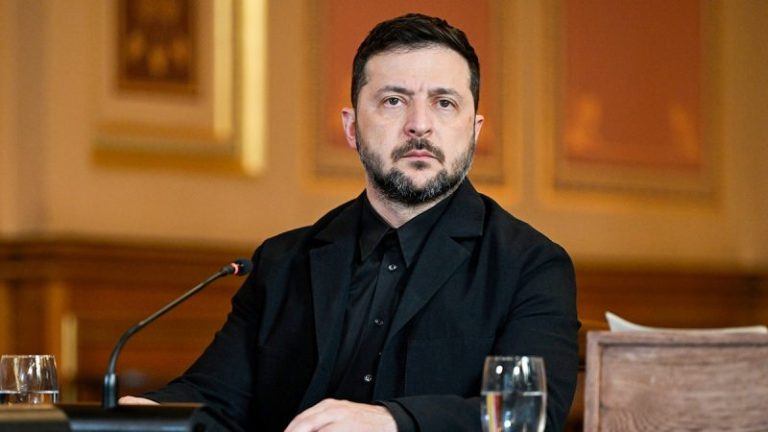
Ukrainian President Volodymyr Zelenskyy announced new efforts to ‘clean up’ the nation’s energy sector amid a corruption scandal and near-constant attacks from Russia.

Zelenskyy met with Ukrainian Prime Minister Yulia Svyrydenko on Sunday morning, saying he called on lawmakers to revamp the leadership at the State Nuclear Regulatory Inspectorate and the State Energy Supervision Inspectorate, in addition to other efforts to expunge Russian influence in the sector.

‘In full coordination with law enforcement and anti-corruption bodies, ensure the renewal of the Asset Recovery and Management Agency and to promptly complete the competition for the position of Head of ARMA so that the new Head of the Agency can be selected by the end of this year,’ Zelenskyy wrote on X.

He further called on lawmakers to ‘promptly conduct an audit and prepare for sale the assets and shares in assets that belonged to Russian entities and to collaborators who fled to Russia. All such assets must operate one hundred percent in Ukraine’s interests – to support our defense and to contribute to Ukraine’s budget.’

The new energy initiative also comes after a former associate of Zelenskyy’s was accused of being the mastermind behind a $100 million embezzlement scheme involving nuclear energy.

Tymur Mindich, who was once Zelenskyy’s business partner, was identified by Ukraine’s anti-corruption watchdogs as being the orchestrator of a scheme involving top officials and Ukraine’s state nuclear power company. Prior to the scandal, some feared Mindich’s growing influence over Ukraine’s lucrative industries that he had access to because of his ties to Zelenskyy.

Mindich allegedly exerted control over loyalists who then pressured contractors for Energoatom, Ukraine’s state-owned nuclear power company, demanding kickbacks to bypass bureaucratic obstacles. The requested kickbacks were reportedly as high as 15%.

Zelenskyy himself was not implicated in the investigation.

The new effort comes as Zelenskyy says that his team is ‘working to ensure another start to negotiations’ on ending the war with Russia.

‘We are also counting on the resumption of POW exchanges – many meetings, negotiations, and calls are currently taking place to ensure this. I thank everyone who is helping. Thank you to everybody who stands with Ukraine,’ Zelenskyy wrote.

Ukraine’s president further said that he is preparing for a full week of diplomacy with Greece, France and Spain, as well as renewed negotiations over prisoner of war exchanges with Russia.

Zelenskyy will meet with officials in Greece on Sunday to discuss natural gas imports, while talks with France on Monday and Spain on Tuesday will center on bolstering Ukrainian air defenses.

Fox News’ Rachel Wolf contributed to this report.

This post appeared first on FOX NEWS

Attorney General Pam Bondi announced Saturday that the suspect wanted in connection to the attack on U.S. Attorney Alina Habba’s office in New Jersey this week has been taken into custody.

The FBI had identified the suspect Friday night as Keith Michael Lisa. 

Bondi said in an X post on Saturday morning that thanks to the FBI, the U.S. Marshals Service and Homeland Security Investigations, the suspect wanted in the attack on Habba’s office ‘is now in custody.’

‘No one will get away with threatening or intimidating our great U.S. Attorneys or the destruction of their offices,’ Bondi wrote.

‘We got him. This Justice Department under Attorney General Pam Bondi and our federal partners will not tolerate any acts of intimidation or violence toward law enforcement,’ Habba wrote on X on Saturday in reaction to the arrest. ‘Now justice will handle him.’

The FBI said Lisa was wanted for allegedly entering the Peter W. Rodino Federal Building in Newark, New Jersey, on Nov. 12, 2025, while in possession of a bat.

‘After being denied entry, he discarded the bat and returned,’ the FBI said. ‘Once inside the building, he proceeded to the U.S. Attorney’s Office where he damaged government property.’

A federal arrest warrant was issued for Lisa on Thursday in the United States District Court for the District of New Jersey in Newark after he was charged with possession of a dangerous weapon in a federal facility and depredation of federal property, the FBI added.

Bondi had announced Thursday that an individual attempted to confront Habba on Wednesday night, ‘destroyed property in her office’ and then ‘fled the scene.’

‘Thankfully, Alina is ok,’ Bondi added. ‘Any violence or threats of violence against any federal officer will not be tolerated. Period. This is unfortunately becoming a trend as radicals continue to attack law enforcement agents around the country.’

Habba said following the incident that, ‘I will not be intimidated by radical lunatics for doing my job.’

Lisa, 51, was described by authorities as being around 6 feet 3 inches tall and weighing between 200 and 230 pounds.

The FBI said Lisa has ties to New York City and Mahwah, N.J., and ‘should be considered dangerous.’

On its website, the Justice Department said that as Acting U.S. Attorney and Special Attorney to the United States Attorney General, Habba ‘is responsible for overseeing all federal criminal prosecutions and the litigation of all civil matters in New Jersey in which the federal government has an interest.’

‘Including the offices in Newark, Camden, and Trenton, Ms. Habba supervises a staff of approximately 155 federal prosecutors and approximately 130 support personnel,’ the Justice Department said.

This post appeared first on FOX NEWS

Attorney General Pam Bondi announced Saturday that the suspect wanted in connection to the attack on U.S. Attorney Alina Habba’s office in New Jersey this week has been taken into custody.

The FBI had identified the suspect Friday night as Keith Michael Lisa. 

Bondi said in an X post on Saturday morning that thanks to the FBI, the U.S. Marshals Service and Homeland Security Investigations, the suspect wanted in the attack on Habba’s office ‘is now in custody.’

‘No one will get away with threatening or intimidating our great U.S. Attorneys or the destruction of their offices,’ Bondi wrote.

The FBI said Lisa was wanted for allegedly entering the Peter W. Rodino Federal Building in Newark, New Jersey, on Nov. 12, 2025, while in possession of a bat.

‘After being denied entry, he discarded the bat and returned,’ the FBI said. ‘Once inside the building, he proceeded to the U.S. Attorney’s Office where he damaged government property.’

A federal arrest warrant was issued for Lisa on Thursday in the United States District Court for the District of New Jersey in Newark after he was charged with possession of a dangerous weapon in a federal facility and depredation of federal property, the FBI added.

Bondi had announced Thursday that an individual attempted to confront Habba on Wednesday night, ‘destroyed property in her office’ and then ‘fled the scene.’

‘Thankfully, Alina is ok,’ Bondi added. ‘Any violence or threats of violence against any federal officer will not be tolerated. Period. This is unfortunately becoming a trend as radicals continue to attack law enforcement agents around the country.’

Habba said following the incident that, ‘I will not be intimidated by radical lunatics for doing my job.’

Lisa, 51, was described by authorities as being around 6 feet 3 inches tall and weighing between 200 and 230 pounds.

The FBI said Lisa has ties to New York City and Mahwah, N.J., and ‘should be considered dangerous.’

On its website, the Justice Department said that as Acting U.S. Attorney and Special Attorney to the United States Attorney General, Habba ‘is responsible for overseeing all federal criminal prosecutions and the litigation of all civil matters in New Jersey in which the federal government has an interest.’

‘Including the offices in Newark, Camden, and Trenton, Ms. Habba supervises a staff of approximately 155 federal prosecutors and approximately 130 support personnel,’ the Justice Department said.

This post appeared first on FOX NEWS

From new stealth bombers to AI-enabled drones, the U.S. and China are reshaping airpower for a Pacific showdown — each betting its technology can keep the other out of the skies.

The U.S. is charging ahead with its next-generation F-47 fighter, while China scrambles to catch up with jets designed to match the F-35 and F-22.

After a brief program pause in 2024, the Air Force awarded Boeing the contract in March for the F-47, a manned sixth-generation fighter meant to anchor America’s next air superiority fleet. The first flight is expected in 2028.

At the same time, the B-21 Raider, the stealth successor to the B-2, is deep into testing at Edwards Air Force Base. The Air Force plans to buy at least 100 Raiders — each built to survive inside heavily defended Chinese airspace.

The Pentagon is also betting on Collaborative Combat Aircraft, or CCAs — drones designed to fly alongside fighters as ‘loyal wingmen.’ Prototypes from Anduril and General Atomics are already in the air. Officials say CCAs will let one pilot control several drones at once.

China outpaces the rest of the world in the commercial drone market, but that doesn’t necessarily give it the advantage from a military perspective. 

‘I’m not sure that’s really true. In terms of high-end military drones that are really important to this fight, the U.S. still has a pretty significant edge.’ said Eric Heginbotham, a research scientist at MIT’s Center for International Studies. 

He pointed to the Air Force’s stealth reconnaissance platforms — the RQ-170 and RQ-180 — and upcoming ‘loyal wingman’ drones designed to fly with fighters as proof that the U.S. still leads in advanced integration and stealth technology.

China’s leap forward

China’s airpower modernization has accelerated as the U.S. reshapes its force. Beijing has zeroed in on three priorities — stealth, engines, and carriers — the areas that long held its military back.

The Chengdu J-20, China’s flagship stealth fighter, is being fitted with the new WS-15 engine, a home-built powerplant meant to rival U.S. engines.

‘It took them a while to get out of the blocks on fifth generation, especially to get performance anywhere near where U.S. fifth gen was,’ Heginbotham said. ‘The J-20 really does not have a lot of the performance features that even the F-22 does, and we’ve had the F-22 for a long time.’

Meanwhile, China’s third aircraft carrier, the Fujian, was commissioned this fall — the first with electromagnetic catapults similar to U.S. Ford-class carriers. The move signals Beijing’s ambition to launch stealth jets from sea and project power well beyond its coast.

Together, the J-20, the carrier-based J-35, and the Fujian give China a layered airpower network — stealth jets on land and at sea backed by growing missile coverage.

Chinese military writings identify airfields as critical vulnerabilities. PLA campaign manuals call for striking runways early in a conflict to paralyze enemy air operations before they can begin. Analysts believe a few days of concentrated missile fire could cripple U.S. bases across Japan, Okinawa, and Guam.

‘The U.S. bases that are forward deployed—particularly on Okinawa, but also on the Japanese mainland and on Guam—are exposed to Chinese missile attack,’ said Mark Cancian, a retired Marine colonel and senior advisor at the Center for Strategic and International Studies. ‘In our war games, the Chinese would periodically sweep these air bases with missiles and destroy dozens, in some cases even hundreds, of U.S. aircraft.’

Heginbotham said that missile-heavy strategy grew directly out of China’s early airpower weakness.

‘They didn’t think that they could gain air superiority in a straight-up air-to-air fight,’ he said. ‘So you need another way to get missiles out — and that another way is by building a lot of ground launchers.’

Different strategies, same goal

The two militaries are taking different paths to the same target: air dominance over the Pacific.

The U.S. approach relies on smaller numbers of highly advanced aircraft linked by sensors and artificial intelligence. The goal: strike first, from long range, and survive in contested skies.

China’s model depends on volume — mass-producing fighters, missiles, and carrier sorties to overwhelm U.S. defenses and logistics.

‘U.S. fighter aircraft—F-35s, F-15s, F-22s—are relatively short-legged, so they have to get close to Taiwan if they’re going to be part of the fight,’ Cancian said. ‘They can’t fight from Guam, and they certainly can’t fight from further away. So if they’re going to fight, they have to be inside that Chinese defensive bubble.’

Both sides face the same challenge: surviving inside that bubble. China’s expanding missile range is pushing U.S. aircraft farther from the fight, while American bombers and drones are designed to break back in.

The fight to survive

Heginbotham said survivability — not dogfighting — will define the next decade of air competition.

‘We keep talking about aircraft as if it’s going to be like World War II — they go up, they fight each other. That’s not really our problem,’ he said. ‘Our problem is the air bases themselves and the fact that aircraft can be destroyed on the air base.’

China, he warned, is preparing for that reality while the U.S. is not.

‘They practice runway strikes in exercises, they’re modeling this stuff constantly,’ Heginbotham said. ‘Unlike the United States, China is hardening its air bases. The U.S. is criminally negligent in its refusal to harden its air bases.’

Cancian’s war-game findings echo that vulnerability. He said U.S. surface ships and aircraft would likely have to fall back under missile fire in the opening days of a conflict.

‘At the initial stages of a conflict, China would have a distinct advantage,’ Cancian said. ‘Now, over time, the U.S. would be able to reinforce its forces, and that would change.’

Looking ahead

The Pentagon’s fiscal 2026–27 budget will determine how fast the U.S. can build out its F-47s, B-21s, and CCAs — systems that will shape American airpower through the 2030s.

China’s rapid modernization is closing what was once a wide gap, but the U.S. still holds advantages in stealth integration, combat experience, and autonomous systems.

‘The ability to protect our aircraft, whatever form those aircraft take, on the ground is going to be central to our ability to fight in the Asia theater,’ Heginbotham said.

‘Survivability is going to be key … The ability to protect and disperse your firepower is going to be central to whether we can really stay in this game.’

For decades, U.S. air dominance was taken for granted. In the Pacific, that advantage is no longer guaranteed. 

This post appeared first on FOX NEWS

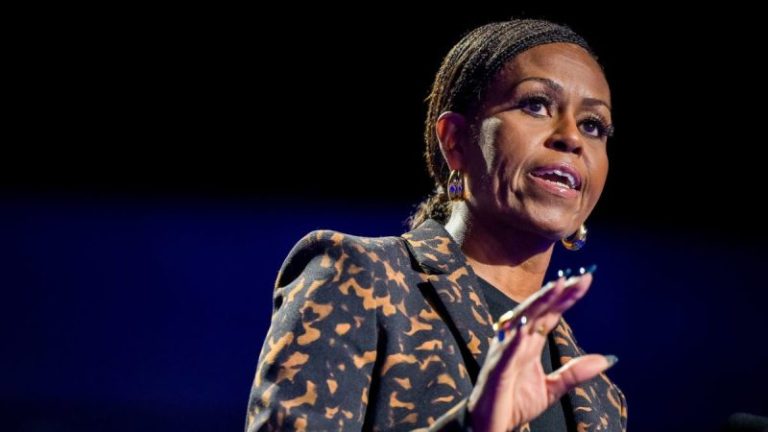
Former first lady Michelle Obama said Americans are ‘not ready’ to elect a woman to the White House, citing former Vice President Kamala Harris’ 2024 presidential election loss to President Donald Trump.

Obama made the comments to a crowd of women at the Brooklyn Academy of Music while promoting her new book, ‘The Look.’

‘As we saw in this past election, sadly, we ain’t ready,’ she said on Friday.

‘That’s why I’m like, don’t even look at me about running, because you all are lying. You’re not ready for a woman. You are not,’ she continued.

The former first lady went on to say that she does not believe men in America are comfortable with a woman leading them.

‘You know, we’ve got a lot of growing up to do, and there’s still, sadly, a lot of men who do not feel like they can be led by a woman, and we saw it,’ Obama said.

In her book, which was released on Nov. 4, Obama touches on her journey with fashion, hair and beauty, as well as her time in the White House as the first Black woman to serve as first lady. She wrote that women in politics are often judged based on their physical appearance instead of their ability to lead.

‘During our family’s time in the White House, the way I looked was constantly being dissected — what I wore, how my hair was styled. For a while now, I’ve been wanting to reclaim more of that story, to share it in my own way. I’m thankful to be at a stage in life where I feel comfortable expressing myself freely — wearing what I love and doing what feels true to me. And I’m excited to share some of what I’ve learned along the way,’ Obama wrote on Facebook in June while promoting her book ahead of its release.

”The Look’ is about more than fashion. It’s about confidence. It’s about identity. It’s about the power of authenticity. My hope is that this book sparks conversation and reflection about the ways we see ourselves — and the way our society defines beauty,’ she added.

This post appeared first on FOX NEWS

In his iconic dissent in Morrison v. Olson (1988), the late, great Supreme Court Justice Antonin Scalia brilliantly articulated why the Independent Counsel Statute unconstitutionally intruded upon the Executive Branch. This dissent laid the groundwork for the Supreme Court’s current constitutionalist majority to restore sanity to separation-of-powers jurisprudence by returning power to its rightful place: the Executive Branch, all of whose power is vested in the President of the United States who is elected by all Americans.

Leftists and other anti-democratic big-government types call this view the ‘unitary executive theory.’ In reality, it is just Article II of the United States Constitution. We The People loan executive power to our duly-elected President; we do not divvy it up among unelected, leftist federal bureaucrats. Scalia’s most famous line in the Morrison dissent was his characterization of the statute as ‘a wolf in wolf’s clothing,’ a play on the idiom of ‘a wolf in sheep’s clothing.’ Scalia was illustrating how the violation of the separation of powers was unambiguous.

Former U.S. District Judge Mark Wolf of Massachusetts is another wolf in wolf’s clothing, despite his effort–aided by the leftist media–to package himself otherwise. Wolf was appointed to the bench by President Reagan in 1985, but he is no judicial conservative. Wolf received the stamp of approval from the most leftist home-state duo in Senate history: Ted Kennedy and John Kerry. The reason the approval of these radical senators was necessary lies in a century-old Senate tradition called the blue slip. Home-state senators can veto nominations of U.S. district judges, U.S. attorneys, and U.S. marshals. Nominees will not move forward without the return of blue slips from both home-state senators. Senators will not relinquish this extraordinary power because they are power-hungry and self-serving. They want to hand-select the federal prosecutor who could indict them, the federal judge who could try them, and the federal marshal who could escort them to prison.

Recently, Wolf resigned from his lifetime appointment. He had assumed senior status (a form of semi-retirement) during the Obama administration, allowing Obama—instead of the next Republican president–to appoint a leftist to replace Wolf in full-time judicial service. According to Wolf, President Trump has disregarded the rule of law in innumerable ways. Wolf wants to speak out about it and serve as a self-appointed spokesman for sitting judges who cannot. Wolf also has blasted the Supreme Court, claiming that the constitutionalist majority has enabled President Trump. Wolf has whined the Court has ruled 17 out of 20 times in the Trump administration’s favor on its emergency docket. Wolf has compared this success rate to that of players like Barry Bonds, Mark McGuire, and Sammy Sosa during Major League Baseball’s steroid era.

Wolf’s claim is absurd. The administration has succeeded so much at the Supreme Court thanks to its stellar team of legal all-stars, headed by Attorney General Pam Bondi and Solicitor General John Sauer. Many other brilliant attorneys also deserve credit for the administration’s sterling Supreme Court performance.

Moreover, the rulings by Wolf’s fellow activist judges are clearly partisan and lawless. How many cases does Wolf think the administration should have won before the Court? Eight out of 20? Ten? Twelve? His statistical conspiracy gibberish is devoid of even a scintilla of legal analysis. Wolf is only interested in peddling nonsense to bash justices he plainly detests. Wolf also conveniently ignores the other side of the statistical coin. According to analysis from former top Senate counsel Michael Fragoso, district judges in Massachusetts ruled against the Trump administration on 27 out of 29 temporary restraining orders and preliminary injunctions. Wolf apparently has no issue with this disparity; rather, he seems to view these rulings as coming from beacons of judicial integrity.

Wolf has a history of conspiracy hogwash. For over a decade, he pursued a baseless case against Supreme Court Justice Clarence Thomas, history’s greatest justice. According to Wolf, Thomas had wilfully failed to make required disclosures. The Judicial Conference categorically rejected Wolf’s theory. Yet, over a decade after the case had been closed, Wolf testified before a Senate Judiciary Committee subcommittee chaired by U.S. Senator Sheldon Whitehouse of Rhode Island, another partisan and deranged conspiracy theorist. During one exchange, Wolf told a U.S. senator that former Reagan Solicitor General Rex Lee would have been disturbed by, as Wolf saw it, unethical behavior of Thomas. That senator was Mike Lee of Utah, and Solicitor General Lee was his deceased father. Sen. Lee rightfully erupted at Wolf’s despicable statement.

Sitting judges cannot speak out against President Trump according to the Code of Conduct for United States Judges. They cannot use Wolf as their mouthpiece, either. The House and Senate Judiciary Committees need to subpoena Wolf to determine which judges are trashing President Trump through Wolf. If Wolf refuses to divulge the information, he should face contempt of Congress charges just like Trump allies Steve Bannon and Peter Navarro did.

If the identities of judges who speak through Wolf to bash President Trump become public, every one of those judges must face impeachment proceedings. No matter how difficult conviction by a two-thirds Senate supermajority will be, these rogue judges must suffer through the impeachment process to deter them and other judicial embarrassments from engaging in blatantly unethical behavior. These radical judges are illegally and dangerously subverting the will of American voters.

Wolf is a Sheldon Whitehouse, not a Ronald Reagan. Wolf plans to serve as the vehicle by which sitting judges can attempt to circumvent ethical constraints. He has spouted risible conspiracy tripe to denigrate the Supreme Court in general and Thomas in particular. He even has stooped to the all-time low of bringing up a senator’s deceased father in a pathetic attempt to score a few cheap political points. In short, Wolf is a disgrace to the federal judiciary, and his resignation is welcome news. Good riddance to this wolf in wolf’s clothing.

This post appeared first on FOX NEWS

Mike Maloney, founder of GoldSilver.com, explains why this time really is different for gold and silver, pointing to factors including growing mainstream adoption.

‘This to me signals the beginning of the third and final phase of the bull market — and that is where you have the greatest amount of gains in the shortest period of time,’ he said.

Securities Disclosure: I, Charlotte McLeod, hold no direct investment interest in any company mentioned in this article.

This post appeared first on investingnews.com

Dana Samuelson, president of American Gold Exchange, discusses this year’s unusual market dynamics for gold and silver, saying there have been three big moves of physical metal.

‘To me, this is literally a run on the bank of gold globally — it’s global, it’s widespread and it’s deep, and I don’t see it changing anytime soon,’ he explained.

Securities Disclosure: I, Charlotte McLeod, hold no direct investment interest in any company mentioned in this article.

This post appeared first on investingnews.com
On Thursday (November 13), Canadian Prime Minister Mark Carney announced a second round of nation-building projects that will be referred to the Major Projects Office. The office was established earlier in the year to streamline the regulatory and funding processes for projects deemed to be in the national interest.

The first set of projects, announced on September 11, included support for the expansion of Newmont’s (NYSE:NEM,ASX:NEM) Red Chris mine in Northern British Columbia, LNG Canada’s phase 2 expansion of its facility in Kitimat, BC, and Foran Mining’s (TSX:FOM) McIlvenna Bay copper-zinc project in Saskatchewan.

According to the Prime Minister’s Office (PMO), the new set of projects represents more than C$56 billion in new investment and supports the creation of 68,000 new jobs.

Critical mineral projects on the list consist of:

        Outside of critical minerals projects, the announcement included support for the Ksi Lisims liquefied natural gas (LNG) project near Prince Rupert in Northwest BC. The Nisga’a First Nation is leading the project and, when complete, it will become Canada’s second-largest LNG facility after LNG Canada’s Kitimat facility. According to the PMO, the project is expected to generate almost C$30 billion in investment and create thousands of jobs.

        Additionally, support will be made available for the North Coast Transmission line, which will provide low-cost electricity and improved telecommunications to communities along BC’s north coast. Likewise, the Iqaluit Nukkiksautiit hydro energy project will receive support to provide hydroelectric energy to communities in Nunavut and reduce the reliance on diesel imports.

        For more on what’s moving markets this week, check out our top market news round-up.

        Markets and commodities react

        Canadian equity markets were mixed this week.

        The S&P/TSX Composite Index (INDEXTSI:OSPTX) rose 1.89 percent over the week to close Friday (November 14) at 30,326.46.

        Meanwhile, the S&P/TSX Venture Composite Index (INDEXTSI:JX) rebounded to gain 1.33 percent to 879.88. The CSE Composite Index (CSE:CSECOMP) had another bad week, plunging 9.01 percent to close at 150.19.

        The gold price rose significantly this week, climbing from its open of US$4,000 to US$4,243 by Thursday morning. However, it pulled back to end the week up 2.01 percent at US$4,080.64 per ounce by 4:00 p.m. EST Friday.

        The silver price performed even better. After opening at US$48.35, it tested all-time highs at US$54.31 Thursday before ultimately ending the week up 4.57 at US$50.56.

        Meanwhile, in base metals, the copper price gained 1.79 percent to US$5.11 per pound.

        The S&P Goldman Sachs Commodities Index (INDEXSP:SPGSCI) rose 1.28 percent to end Friday at 559.27.

        Top Canadian mining stocks this week

        How did mining stocks perform against this backdrop?

        Take a look at this week’s five best-performing Canadian mining stocks below.

        Stocks data for this article was retrieved at 4:00 p.m. EST on Friday using TradingView’s stock screener. Only companies trading on the TSX, TSXV and CSE with market caps greater than C$10 million are included. Mineral companies within the non-energy minerals, energy minerals, process industry and producer manufacturing sectors were considered.

        1. Adex Mining (TSXV:ADE)

        Weekly gain: 157.14 percent
        Market cap: C$40.63 million
        Share price: C$0.09

        Adex Mining is an exploration company that holds a 100 percent stake in the Mount Pleasant project in Southwest New Brunswick, Canada.

        The property contains two main deposits: the Fire Tower zone, which hosts tungsten and molybdenum mineralization, and the North zone, which hosts tin, zinc and indium.

        The asset consists of 102 mineral claims covering 1,600 hectares, as well as equipment and facilities from historic mining operations conducted by BHP (ASX:BHP,NYSE:BHP,LSE:BHP) between 1983 and 1985.

        According to its most recent investor presentation released on June 11, the property hosts the world’s largest indium reserve and North America’s largest tin deposit. Indicated resources for the North zone demonstrated contained metal values of 47 million kilograms of tin, and 789,000 kilograms of indium from 12.4 million metric tons with average grades of 0.38 percent tin and 64 parts per million indium.

        Additionally, the company engaged Moneta Securities in June to oversee selling the mine following a strategic review.

        Adex has not released news in the past week. However, its Fire Tower zone bears similarities to Northcliff’s Sisson tungsten-molybdenum project in New Brunswick, which the Canadian government referred to the Major Projects Office on Thursday.

        2. Trident Resources (TSXV:ROCK)

        Weekly gain: 118.82 percent
        Market cap: C$42.58 million
        Share price: C$1.86

        Trident Resources, formerly Eros Resources, is a gold and copper exploration company focused on projects in Saskatchewan, Canada.

        A three-way merger in early 2025 between Eros Resources, MAS Gold and Rockridge Resources allowed the companies to consolidate a portfolio of assets in Saskatchewan, including the Contact Lake and Greywacke gold projects in the La Ronge gold belt as well as the Knife Lake copper project.

        Its primary focus has been on its flagship Contact Lake gold project, a 21,440 hectare property located near La Ronge, Saskatchewan. The project hosts four primary deposits: Contact Lake, Preview SW, Preview North and North Lake.

        On Wednesday (November 12), the company released assay results from diamond drilling at Contact Lake, the first exploration conducted on the property in nearly 30 years. Highlights from the initial three holes included one hole with 7.03 grams per metric ton (g/t) gold over 43.25 meters, including an intersection of 30.06 g/t gold over 9.25 meters.

        The company noted that, while it was still in the early stages of exploration at the property, it was encouraged by results that bore similarities to early results of other significant high-grade discoveries in the region.

        3. Northcliff Resources (TSX:NCF)

        Weekly gain: 116.22 percent
        Market cap: C$279.18 million
        Share price: C$0.4

        Northcliff Resources is a development and exploration company advancing its Sisson tungsten-molybdenum project in New Brunswick, Canada.

        The 14,140 hectare property has seen extensive exploration dating back to the early 1980s.

        A 2013 mineral reserve estimate demonstrated total proven and probable quantities of 22.2 million metric tons of tungsten oxide and 154.8 million pounds of molybdenum from 334.36 million metric tons of ore with average grades of 0.07 percent tungsten oxide and 0.02 percent molybdenum.

        The project is currently in the development stage, and on Friday, it announced it was granted a five-year extension to the construction commencement timeline by New Brunswick’s Department of Environment and Climate Change. Construction is now anticipated to begin in December 2025.

        The project was also one of six that were included in the second-tranche of Canadian nation-building projects referred to the Major Projects Office on Thursday. The inclusion on the list will give Northcliff access to a streamlined regulatory process and open funding assistance to facilitate the development of Sisson.

        Commenting on the news, Northcliff Chairman, President and CEO Andrew Ing indicated the company is excited with its inclusion and that its goal is to contribute to building a resilient critical mineral supply chain.

        The release also outlined significant financial funding received since the start of the year, including US$15 million from the US Department of Defense and C$8.21 million from Natural Resources Canada.

        4. Canada Nickel (TSXV:CNC)

        Weekly gain: 61.54 percent
        Market cap: C$334.66 million
        Share price: C$1.68

        Canada Nickel is an exploration and development company advancing its flagship Crawford nickel sulphide project in Ontario, Canada.

        The property consists of 116 crown patents and 150 single- and multi-cell mining claims covering an area of approximately 9,600 hectares near Timmins and has seen exploration dating back to the 1960s.

        A feasibility study released in October 2023 demonstrated the project’s economics, with a post-tax net present value of US$2.48 billion and an internal rate of return of 17.1 percent.

        The included ore reserve estimate reported proven and probable reserves of contained metal values of 3.7 million metric tons of nickel, 9.7 million metric tons of chromium, 215,000 metric tons of copper, 777,000 ounces of palladium, and 519,000 ounces of platinum.

        The metal is contained in 1.72 billion metric tons of ore with average grades of 0.22 percent nickel, 0.57 percent chromium, 0.013 percent copper, 0.014 g/t palladium and 0.01 g/t platinum.

        Shares in Canada Nickel rose sharply this week after Crawford was included in the second round of projects referred to the Canadian government’s Major Project Office.

        In its release following the announcement, Canada Nickel’s CEO said that the company looks forward to working with the government and the MPO to secure financing and permits to begin construction at Crawford by the end of 2026.

        He also stated that the project represents a secure, domestic supply of critical minerals, including nickel and North America’s only source of chromium.

        5. Gold Terra Resources (TSXV:YGT)

        Weekly gain: 57.89 percent
        Market cap: C$51.71 million
        Share price: C$0.15

        Gold Terra is an exploration company advancing the Con Mine gold property in the Northwest Territories, Canada.

        The project was initially acquired as part of a 2021 agreement with Newmont that gave Gold Terra the option to earn a 100 percent interest in the asset for meeting certain exploration milestones and regulatory approvals, along with a C$8 million cash payment to Newmont.

        The agreement was then amended in September 2024, extending the timeline by 2 years to November 21, 2027.

        The property consists of 138 mining leases and 165 claims covering a total area of 79,046 hectares and hosts the historic Con Mine, which produced more than 6.1 million ounces of gold.

        A mineral resource estimate included in an October 2022 technical report demonstrated a total inferred resource of 1.21 million ounces of gold from 24.3 million metric tons with an average grade of 1.54 g/t gold.

        Shares in Gold Terra gained this week after the company announced a C$6.3 million non-brokered private placement that included a new strategic investment from Franco-Nevada (TSX:FNV,NYSE:FNV) Co-Founder David Harquail and existing shareholder Eric Sprott.

        The company said it will use proceeds for general corporate purposes and to fund a drilling program scheduled for January 2026 at the southern end of the Campbell Shear target at the Con Mine property. The program aims to expand the property’s indicated and inferred resources.

        FAQs for Canadian mining stocks

        What is the difference between the TSX and TSXV?

        The TSX, or Toronto Stock Exchange, is used by senior companies with larger market caps, and the TSXV, or TSX Venture Exchange, is used by smaller-cap companies. Companies listed on the TSXV can graduate to the senior exchange.

        How many mining companies are listed on the TSX and TSXV?

        As of May 2025, there were 1,565 companies listed on the TSXV, 910 of which were mining companies. Comparatively, the TSX was home to 1,899 companies, with 181 of those being mining companies.

        Together, the TSX and TSXV host around 40 percent of the world’s public mining companies.

        How much does it cost to list on the TSXV?

        There are a variety of different fees that companies must pay to list on the TSXV, and according to the exchange, they can vary based on the transaction’s nature and complexity. The listing fee alone will most likely cost between C$10,000 to C$70,000. Accounting and auditing fees could rack up between C$25,000 and C$100,000, while legal fees are expected to be over C$75,000 and an underwriters’ commission may hit up to 12 percent.

        The exchange lists a handful of other fees and expenses companies can expect, including but not limited to security commission and transfer agency fees, investor relations costs and director and officer liability insurance.

        These are all just for the initial listing, of course. There are ongoing expenses once companies are trading, such as sustaining fees and additional listing fees, plus the costs associated with filing regular reports.

        How do you trade on the TSXV?

        Investors can trade on the TSXV the way they would trade stocks on any exchange. This means they can use a stock broker or an individual investment account to buy and sell shares of TSXV-listed companies during the exchange’s trading hours.

        Article by Dean Belder; FAQs by Lauren Kelly.

        Securities Disclosure: I, Dean Belder, hold no direct investment interest in any company mentioned in this article.

        Securities Disclosure: I, Lauren Kelly, hold no direct investment interest in any company mentioned in this article.

        This post appeared first on investingnews.com

        During the Mining Share panel at the New Orleans Investment Conference, participants underscored that the gold bull market will continue — however, just where we are in that bull run was up for debate.

        For conference host and Gold Newsletter editor Brien Lundin, there is still some way to go.

        “The gold bull market is still in place. We don’t know how long it’s going to last. That’s the hard part. I think gold’s going to US$6,000 to US$8,000 (per ounce) in the cycle, maybe more. (The) mining share bull market, I would say we’re probably in the fourth inning, fifth inning, maybe. But you know, we could go to extra innings,” he said.

        Strategic investor Jeff Phillips also believes the gold bull market is at an early stage.

        ‘I would say that we are in the third or fourth inning,” he said. “This is early on in the bull market, but I do think there’ll be a rain delay, since we’re talking about baseball terminology. I think this is an epic bull market that we’re in.”

        Phillips went on to compare today’s setup to past cycles, noting the strong run gold saw between 2003 and 2007, before the financial crisis briefly derailed momentum. Although he anticipates another correction at some point, he remains confident in the broader bull market and said he is continuing to buy and stay patient.

        For Jordan Roy-Byrne, understanding the difference between a secular and cyclical bull market is imperative.

        “Secular — that’s the major long-term trend that usually lasts a decade or longer. Cyclically, it can be anywhere from two to five years or so,’ explained the editor and publisher of the Daily Gold.

        “I think the cyclical bull has three or four more years left. The risk when that gets long in the tooth is then you have what happened at 1975 to 1976, and also 2008 — that’s when you have your 65 or 60 percent decline in the shares.”

        Although Roy-Byrne believes that type of correction is “far off into the future,” he was adamant that something like that will happen before the current secular bull market comes to an end.

        Jennifer Shaigec, principal at Sandpiper Trading, said central bank buying shows the bull market is in its infancy.

        “I think we’re still actually in fairly early innings,” she said. “The underlying fundamentals for why central banks have been buying gold have not changed. In fact, I can see it accelerating.”

        Shaigec went on to acknowledge that gold often experiences a seasonal dip at this time of year, and that some investors may be waiting for a pullback. But she emphasized that the broader fundamentals remain strong.

        Drawing a parallel to 2008, when gold fell about 22 percent before rebounding above previous highs within six months, she urged investors to keep a long-term perspective and be mentally prepared for short-term volatility. Shaigec also pointed out that gold has historically been among the first assets to recover after market downturns.

        Rounding out the panel, Nick Hodge, publisher at Digest Publishing, told attendees that the gold correction has found short-term support at the US$4000 level, but longer-term support is around US$3,600.

        “All the fundamental drivers, ie. the debt, central bank buying, etc., are still in place and haven’t abated,” he said. “Silver hasn’t had its move yet, so that tells me we still have some time to go. And GDX, GDXJ just started outperforming the gold price in August, so it’s still early to the middle days in the precious metal bull market.”

        What’s next for the gold price?

        From there, panel moderator and well-known investor Rick Rule, proprietor at Rule Investment Media, emphasized that the recent pullback in gold is minor in the context of a much larger, long-running bull market.

        Rule agreed with Roy-Byrne’s distinction between cyclical dips and broader secular trends, noting that many investors seem rattled by what is essentially a normal fluctuation.

        He pointed out that gold is still up dramatically over the past year, and that past cycles have seen far sharper drops — including a 50 percent decline in 1975 — that ultimately didn’t break the long-term trend.

        Noting that precious metals cycles tend to follow a familiar pattern, beginning with strength in gold and moving outward into other segments, Rule asked the panel participants which companies in the gold sector — explorers, developers or potential M&A targets — are now best positioned as the market progresses.

        For Hodge, exploration and brownfields development are a strong choice as the precious metals cycle evolves.

        He noted that the VanEck Gold Miners ETF (ARCA:GDX) outperformed gold over the summer, prompting some investors to take profits and rotate capital into earlier-stage opportunities — momentum he expects to continue.

        Hodge added that market cycles now move faster due to the speed of information, accelerating the shift from producers to companies further down the value chain as miners look to replace reserves.

        Additionally, he pointed to a growing influx of risk-tolerant investors who cut their teeth in crypto and are increasingly drawn to gold and mining equities as they learn about fiat currency and counterparty risk. Their appetite for speculation, he said, is likely to push more capital into smaller, higher-risk exploration names over the next year.

        Shaigec echoed Hodge’s sentiment.

        “I agree there’s a lot of speculative money that has yet to rotate over to precious metals,” she said.

        “I’m seeing a lot of oversubscribed private placements. I just think that juniors are still the place to be. There’s some grassroots exploration, which actually hit an all-time low in 2023, and we’ve still had decades of lack of investment in exploration. We have a lot of room yet to run there,’ Shaigec added.

        Roy-Byrne advised watching silver, underscoring the value that gold’s sister metal has yet to gain.

        “Silver, after this correction, has a chance to make a historic move,” he told the audience. “We’re probably going to see a lot of money jump in next year when that happens.”

        Referring to an analogy he once heard, Phillips compared a precious metals bull market to the crack of a whip: producers move first, followed by mid-tier and single-asset developers, with exploration companies snapping into action at the very end. In his view, the market is only just reaching that final stage, and explorers have yet to see real upside.

        Phillips also echoed other panelists’ comments that younger crypto investors are becoming more aware of inflation, money printing and the value of hard assets.

        That shift, he said, is already showing up in unconventional moves, from stablecoin companies buying gold royalties to major tech firms and even governments directing capital into mining-related assets.

        All of that suggests the speculative end of the sector is only beginning to come alive, he said.

        Expert stock picks — Gold, silver, copper, nickel and uranium

        Toward the end of the discussion, Rule asked each panelist to provide stock picks for the attentive audience.

        First was Lundin, who praised the list of more than 100 exhibitors at the 51st New Orleans Investment Conference.

        He recommended Delta Resources (TSXV:DLTA,OTCQB:DTARF), highlighting its “large, still undefined, gold resource in the Thunder Bay region.” He also likes Getchell Gold (CSE:GTCH,OTCQB:GGLDF), a company focused on gold in Nevada, and Seabridge Gold (TSX:SEA,NYSE:SA), which he dubbed a “permanent optionality play.”

        For Phillips, Empress Royalty’s (TSXV:EMPR,OTCQB:EMPYF) management team, cashflow-positive status and focus on gold and silver puts the company at the top of his list.

        Almadex Minerals (TSXV:DEX,OTCQX:AAMMF), where management has a history of finding multimillion-ounce deposits, and prospect generator Headwater Gold (CSE:HWG,OTCQB:HWAUF), were also among his stock selections.

        Shaigec veered away from precious metals in recommending SPC Nickel (TSXV:SPC,OTCQX:SPCNF), a company with good geology and a management team that owns 36 percent of the firm’s shares.

        She also mentioned Pacifica Silver (CSE:PSIL,OTCQB:PAGFF) citing the company’s recent private placement, which included First Majestic Silver (TSX:AG,NYSE:AG). Her last stock pick and “absolute favorite” is Camino Minerals (TSXV:COR,OTCID:CAMZF), a Peru-focused copper company with good management.

        Rounding out the list were Hodge’s selections, starting with Northshore Uranium (TSXV:NSU) due to its US deposit. He also chose Kincora Copper (TSXV:KCC,OTCQB:BZDLF), citing its small market cap, strong investor interest and robust portfolio, and Kingsmen Resources (TSXV:KNG,OTCQX:KNGRF), a company that has seen its share price grow from C$0.25 to C$0.75 in the last year.

        Securities Disclosure: I, Georgia Williams, hold no direct investment interest in any company mentioned in this article.

        This post appeared first on investingnews.com