Author

admin

Browsing

President Donald Trump is ‘not interested’ in making peace with Colombian President Gustavo Petro, the White House said Thursday, as tensions between Washington and Bogotá continue to escalate.

‘I don’t think we’re seeing de-escalation from the unhinged leader of Colombia right now,’ press secretary Karoline Leavitt told reporters during a White House briefing when asked what Petro could do to reduce tensions.

‘I don’t think the president, frankly, is interested in that at this point,’ Leavitt added.

Relations between the two countries have sharply deteriorated after Petro accused the U.S. of killing innocent fishermen during strikes targeting narco-traffickers in the Caribbean.

Following Petro’s accusation, Trump announced plans to cut off all counter-narcotics aid to Colombia and impose new tariffs on the country.

Trump lashed out at his South American counterpart, calling him a ‘thug’ who is ‘making a lot of drugs.’

‘They’re doing very poorly, Colombia. They make cocaine. They have cocaine factories … and he better watch it or we’ll take very serious action against him and his country,’ Trump said. ‘What he has led his country into is a death trap.’

Petro fired back, threatening to sue Trump in U.S. court.

‘From the slanders that have been cast against me in the territory of the United States by high-ranking officials, I will defend myself judicially with American lawyers in the American justice system,’ Petro wrote on X. ‘I will always stand against genocides and murders by those in power in the Caribbean.’

‘When our help is required to fight against drug trafficking, American society will have it. We will fight against the drug traffickers with the states that want our help,’ he added.

Petro has sought closer ties with Venezuelan dictator Nicolás Maduro while distancing Colombia — a major non-NATO ally — from the United States.

Meanwhile, the U.S. has conducted eight strikes on vessels believed to be transporting narcotics from Latin America. The world is now watching to see whether Trump will follow through on threats to strike Venezuelan soil — or even target Maduro himself, directly or indirectly.

Trump confirmed that he had authorized the CIA to conduct covert operations inside Venezuela and also warned Colombia could face similar consequences.

‘Petro, a low rated and very unpopular leader, with a fresh mouth toward America, better close up these killing fields immediately,’ Trump wrote on Truth Social, ‘or the United States will close them up for him, and it won’t be done nicely.’

In a statement to Fox News Digital, the Colombian Embassy in Washington sought to ease tensions, saying the U.S. representative in Bogotá recently met with Petro and that ‘both sides agreed to continue dialogue in a spirit of cooperation and mutual respect. The meeting reaffirmed the shared commitment towards efforts against illicit drug trafficking, grounded in accuracy, coordination, and security.’

This post appeared first on FOX NEWS

Biotech is a dynamic industry that is driving scientific advances and innovation in healthcare. In Canada, the biotech sector is home to companies pursuing cutting-edge therapies and medical technologies.

Read on to learn what’s been driving these Canadian biotech firms.

1. Eupraxia Pharmaceuticals (TSX:EPRX)

Year-on-year gain: 141.23 percent
Market cap: C$410.85 million
Share price: C$8.25

Eupraxia Pharmaceuticals is developing clinical candidates that employ its DiffuSphere technology, which delivers treatments to the targeted tissues.

The company’s candidates are currently EP-104GI for eosinophilic esophagitis and EP-104IAR for knee osteoarthritis, and it is exploring the use of its technology for other active compounds as well.

Eupraxia added EP-104GI to its pipeline through its acquisition of EpiPharma Therapeutics in late 2023. The company has continued to advance the treatment through clinical trials in 2025 and released multiple rounds of positive data from its Phase 1b/2a trial cohorts.

In July, Eupraxia dosed its first patient after advancing its investigation to Phase 2b trials based on safety and efficacy data from the earlier Phase 2a patient cohorts. Top-line results from the Phase 2b study are anticipated in the second half of 2026.

In September, the company shared data from the highest-dose cohort of the still ongoing Phase 1b/2a trials, reporting that the group saw the largest improvements so far.

2. Bright Minds Biosciences (CSE:DRUG)

Year-on-year gain: 103.17 percent
Market cap: C$683.67 million
Share price: C$92.95

Bright Minds Biosciences is developing novel serotonin agonists targeting neurocircuit abnormalities linked to neuropsychiatric disorders and epilepsy, designing next-generation treatments that aim to retain the therapeutic benefits of psychedelics while minimizing side effects.

Its lead candidate, BMB-101, a selective 5-HT2C receptor agonist, has shown encouraging preclinical efficacy by stopping seizures in an epilepsy mouse model, evaluated jointly with Firefly Neuroscience (NASDAQ:AIFF).

The company’s stock surged nearly 1,500 percent in October 2024 following H. Lundbeck’s acquisition announcement of a competitor focused on similar targets. Strengthening its epilepsy expertise, Bright Minds expanded its scientific advisory board in early 2025 by adding five leaders in the field.

Ongoing clinical progress and strategic growth initiatives position Bright Minds as a promising contender in the neuropsychiatric treatment landscape.

3. Hemostemix (TSXV:HEM)

Year-on-year gain: 31.25 percent
Market cap: C$18.40 million
Share price: C$0.11

Hemostemix is a clinical-stage biotech company focused on developing autologous stem cell therapies, meaning the treatments use a patient’s own cells to theoretically enhance safety and efficacy.

Its main product, ACP-01, is an autologous cell therapy designed to promote tissue repair and regeneration in areas affected by diseases, including a range of heart diseases.

The company announced its first advanced sales orders for ACP-01 in Q1 2025 and has been working to expand internationally and attract new investment.

Hemostemix secured the regulatory green light for commercial sales in Florida after the state passed Senate Bill 1768. The bill creates a framework in which healthcare providers can administer stem cell therapies that had not yet been approved by the US Food and Drug Administration (FDA) but meet the bill’s guidelines.

The company now offers commercial ACP-01 treatments for ischemic pain in the state under the name VesCell, with sales forecasted to reach C$22.5 million in 2026. Operational plans target cash flow positivity by Q4 2026, supported by a growing physician network and commercial pipeline.

Additionally, Hemostemix is currently collaborating with Firefly Neuroscience on a Phase 1 clinical trial of ACP-01 for vascular dementia.

4. NervGen (TSXV:NGEN)

Year-on-year gain: 79.92 percent
Market cap: C$300.97 million
Share price: C$4.39

NervGen is a clinical-stage Canadian biotechnology company that focuses on developing innovative treatments to enable the nervous system to repair itself following damage from injury or disease.

The company’s core technology targets a mechanism that hinders nervous system repair. When the nervous system is damaged, chondroitin sulfate proteoglycans (CSPG) form a “scar.” Initially, CSPGs help contain damage, but their long-term interaction with the PTPσ receptor inhibits repair.

NervGen’s lead drug candidate, NVG-291, is designed to relieve these inhibitory effects to promote nervous system repair. It received fast-track designation from the US FDA.

NervGen is advancing NVG-291 in a Phase 1b/2a clinical trial for spinal cord injury (SCI) and reported positive data from the chronic cohort in June.

NVG-300, a newer preclinical candidate, is being evaluated for ischemic stroke and SCI.

Securities Disclosure: I, Meagen Seatter, hold no direct investment interest in any company mentioned in this article.

This post appeared first on investingnews.com

The American cattle ranching industry is blasting President Donald Trump’s proposal to purchase beef from Argentina in an effort to lower supermarket beef prices.

“This plan only creates chaos at a critical time of the year for American cattle producers, while doing nothing to lower grocery store prices,” Colin Woodall, CEO of the National Cattlemen’s Beef Association, said in a statement Monday.

Wyoming-based cattle operation Meriwether Farms addressed Trump directly in a social media post Monday.

“We love you and support you — but your suggestion to buy beef from Argentina to stabilize beef prices would be an absolute betrayal to the American cattle rancher,” the farm wrote on X.

By midday Tuesday, the post had already received 4 million views. A representative for Meriwether Farms did not immediately respond to a request for comment.

Trump floated purchasing beef from the South American nation Sunday aboard Air Force One to push down U.S. beef prices by increasing the overall supply.

‘We would buy some beef from Argentina,’ he told reporters, ‘If we do that, that will bring our beef prices down.’

Beef prices have hit record highs this year, according to data from the Bureau of Labor Statistics, fueled in part by depleted herd counts and steady demand from U.S. consumers.

This post appeared first on NBC NEWS

A federal judge struck down a Biden-era rule that expanded federal anti-discrimination measures to transgender healthcare, writing that the Department of Health and Human Services (HHS) ‘exceeded its authority by implementing regulations redefining sex discrimination and prohibiting gender identity discrimination.’

The ruling from Judge Louis Guirola Jr. of the U.S. District Court for the Southern District of Mississippi came after a coalition of 15 Republican-led states sued over the matter, according to The Hill.

‘When Biden-era bureaucrats tried to illegally rewrite our laws to force radical gender ideology into every corner of American healthcare, Tennessee stood strong and stopped them,’ Tennessee Attorney General Jonathan Skrmetti said in a statement following the ruling. ‘Our fifteen-state coalition worked together to protect the right of healthcare providers across America to make decisions based on evidence, reason, and conscience.’

‘This decision restores not just common sense but also constitutional limits on federal overreach, and I am proud of the team of excellent attorneys who fought this through to the finish,’ he added.

Skrmetti’s office said the U.S. District Court for the Southern District of Mississippi held that HHS ‘exceeded its authority when it issued a rule in May 2024 redefining Title IX’s prohibition against discrimination ‘on the basis of sex’ — which Congress incorporated into the ACA through Section 1557 — to include gender identity.’

‘HHS’s 2024 rule represented a disturbing federal intrusion into the States’ traditional authority to regulate healthcare and make decisions about their own Medicaid programs. Specifically, the rule would have prohibited healthcare facilities from maintaining sex-segregated spaces, required certain healthcare providers to administer unproven and risky procedures for gender dysphoria, and forced states to subsidize those experimental treatments through their Medicaid programs,’ it continued. ‘In vacating the rule, Judge Louis Guirola determined that when Congress passed Title IX in 1972, ‘sex’ meant biological sex and that federal agencies cannot unilaterally rewrite laws decades later to advance political agendas.’

The states involved in the lawsuit were Tennessee, Mississippi, Alabama, Georgia, Indiana, Kansas, Kentucky, Louisiana, Nebraska, Ohio, Oklahoma, South Carolina, South Dakota, Virginia, and West Virginia.

The rule was first created under the administration of former President Barack Obama in 2016, before President Donald Trump reversed it in his first term and then former President Joe Biden reversed it again, The Hill reported. 

Guirola’s ruling said HHS ‘exceeded its authority by implementing regulations redefining sex discrimination and prohibiting gender identity discrimination.’ 

The judge vacated the rule universally, but the rule had already been prevented from going into effect. It has been stayed since July 2024, according to Bloomberg Law. 

This post appeared first on FOX NEWS

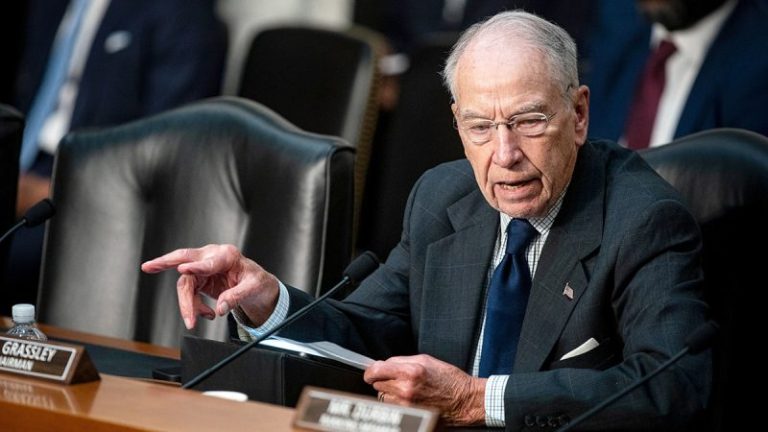
Two federal judges admitted that members of their staff used artificial intelligence to prepare court orders over the summer that contained errors.

The admissions, which came from U.S. District Judge Julien Xavier Neals in New Jersey and U.S. District Judge Henry Wingate in Mississippi, came in response to an inquiry by Sen. Chuck Grassley, R-Iowa, who chairs the Senate Judiciary Committee.

Grassley described the recent court orders as ‘error-ridden.’

In letters released by Grassley’s office on Thursday, the judges said the rulings in the cases, which were not connected, did not go through their chambers’ usual review processes before they were released.

The judges both said they have since adopted measures to improve how rulings are reviewed before they are posted.

Neals said in his letter that a June 30 draft decision in a securities lawsuit ‘was released in error – human error – and withdrawn as soon as it was brought to the attention of my chambers.’

The judge said a law school intern used OpenAI’s ChatGPT to perform legal research without authorization or disclosure that he also said was contrary to the chamber’s policy and relevant law school policy.

‘My chamber’s policy prohibits the use of GenAI in the legal research for, or drafting of, opinions or orders,’ Neals wrote. ‘In the past, my policy was communicated verbally to chamber’s staff, including interns. That is no longer the case. I now have a written unequivocal policy that applies to all law clerks and interns.’

Wingate said in his letter that a law clerk used Perplexity ‘as a foundational drafting assistant to synthesize publicly available information on the docket,’ adding that releasing the July 20 draft decision ‘was a lapse in human oversight.’

‘This was a mistake. I have taken steps in my chambers to ensure this mistake will not happen again,’ the judge wrote.

Wingate had removed and replaced the original order in the civil rights lawsuit, declining at the time to give an explanation but saying it contained ‘clerical errors.’

Grassley had requested that the judges explain whether AI was used in the decisions after lawyers in the respective cases raised concerns about factual inaccuracies and other serious errors.

‘Honesty is always the best policy. I commend Judges Wingate and Neals for acknowledging their mistakes and I’m glad to hear they’re working to make sure this doesn’t happen again,’ Grassley said in a statement.

‘Each federal judge, and the judiciary as an institution, has an obligation to ensure the use of generative AI does not violate litigants’ rights or prevent fair treatment under the law,’ the senator continued. ‘The judicial branch needs to develop more decisive, meaningful and permanent AI policies and guidelines. We can’t allow laziness, apathy or overreliance on artificial assistance to upend the Judiciary’s commitment to integrity and factual accuracy. As always, my oversight will continue.’

Lawyers have also faced scrutiny from judges across the country over accusations of AI misuse in court filings. In response, judges have issued fines or other sanctions in several cases over the past few years.

Reuters contributed to this report.

This post appeared first on FOX NEWS

A group that includes activist investor Jana Partners and NFL player Travis Kelce says it has accumulated one of the largest ownership stakes in Six Flags Entertainment and intends to press the company’s leadership on ways to improve the struggling amusement park operator’s business.

Jana said Tuesday that the investor group now owns an economic interest of approximately 9% in Six Flags. The group plans to ‘engage’ with Six Flags’ management and board of directors to discuss ways to enhance shareholder value and improve visitors’ experience.

Shares in the Charlotte, North Carolina-based Six Flags surged 17.7% on the news. The shares added another 5.1% gain in after-hours trading. Even with Tuesday’s rally, the company’s shares are down about 47% so far this year.

Six Flags reported a loss of $319.4 million for the first half of the year. The company said attendance fell 9% in the three months that ended June 29, due partly to bad weather and a ‘challenged consumer’ in most of the markets it operates in.

The investor group also includes consumer executive Glenn Murphy and technology executive Dave Habiger.

Kelce, tight end for the Kansas City Chiefs, said in a statement that he grew up going to Six Flags amusement parks.

‘The chance to help make Six Flags special for the next generation is one I couldn’t pass up,’ he said.

This post appeared first on NBC NEWS

Investor Insight

Apollo Silver is advancing two high-impact silver projects in premier North American jurisdictions—California and Chihuahua—offering investors a unique combination of scale, optionality, and leverage to silver and critical mineral demand.

Overview

Apollo Silver (TSXV:APGO,OTCQB:APGOF,FSE: 6ZF0) is a silver-focused company advancing a dual-asset strategy centered on two high-impact projects in North America: the Calico silver project in California, USA and the Cinco de Mayo project in Chihuahua, Mexico. Both are located in mining-friendly jurisdictions with strong infrastructure and significant historical work.

At Calico, Apollo Silver is advancing the Waterloo deposit toward development through geological modeling, barite resource definition, and engineering studies. Calico boasts 125 Moz of silver (measured and indicated) and 58 Moz of silver (inferred), and recent test work has produced a 94.6 percent barite concentrate, supporting the asset’s potential as a US critical minerals supplier.

In Mexico, Cinco de Mayo offers rare optionality with a historical inferred resource of 154 Moz silver equivalent (385 g/t), and a potentially game-changing discovery at the Pegaso Zone. The project is under an option agreement between Apollo Silver and Pan American (previously MAG Silver), wherein Apollo Silver will complete a 20,000-meter drill program to convert the option to an acquisition of the Cinco de Mayo. Apollo Silver’s strategy is underpinned by disciplined capital allocation, high-impact exploration, and a proven ability to acquire and unlock value from high-quality assets—following a model similar to Prime Mining. With no debt, strong institutional backing, and an experienced team, Apollo Silver is well-positioned to deliver scalable, discovery-driven growth in a rising silver and critical minerals market.

Company Highlights

  • Tier-1 US Silver Asset – Calico Project: Hosts 125 Moz silver (Measured and Indicated) and 58 Moz silver (inferred), making it the largest undeveloped primary silver deposit in the US.
  • Barite & Zinc Critical Minerals Exposure: Calico includes an Indicated resource estimate of 2.7 Mt of barite and 354M lbs of zinc and an Inferred resource estimate of 0.65Mt of barite and 258M lbs of zinc.
  • High-grade Discovery Potential – Cinco de Mayo: An option to acquire a district-scale carbonate replacement deposit with a historical inferred resource of 154 Moz silver equivalent at 385 g/t, offering further upside from the Pegaso Zone discovery target.
  • Strategic Shareholder Registry: Backed by Jupiter Asset Management, Eric Sprott, Terra Capital, Commodity Capital and Ninepoint.
  • Experienced Leadership Team: Proven M&A, discovery and capital markets expertise with over $5 billion in past transactions and most applicable to Apollo Silver, the success at Prime Mining.

Key Projects

Calico Project

The Calico silver project comprises three adjacent properties—Waterloo, Langtry and Mule—located in mining-friendly San Bernardino County, 15 km from Barstow, California. Resources at Calico sit primarily on private land with vested mining rights, simplifying the path to permitting. Infrastructure is excellent: paved roads, power lines within 5 km, and proximity to the expanding Barstow rail terminal.

Using a 47 g/t silver equivalent cut-off grade, the Waterloo Deposit includes 125 M oz of silver in in 55Mt at an average grade of 71 g/t silver in the Measured and Indicated categories, and 0.51 Moz silver in 0.6 Mt at an average of 26 g/t silver in the Inferred category. The Langtry Deposit now contains 57 Moz silver in 24 Mt at an average grade of 73 g/t in the Inferred category, using a 43 g/t silver cut-off grade. The deposits are approximately 2 km apart, shallow, laterally extensive, and exhibit excellent geologic continuity. The mining concept would be a potential open-pit operation, with a minimal environmental footprint and where Waterloo would have a low strip ratio of 0.8:1.

Apollo Silver recently added critical mineral resources for both barite & zinc at the Calico project. Barite has shown recoveries above 94.6 percent in earlier test work. Waterloo includes an Indicated resource estimate of 2.7 Mt of barite and 354M lbs of zinc at an average grade of 7.4 percent barite and 0.45 percent zinc at a cut-off grade of 47 g/t silver equivalent. It also contains Inferred resource estimate of 0.65Mt of barite and 258M lbs of zinc, at an average grade of 3.9 percent barite and 0.71 percent zinc at a cut-off grade of 47 g/t silver equivalent.

The company has recently acquired 2,215 hectares of highly prospective claims contiguous to its Waterloo property at the Calico silver project referred to as the Mule claims comprising 418 lode mining claims. The Mule claims expand the Calico Project land package by over 285 percent, from 1,194 ha to 3,409 ha of contiguous claims.

Having recently announced its mineral resource estimate, ongoing 2025-26 programs are contemplated to include exploration for additional gold mineralization, with a subsequent targeted drill program contingent on positive early results, and metallurgical and geotechnical work program on Waterloo.

Cinco de Mayo Project

Cinco de Mayo is a district-scale carbonate replacement deposit (CRD) system located in Chihuahua, Mexico along the same NW-SE structural trend that hosts some of the country’s largest silver and base metal deposits. The project was historically MAG Silver’s flagship asset, hosting a 2012 historical mineral resource estimate prepared by RPA. At an NSR cut-off of US$100/t, the Inferred resources were estimated to total 12.45 Mt at 132 g/t silver, 0.24 g/t gold, 2.86 percent lead, and 6.47 percent zinc. The total contained metals in the resource were 52.7 Moz of silver, 785 Mlbs of lead, 1,777 Mlbs of zinc, and 96,000 ounces of gold. Notably, a significant mineralized intercept—including 61 meters of massive sulphides—was drilled by MAG Silver in the Pegaso Zone beneath the known resource but never followed up due to social access issues.

The site also includes the Pozo Seco deposit, which hosts an additional historical resource consisting of 29.1 Mt grading 0.147 percent molybdenum and 0.25 g/t gold, containing 94.0 Mlbs of molybdenum and 230,000 oz of gold, in the Indicated resource category. An Inferred Mineral Resources were estimated at 23.4 Mt grading 0.103 percent molybdenum and 0.17 g/t gold, containing 53.2 Mlbs of molybdenum and 129,000 oz of gold. Cut-off grade used in the 2010 technical report was 0.022 percent molybdenum.

Apollo Silver has secured an option to acquire the Cinco de Mayo property from Pan American (previously Mag Silver) and is re-engaging with the local community to secure surface access. A new, development-friendly ejido administration, elected in December 2024, has created an opportunity to negotiate a mutually beneficial agreement for access rights. Once secured, Apollo plans to launch a 20,000-meter drill campaign, with priority targets at Pegaso and expansion zones at Jose Manto.

Under the option agreement with Pan American, Apollo must secure surface access, complete the 20,000 meters of drilling, and issue 19.99 percent of its common shares to finalize the acquisition. The company is also evaluating metallurgical studies and engineering reviews to support a future resource update.

Management Team

Andrew Bowering – Chairman of the Board

A venture capitalist with over 30 years of operational experience, Andrew Bowering has raised over $500 million in value and capital for companies within the natural resources industry. He is the founder of Millennial Lithium and American Lithium, and he is a director and executive advisor to Prime Mining.

Ross McElroy – President and CEO

Ross McElroy is a professional geologist with over 38 years of experience in the mining industry, spanning operational and corporate roles with major, mid-tier, and junior companies worldwide. He played a pivotal role in the discoveries of several world-class uranium and gold deposits, many of which have advanced through development into mining operations. Most recently he was the CEO of Fission Uranium Corp, where he oversaw the sale of Fission for more than $1.14B to Paladin Energy.

Chris Cairns – Chief Financial Officer

Chris Cairns is a CPA, CA and brings more than 13 years of experience working in the finance and mining industries. He obtained his designation while at PwC, working with numerous Canadian and US-listed mining and exploration companies operating in North America, South America and Mongolia, before leaving to serve in roles as controller and CFO of two publicly listed mining exploration companies listed in Canada and the United States.

Rona Sellers – VP Commercial and Compliance and Corporate Secretary

Rona Sellers is an experienced governance professional with more than 13 years of experience in corporate and securities law. Previously, she was VP compliance and corporate secretary at Maple Gold Mines, and previous to that she held corporate secretarial roles at publicly traded companies listed in Canada and the United States.

Isabelle Lépine – Director, Mineral Resources

With over 25 years experience leading resource focused technical programs and teams, Isabelle Lépine brings extensive knowledge in mineral resource management to Apollo. Her significant experience ranges across the advanced stages of the resource development cycle through to mining. Most recently, she was director of mineral resources at Stornoway Diamonds.

This post appeared first on investingnews.com

Here’s a quick recap of the crypto landscape for Wednesday (October 22) as of 9:00 p.m. UTC.

Get the latest insights on Bitcoin, Ether and altcoins, along with a round-up of key cryptocurrency market news.

Bitcoin and Ether price update

Bitcoin (BTC) was priced at US$107,811, a 3.5 percent decrease in 24 hours. Its lowest valuation of the day was US$107,657, and its highest was US$108,936.

Bitcoin price performance, October 22, 2025.

Chart via TradingView.

Bitwise Chief Investment Officer Matt Hougan believes gold’s explosive price performance this year could offer a glimpse of what lies ahead for Bitcoin, arguing that the world’s top cryptocurrency may be preparing for a similar structural breakout once its remaining pool of sellers runs dry.

Gold has surged roughly 57 percent in 2025, powered largely by sustained central bank accumulation. Bitcoin, meanwhile, has traded in a relatively narrow range between US$108,000 and US$112,000. According to Hougan, the comparison between the two assets provides a potential roadmap for their trajectory going into next year.

“Don’t look at gold’s meteoric rise with envy. Look at it with anticipation. It could end up showing us where bitcoin is headed,” Hougan wrote in a client note this week.

In addition, steady accumulation by exchange-traded funds (ETFs) and corporate treasuries has provided a similar source of structural demand. Since the launch of spot Bitcoin ETFs in January 2024, institutions and corporations have purchased roughly 1.39 million BTC, far outpacing new supply generated by the network.

Market data this week supports the idea of renewed accumulation. Following a US$19 billion liquidation event earlier this month, spot Bitcoin ETFs have recorded US$477 million in positive net inflows.

Predictions about a breakdown below US$100,000 have not materialized, though ongoing long liquidations over the past four hours reveal how vulnerable bullish traders remain near current support.

Ether (ETH) was priced at US$3,796.34, a 4.9 percent decrease in 24 hours. Its lowest valuation of the day was US$3,795.42, and its highest was US$3,873.52.

Altcoin price update

  • Solana (SOL) was priced at US$179.68, at its lowest valuation of the day, down by 7.5 percent over the last 24 hours. Its highest valuation of the day was US$185.98.
  • XRP was trading for US$2.37, a decrease of 5.2 percent over the last 24 hours and its lowest valuation of the day. Its highest was US$2.41.

Fear and Greed Index snapshot

CMC’s Crypto Fear & Greed Index remains locked in a state of anxiety, sitting in “fear” territory (29) for seven consecutive days and marking its longest streak since April. Its stagnation reflects a growing sense of caution among investors, as Bitcoin continues to trade within a narrow band between US$103,000 and US$115,000 for nearly two weeks.

Over the past 30 days, the index has been in greed territory for just seven days — the same period when Bitcoin reached its all-time high of US$126,000 in early October. Since then, investor sentiment has reversed sharply.

CMC Crypto Fear and Greed Index, Bitcoin price and Bitcoin volume.

Chart via CoinMarketCap.

The current fear phase began on October 11, a day after the largest liquidation event in crypto history erased more than US$20 billion in leveraged positions. Historically, similar periods of heightened fear have marked turning points for Bitcoin. The last extended stretch of fear occurred in March and April during the Trump administration’s tariff standoff with China, when Bitcoin bottomed near US$76,000. Market analysts say the prevailing mood underscores uncertainty following the US Federal Reserve’s recent policy pivot and renewed US-China trade negotiations.

Crypto derivatives and market indicators

Bitcoin derivatives metrics suggest traders are taking a wait-and-see approach.

Liquidations for contracts tracking Bitcoin have totaled approximately US$6.12 million in the last four hours, with the majority being long positions, signaling continued risk aversion. Ether liquidations showed a similar pattern, with long positions making up the majority of US$9.35 million in liquidations.

Futures open interest for Bitcoin was down by 1.09 percent to US$68.51 billion over four hours, with further decreases in the final hour of trading. Ether futures open interest moved by -1.15 percent to US$43.7 billion.

The funding rate remains positive for both crytocurrencies, with Bitcoin at 0.008 and Ether at 0.002, indicating more overall bullish positioning than bearish.

Bitcoin’s relative strength index stood at 44.98, meaning its price momentum is in a neutral to slightly bearish zone.

Today’s crypto news to know

Senate Democrats tell Trump envoy to explain undivested crypto stakes

Senate Democrats have called on Steve Witkoff, US President Donald Trump’s special envoy to the Middle East, to explain why he has not divested from his crypto holdings despite federal ethics requirements.

In a letter led by Senator Adam Schiff, eight lawmakers pressed Witkoff for details on his interests in World Liberty Financial, the Trump-linked crypto firm he co-founded in 2024, and several affiliated entities.

Witkoff’s latest ethics disclosure, dated August 13, shows he still owns stakes in multiple crypto-related businesses, including WC Digital Fi and SC Financial Technologies. Lawmakers allege these investments pose potential conflicts of interest given his diplomatic role and the company’s business ties to the United Arab Emirates.

The scrutiny follows a New York Times report linking Witkoff’s crypto dealings to a US$2 billion Emirati investment in Binance funded through World Liberty Financial’s stablecoin, USD1.

Neither the White House nor World Liberty Financial has commented on the matter.

FalconX announces plans to acquire 21Shares

FalconX announced plans to acquire 21Shares, one of Europe’s leading crypto exchange-traded product issuers.

The deal, confirmed Wednesday, will integrate FalconX’s prime brokerage operations, which serves over 2,000 institutional clients, with 21Shares’ portfolio of 55 listed products across Bitcoin, Ether and other digital assets.

21Shares currently oversees more than US$11 billion in assets and will continue operating independently under CEO Russell Barlow following the deal. While the financial terms remain undisclosed, the transaction marks FalconX’s third major acquisition this year after Arbelos Markets and Monarq Asset Management.

Hong Kong approves first spot Solana ETF

Hong Kong regulators have approved the region’s first spot Solana ETF.

The Securities and Futures Commission granted authorization to China Asset Management Company to launch the Hua Xia Solana ETF on the Hong Kong Stock Exchange on October 27. The product will trade through OSL Exchange, with OSL Digital Securities as sub-custodian and BOCI-Prudential Trustee serving as the primary custodian.

Each unit will consist of 100 shares, with a minimum investment of about US$100.

The fund’s debut makes Solana the third cryptocurrency — after Bitcoin and Ethereum — to receive regulatory approval for a spot ETF in Hong Kong.

Fed governor proposes skinny master accounts for crypto access to Fed payments

Fed Governor Christopher Waller signaled a major policy shift during his opening remarks at the Payments Industry Conference on Tuesday (October 21), welcoming DeFi and crypto innovators into mainstream payments dialogue and proposing a new framework for direct access to Fed payment infrastructure for eligible firms.

In his speech, Waller recognized traditional banks and crypto-native fintechs as core stakeholders and stressed the Fed’s intent to be active in technology-driven payment revolutions like distributed ledger technology, tokenized assets and artificial intelligence (AI). The proposed payment accounts, referred to as skinny master accounts, would offer eligible nonbank entities direct access to the Fed’s payments rails, bypassing third-party banks, but without interest, overdraft protection or discount window access, and potentially with balance caps.

Waller said this tailored access aims to match the needs and risks of payment firms and digital asset companies with a simpler review. He also noted that the Fed is conducting hands-on research into tokenization, smart contracts and AI/payments intersection and will seek industry input on the new account framework.

Andreessen Horowitz highlights maturing crypto industry

Andreessen Horowitz’s most recent State of Crypto 2025 report highlights a new era in the cryptocurrency industry that the firm says is defined by real utility and maturing institutional adoption.

The authors point out stablecoins’ explosion as a dominant macroeconomic force, citing nearly US$46 trillion in processed transactions over the past year, a figure that rivals traditional payment systems.

The report also emphasizes infrastructure upgrades across blockchains like Ether and Solana, which have increased transaction speeds while lowering costs, as well as improved regulatory clarity in the US through supportive legislative actions, which have been major catalysts helping revive builder confidence and establish frameworks for digital asset oversight that balance innovation with investor protection.

World app expands into prediction markets

World, the digital identity project formerly known as Worldcoin, is expanding into prediction markets by integrating Polymarket. The company, which is led by OpenAI CEO Sam Altman, announced on Tuesday that its World app, a mobile app combining a digital wallet with a decentralized identity tool, has integrated the Polymarket app.

The launch of the Polymarket mini app on World enables World app users to place Polymarket bets directly from the World app wallet using Circle’s USDC or World’s token, Worldcoin.

Securities Disclosure: I, Giann Liguid, hold no direct investment interest in any company mentioned in this article.

Securities Disclosure: I, Meagen Seatter, hold no direct investment interest in any company mentioned in this article.

This post appeared first on investingnews.com