Author

admin

Browsing

IAMGOLD (TSX:IMG,NYSE:IAG) is tightening its grip on one of Québec’s most promising gold districts with back-to-back acquisitions aimed at consolidating control over a vast stretch of the Chibougamau region.

In the span of two days, the mid-tier gold producer announced definitive agreements to acquire Northern Superior Resources (TSXV:SUP,OTCQB:NSUPF) and Mines d’Or Orbec (TSXV:BLUE).

Collectively the deals will expand its landholding to more than 100,000 hectares.

The larger of the two transactions will see IAMGOLD acquire all issued and outstanding shares of Northern Superior Resources in a cash-and-stock deal valued at approximately C$267.4 million.

The acquisition will fold Northern Superior’s Philibert, Chevrier and Croteau projects into IAMGOLD’s existing Nelligan and Monster Lake holdings, creating what the company has branded the Nelligan Mining Complex.

Together, these properties host estimated measured and indicated mineral resources of 3.75 million ounces of gold and inferred resources of 8.65 million ounces, positioning the district as Canada’s fourth largest pre-production gold camp.

“The addition of Northern Superior’s assets to IAMGOLD’s Nelligan Mining Complex in the Chibougamau region of Québec is extremely exciting for IAMGOLD, the region and our mutual shareholders,” said Renaud Adams, IAMGOLD’s president and CEO. “This acquisition aligns with our strategy to become a leading Canadian-focused mid-tier gold producer, bolstering our organic pipeline in Québec where we have maintained a longstanding presence.”

A day earlier, IAMGOLD struck a deal to acquire Mines d’Or Orbec, a junior explorer advancing the Muus project southwest of Chibougamau. IAMGOLD already holds a 6.7 percent equity interest in Orbec and expects to issue roughly 369,000 new shares to complete the purchase. The transaction will bring Muus under IAMGOLD’s control.

Located at the intersection of the Fancamp and Guercheville deformation zones, which are two major mineralized corridors that also host IAMGOLD’s Monster Lake and Nelligan deposits, the 24,979 hectare Muus project has been viewed as a geological link between the company’s existing holdings.

“Over the past several years, we have advanced the Muus project into one of Québec’s most promising gold exploration plays,” Orbec CEO John Tait said.

With the addition of both Northern Superior and Orbec, IAMGOLD is set to more than double its regional footprint.

The company has signaled its intent to pursue a “hub-and-spoke” development strategy in the region, envisioning a central processing facility fed by multiple ore sources within a 17 kilometre radius.

Pending regulatory and shareholder approvals, both acquisitions are expected to close in late 2025 or early 2026.

The price of gold has surged to unprecedented levels this month, reaching an all-time high of around US$4,370 per ounce amid heightened safe-haven demand and expectations of US interest-rate cuts.

However, on Tuesday (October 21), a correction began to set in as the yellow metal pulled back sharply. It fell as much as 5.5 percent to about US$4,115 as profit taking kicked in and the US dollar strengthened.

Securities Disclosure: I, Giann Liguid, hold no direct investment interest in any company mentioned in this article.

This post appeared first on investingnews.com

For nearly a decade, conservatives have argued President Donald Trump and his allies have been targeted by federal law enforcement agencies. The media and so-called intel experts tried to convince us that Hunter Biden’s laptop was fake news and the Steele Dossier was God’s honest truth. Why? Because of deep political bias against Trump. Rather than sweep these injustices under the rug, I want to set the record straight.  

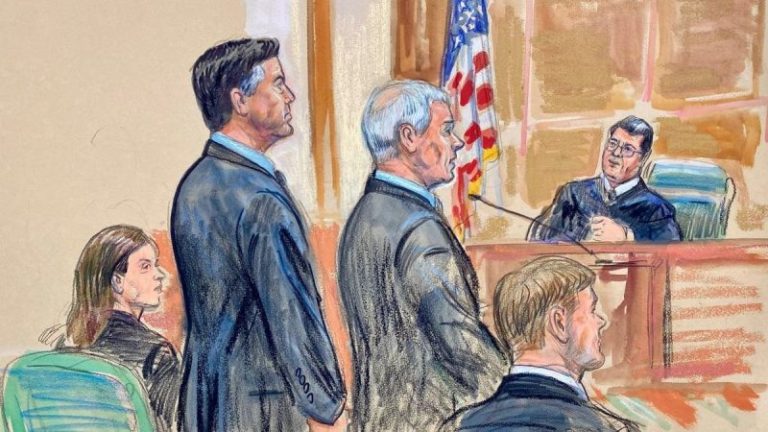
In September, former FBI Director James Comey, known for misusing his power against the president, was indicted for lying to Congress. I’ve been arguing for five years that Comey’s actions should be examined carefully, including the possibility of criminal misconduct. 

In analyzing the prosecution of Comey, it’s important to review the facts that led to this moment. In July 2016, Comey’s FBI opened Crossfire Hurricane, a counterintelligence operation centered around whether Trump was colluding with Russia during his campaign. The genesis for this theory largely stemmed from the Steele Dossier prepared by Christopher Steele, who we now know was hired on behalf of the Clinton campaign.  

Within a month of opening Crossfire Hurricane, Comey attended a meeting at the White House where then-CIA Director John Brennan briefed then-President Barack Obama, then-Vice President Joe Biden and other high-ranking officials on credible intelligence suggesting then-Secretary of State Hillary Clinton’s campaign may have been behind the narrative that Trump was colluding with the Russians. A few weeks later, Comey also received a memo from the intelligence community supporting the idea that the Clinton campaign signed off on an effort to link Trump to Russia. 

Fast-forward to January 2017, the Russian subsource who provided the information for the Steele Dossier told the FBI that the information in the dossier was unreliable and nothing but hearsay. Despite this interview, Comey and others continued to apply for warrants against Carter Page, an official adviser to the Trump campaign. 

One would think that alarm bells would go off in the FBI when the man primarily responsible for creating the document used to get a warrant in the FISA court had recanted the authenticity of the document. Apparently, this bombshell revelation in the bureau’s most high-profile investigation sat in the bowels of the FBI and never made it to Comey. I find that hard to believe. 

At that time, the FBI clearly possessed exculpatory information exonerating Trump. Despite the fact that the DOJ and FBI have a duty to share exculpatory information and evidence that might undercut the reliability of a warrant application with the FISA court, they never did. 

In 2020, Comey testified during a hearing I called as chairman of the Senate Judiciary Committee that he was never informed of the dossier’s lack of credibility and that the intelligence reports indicating the Clinton campaign was behind the Russia narrative did not ‘ring any bells.’ I had a hard time then — as I do now — believing that the former FBI director was telling the truth. 

The other matter to consider is the Biden Justice Department’s persecution of Trump. Three days after he announced he would seek the White House in 2024, the Biden DOJ appointed Jack Smith as special counsel.  

Within nine months of launching his campaign, Trump was indicted on 91 criminal counts across four separate jurisdictions — two of which were started by Smith. It is my firm belief that if Trump had decided not to seek the presidency in 2024, none of this would have happened. Many Americans agree with me that these indictments were politically motivated and that Smith was not a fair arbiter of the law.  

It has been the DOJ’s long-standing policy to not charge political candidates before Election Day to avoid the appearance of impropriety. However, Smith obliterated this policy. Within a month before the 2024 election, Smith was allowed to publicly release a brief containing his own version of the evidence against Trump, and he was even allowed to release an unredacted version two weeks before the election.  

Smith not only went after Trump but also his allies in Congress. During their investigation, agents working for Smith obtained records from the phone calls I — as well as eight of my colleagues — made between Jan. 4-7, 2021. At that time, I was the chairman of the Senate Judiciary Committee. These actions are an egregious violation of the Constitution’s separation of powers and should concern every American, regardless of their politics.  

 I’ve been arguing for five years that Comey’s actions should be examined carefully, including the possibility of criminal misconduct. 

The common theme between Comey and Smith is that they cut corners and ignored procedures in their pursuit of Trump. Comey disregarded evidence exonerating Trump during Crossfire Hurricane, and Smith released damaging information about him just weeks before the 2024 election. These misguided investigations resulted in numerous indictments, flooded the media with negative stories about Trump and wasted millions of taxpayer dollars.  

Fortunately, the American people saw through these examples of weaponization by the DOJ and FBI, but Comey, Smith and others still inflicted great damage on our country. Their misconduct eroded trust in our institutions and threatened the Constitution’s fundamental principle of equal justice under law. 

These abuses by Comey and Smith come along with numerous other examples of Democratic administrations targeting conservatives, including the RNC, parents attending school board meetings, Americans going to church, the America First Policy Institute, among others. When you hear Republicans say the law has been weaponized against President Trump and his supporters, at least have some understanding of why we feel that way. To suggest otherwise defies reality and common sense. 

I will join my Republican colleagues and fellow Americans in refusing to be intimidated. We will keep pushing to hold accountable those who were responsible for outrageous abuses of power in an effort to destroy all things Trump. 

This post appeared first on FOX NEWS

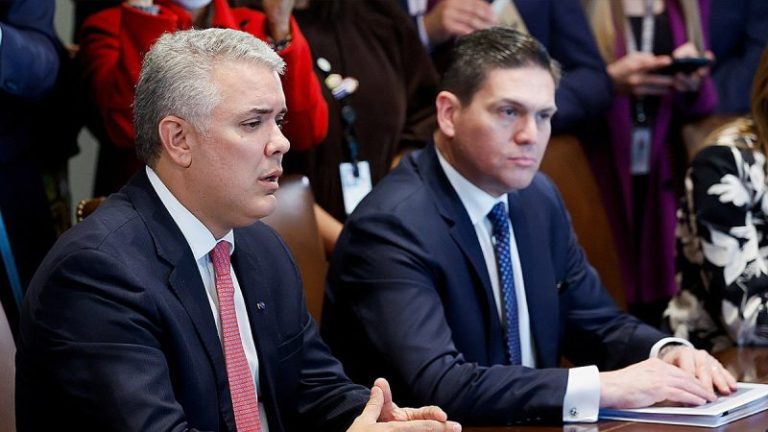
Colombia’s former defense minister Juan Carlos Pinzón warned that the once-close U.S.–Colombia alliance has ‘collapsed’ under President Gustavo Petro, accusing the leftist leader of aligning with Venezuela’s Nicolás Maduro and turning Colombia into a ‘narco-state.’

Pinzón, who is weighing a presidential run, told Fox News Digital he could ‘repair U.S.-Colombian relations in a week’ and urged international oversight of Colombia’s May elections amid what he called growing cartel influence and political corruption.

‘Petro has made himself an ally to [Venezuelan dictator Nicolás] Maduro’s regime, a narco-state, and a regime that is held mainly by the Cartel de los Soles,’ Pinzón said. ‘He has justified the existence of drug trafficking in Colombia … he has aligned himself with the idea of something that he calls ‘Total Peace,’ which implies that he’s providing benefits to drug traffickers and terrorist organizations and in general terms to organized crime.’

Relations between Washington and Bogotá — historically one of the closest U.S. security partnerships in Latin America — have deteriorated sharply under Petro, who has sought warmer ties with Caracas while distancing Colombia from the U.S. and Western allies.

During his tenure as defense minister from 2011 to 2015 under President Juan Manuel Santos, Pinzón oversaw some of Colombia’s most aggressive operations against the FARC and other armed groups, helping drive coca production and kidnappings to historic lows. As ambassador to Washington from 2015 to 2017, he helped secure Colombia’s designation as a major non-NATO ally, expanding intelligence sharing and military training programs with the U.S. — partnerships he now says have been ‘dismantled’ under Petro.

Under Petro’s ‘Total Peace’ policy, the Colombian government negotiates directly with armed criminal groups in an effort to end decades of internal conflict and integrate fighters into civilian life. Critics, including Pinzón, say the initiative has legitimized cartels and weakened the country’s security forces.

‘Homicide has gone up, terrorist actions have gone up, kidnappings have gone up, and the killing of police officers and military is increasing,’ he said. ‘All this is very bad for my country. And this is why I’m so committed to fight this, to confront this.’

Pinzón, who previously served as both defense minister and ambassador to Washington, is positioning himself as a pro-U.S. alternative ahead of Colombia’s 2026 presidential race. ‘I might announce a decision in the coming weeks,’ he said. ‘That’s something that I’m really considering.’

He also called for international election monitoring, warning that criminal networks could interfere in the vote. ‘If I were to ask something to the world today and to the international community — to the U.S., to the European Union, and even to countries in Asia — it’s that they make sure Colombian elections are not tainted by drug trafficking, illegal mining or terrorist hands,’ Pinzón said.

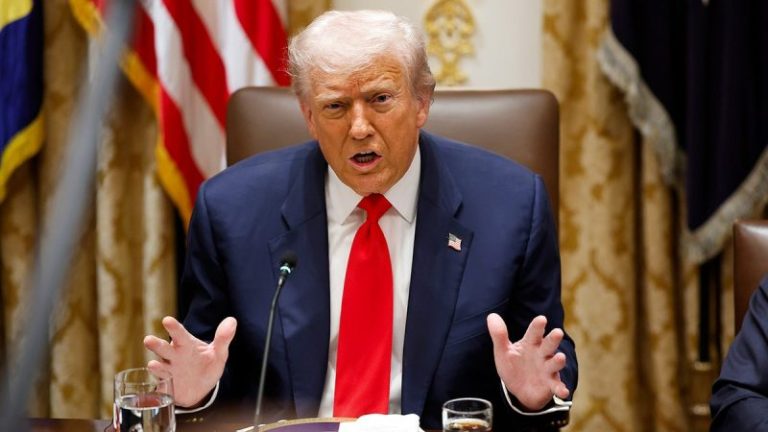
After a recent spat where Petro accused the U.S. of killing a Colombian fisherman in one of its seven Caribbean strikes targeting drug traffickers, Trump announced he would cut off all counter-narcotics aid to Colombia and hike tariffs on the nation. 

Pinzón urged Washington not to punish ordinary Colombians for Petro’s policies.

‘It’s not regular Colombians who are doing this,’ he said. ‘Most of us completely disagree with what is going on under Petro. We don’t want to see tariffs that can affect jobs and businesses in Colombia.’

While he praised Trump’s stance against narco-trafficking and corruption, Pinzón said he hopes the U.S. will avoid cutting counternarcotics aid, which he described as vital to Colombia’s military and police forces on the front lines of the drug war. ‘Our military and police are the real fighters against drugs,’ he said. ‘They continue to sacrifice, they continue to confront terrorism and drug trafficking. If that support disappears, it’s the criminals who are going to benefit.’

Instead, Pinzón said Washington should focus on targeted financial sanctions—such as those imposed by the Treasury Department’s Office of Foreign Assets Control (OFAC)—to hit specific traffickers, corrupt officials and their enablers rather than imposing measures that ‘hurt regular Colombians.’ ‘We would prefer OFAC-style sanctions on the people committing crimes,’ he said, ‘not policies that punish those who oppose Petro’s agenda.’

Looking ahead to potential ties with Washington, Pinzón said he could quickly rebuild the partnership through renewed security and intelligence cooperation, technology exchange, and educational programs.

‘I will just come to the U.S., speak openly and clearly with President Trump and the U.S. leadership, and speak on the need of creating a security agreement again on intelligence, on air mobility, on technology, on combating drug trade, but also on critical minerals and education,’ he said. ‘We want more Colombians to come to U.S. schools and enhance their capabilities and come back to Colombia to create knowledge, wealth and prosperity. We’re going to be again the closest ally of the United States strategically in the region.’

If Colombia continues on its current course, Pinzón warned, it could destabilize the entire hemisphere. ‘Colombia is a stabilizer at the end,’ he said. ‘If Colombia fails, the whole region will fail.’

Asked if he would seek U.S. backing, Pinzón said he values bipartisan support. ‘Everybody knows that I will have a very good relationship with the United States, certainly with the current administration, with President Trump,’ he said.

Pinzón also accused Petro of ‘abandoning’ Colombian citizens during a diplomatic spat with Washington after refusing deportation flights from the U.S. because the migrants were shackled. He said he would cooperate on deportations and be open to broader agreements if asked.

‘When Afghanistan fell, we offered the U.S. even to take care of some of the Afghanis if necessary,’ Pinzón said. ‘When you have a strong relationship as the one we used to have between Colombia and the U.S., and we will have if I can get to the presidency, what we’re going to see is a lot of good coordination and a lot of good things for both the people of Colombia and the people of the United States.’

Fox News Digital reached out to the Colombian Embassy for comment but did not receive a response before publication.

This post appeared first on FOX NEWS

A group of House Republicans is raising concerns about the potential effects of the U.S. importing Argentinian beef after President Donald Trump floated the idea earlier this week.

Rep. Julie Fedorchak, R-N.D., is leading seven other House GOP lawmakers in a letter to the president on Tuesday evening, warning the potential plan has rattled the multibillion-dollar American ranching industry.

‘America’s cattle producers are among the most resilient and hardworking in the nation,’ the Republicans wrote. ‘Collectively, the cattle industry supports thousands of jobs across our districts and contributes $112 billion to rural economies nationwide.’

‘In recent days, we have heard strong concerns from producers regarding reports that the U.S. may import beef from Argentina.’

The House Republicans acknowledged the ‘importance of strong trade relationships and diverse markets’ but added that beef producers in their districts ‘are seeking clarity on how this decision will be made, what safety and inspection standards will apply, and how this policy aligns with your administration’s commitment to strengthening American agriculture.’

Trump suggested Sunday that buying beef from Argentina could help lower prices for Americans at home, amid a wider promise to lower costs for U.S. citizens.

‘One of the things we’re thinking about doing is beef from Argentina,’ Trump told reporters aboard Air Force One.

He later elaborated in his conversation with reporters, ‘We would buy some beef from Argentina. If we do that, that will bring our beef prices down.’

‘Our groceries are down, our energy prices are down. I think we’re going to have $2 gasoline pretty soon. We’re getting close and everything’s down. The one thing that’s kept up is beef,’ Trump said.

He added that it would not be ‘that much’ but argued it would help Argentina, a U.S. ally, as well.

But the House Republicans questioned whether imported beef would be held to the same food safety and animal health requirements as that of the U.S., which they called ‘the gold standard.’

‘Any import policy must hold foreign suppliers to those same rigorous standards. Introducing beef from countries with inconsistent safety or inspection records could undermine the confidence that U.S. ranchers have worked decades to earn,’ the lawmakers warned.

‘We respectfully request additional information on this matter and urge your administration to ensure that any future decisions are made with full transparency, sound science, and a firm commitment to the U.S. cattle industry. America’s producers can compete with anyone in the world. If given an opportunity, they will continue to respond quickly to the market demand for more quality American beef in our grocery stores.’

In addition to Fedorchak, the letter is also signed by Reps. Michelle Fischbach, R-Minn., Troy Downing, R-Mont., Gabe Evans, R-Colo., Dusty Johnson, R-S.D., Derek Schmidt, R-Kan., Jeff Hurd, R-Colo., and Republican Study Committee Chair August Pfluger, R-Texas.

White House spokesman Kush Desai told Fox News Digital in response, ‘The Trump administration remains committed to addressing the needs and concerns of American cattle producers and safeguarding their interests at home and abroad. That’s why the administration has secured billions in new export opportunities for American agricultural products in our historic trade deals with the UK, Japan, the EU, and others.’

‘It’s also why the administration is focused on reversing a prolonged decrease in the supply of live cattle by growing American cattle herds with robust action to deliver disaster relief to cattle country, support new ranchers, and reduce risk for cattle producers,’ Desai said.

Trump’s proposal has stirred some anxiety among some Republicans whose constituencies depend on cattle ranching.

Sen. Deb Fischer, R-Neb., posted on X Tuesday, ‘If the goal is addressing beef prices at the grocery store, this isn’t the way.’

‘The U.S. has safe, reliable beef, and it is the one bright spot in our struggling ag economy. Nebraska’s ranchers cannot afford to have the rug pulled out from under them when they’re just getting ahead or simply breaking even,’ Fischer wrote.

Meanwhile, Fox News Digital was told that Rep. Harriet Hageman, R-Wyo., also raised significant concerns about what importing beef from Argentina could do to the U.S. cattle ranching industry during a call with fellow House Republicans on Tuesday.

But some Republican responses were more muted. Sen. Markwayne Mullin, R-Okla., told reporters that Trump ‘definitely identified a problem’ regarding a shortage of cattle in the U.S. He added, ‘I understand what he’s trying to get done. I think there’s more ways to implement it.’

Fedorchak herself told Fox News Digital, ‘We’ve all received a number of questions and calls from our constituents over the last few days, so we are asking for clarity on the administration’s long-term plans. Our farmers and ranchers stand ready to deliver on the president’s America-First agenda. North Dakotans take great pride in producing the safest, highest-quality beef in the world — and we should be building on that success.’

This post appeared first on FOX NEWS

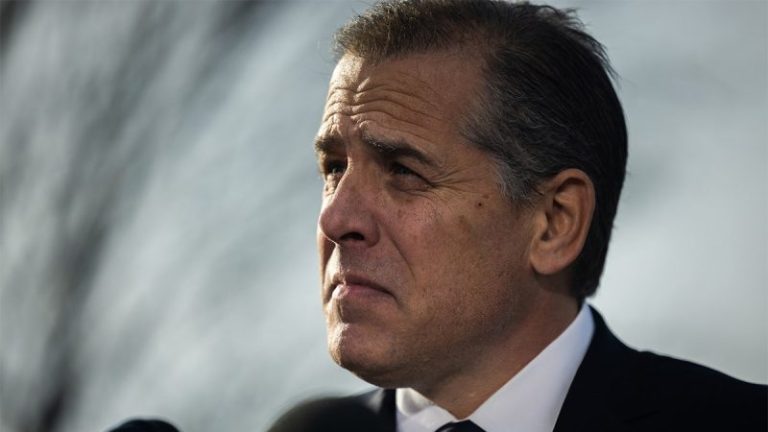
Former first son Hunter Biden is claiming that his father only pardoned him because Donald Trump reclaimed the presidency in November 2024 — and ‘would not have’ done so under ‘normal circumstances’ while the appeals process played out.

‘Donald Trump went and changed everything,’ Hunter said in an interview released Monday on journalist Tommy Christopher’s Substack platform.

‘And I don’t think that I need to make much of an argument about why it changed everything.’

The 55-year-old — who pleaded guilty last year to evading $1.4 million in back taxes to the IRS and was convicted on felony gun charges — declined to mention that he had apparently been present for discussions on pardons during Joe Biden’s final months in the White House.

‘I’ve said this before,’ Hunter went on.

‘My dad would not have pardoned me if President Trump had not won, and the reason that he would not have pardoned me is because I was certain that in a normal circumstance of the appeals [I would have won].’

The Biden scion added that Trump was planning a ‘revenge tour’ against his father, which would have made himself the ‘easiest target to just to intimidate and to not just impact me, but impact my entire family into, into silence in a way that at least he is not — it’s not as easy for him to do [with] me being pardoned.’

‘I realize how privileged I am,’ Hunter went on.

‘I realize how lucky I am; I realize that I got something that almost no one would have gotten.

‘But I’m incredibly grateful for it and I have to say that I don’t think that it requires me to make much of a detailed argument for why it was the right thing to do, at least from my dad, from his perspective.’

Ex-White House chief of staff Jeff Zients spilled last month that Hunter ‘was involved’ in clemency talks and even ‘attended a few meetings,’ a source with knowledge of the Biden official’s testimony to the House Oversight Committee told The Post.

This post appeared first on FOX NEWS

Spartan Metals (TSXV:W) is a US-focused explorer advancing its high-grade tungsten and rubidium Eagle Project in Nevada. The company is unlocking critical minerals essential to US defense, technology, and energy independence, supporting onshoring goals under the Defense Production Act.

The Eagle tungsten-silver-rubidium project in eastern Nevada spans 4,936 acres across three historic mine areas — Tungstonia, Rees, and Antelope. With historic production of 8,379 units of WO₃ grading 0.6–0.9 percent, Eagle ranks among the highest-grade past-producing tungsten systems in the US, enriched with rubidium and other defense-critical metals including antimony, bismuth, indium, and arsenic. Spartan is advancing an exploration program to validate and expand this potential using modern geochemistry, geophysics, and tailings drilling.

With multiple mineralized zones, district-scale potential and strong alignment with US strategic metal initiatives, the Eagle project is the cornerstone of Spartan’s growth strategy.

Company Highlights

  • Flagship Eagle Project: One of the highest-grade, past-producing tungsten mines in the US.
  • Multi-metal Exposure: Targets tungsten, rubidium, antimony, bismuth, and silver – all listed as US critical minerals.
  • Tier-1 Mining Jurisdiction: Located in eastern Nevada, a world-class mining state with established infrastructure and regulatory clarity.
  • Strong Management and Technical Team: Led by a CEO and VP of exploration with proven discovery track
  • Alignment with US Critical Minerals Strategy: Positioned to benefit from Department of Defense and US government initiatives supporting domestic critical mineral supply chains.
  • Attractive Capital Structure: Tight share strucuture with management and board holding ~42 percent of shares outstanding, ensuring strong alignment with investors.

This Spartan Metals profile is part of a paid investor education campaign.*

Click here to connect with Spartan Metals (TSXV:W) to receive an Investor Presentation

This post appeared first on investingnews.com

Hunter Biden was furious with former President Barack Obama for leading then-President Joe Biden offstage with a guiding hand at a June 2024 fundraiser, according to a new book from ABC News’ Jonathan Karl.

An excerpt from the book, obtained by Axios, details how the younger Biden believed Obama had disrespected and embarrassed the president.

‘I almost jumped up on the stage and said, ‘Don’t ever f–king do that to the president of the United States again — ever,” Hunter told Karl in an interview.

‘The younger Biden insisted his dad was simply taking some time to acknowledge the crowd. ‘I knew that that was going to be a meme,’ Hunter recalled. ‘That really, really, really, really pissed me off,” the book reads.

The incident was one of many that contributed to criticism that Biden was too old to hold office, an opinion held by the vast majority of voters, according to polls from the time.

The clip was just one of many in the latter months of Biden’s presidency that showed an ally, aide or family member stepping in to seemingly direct or guide Biden off a stage or during an event.

The Obama incident came just days after Biden had to be redirected by another world leader during a G7 event in Italy. The former president was arrayed with other world leaders as he appeared to wander a few steps away from the group.

Italian Prime Minister Giorgia Meloni then walked over to the president, touched his right arm and redirected him back to the group of world leaders.

The White House at the time dismissed the clip for having an ‘artificially narrow frame’ that only made it seem as though Biden was walking away from the crowd.

Fox News’ Emma Colton contributed to this report.

This post appeared first on FOX NEWS

Torchlight Innovations Inc. (TSXV: TLX.P) (‘Torchlight’ or ‘the Company’), doing business as RZOLV Technologies, is pleased to announce positive preliminary results from its metallurgical testing program focused on rare earth and critical mineral leaching using its proprietary RZOLV reagent system.

Modern economies are increasingly dependent on a broad suite of critical minerals and rare earth elements—including lithium, cobalt, nickel, praseodymium, tellurium, gallium, scandium, and others—that are essential to clean energy, advanced electronics, battery storage, and defense technologies.

According to the International Energy Agency (IEA), these minerals are ‘crucial to the performance of batteries, permanent magnets, and other clean energy technologies.’ The U.S. Department of Energy (DOE) similarly notes that critical minerals ‘are vital for a wide range of industries, including clean energy and defense,’ powering systems such as solar panels, wind turbines, and electric vehicle batteries. As traditional high-grade deposits become harder to access, attention is shifting toward secondary and unconventional sources such as tailings, mine waste, low-grade ores, brines, and industrial by-products. (Sources: https://www.iea.org/topics/critical-minerals| https://www.energy.gov/fecm/articles/developing-domestic-supply-critical-minerals-and-materials)

In this emerging landscape, a reagent like RZOLV, capable of dissolving over twenty such elements, represents a potentially transformative advancement in sustainable mineral recovery.

Key Highlights

  • Multi-Element Recovery: RZOLV dissolved over 25 critical and rare earth elements under mild, non-toxic conditions, with standout recoveries of cerium (73%), manganese (64%), and cobalt (60%).
  • REE and Base Metal Versatility: Consistent recoveries (40-45%) for mid-series rare earths such as samarium, europium, and gadolinium demonstrate RZOLV’s broad leaching capability across both transition and lanthanide elements, validating its cross-commodity potential.
  • Proven Chemistry: The reagent’s redox-complex system mobilizes metals without cyanide or harsh acids, enabling clean, efficient extraction.
  • Cross-Commodity Flexibility: Consistent recoveries across both base and rare earth elements confirm broad market potential.
  • Proven Compatibility: Leach solutions integrate easily with standard ion-exchange and solvent-extraction systems for scalable downstream recovery.
  • Compatibility with Standard Hydrometallurgy: RZOLV leach solutions are compatible with ion-exchange (IX) and solvent-extraction (SX) systems, providing efficient and selective pathways for downstream metal recovery and purification.
  • Sustainable Advantage: Operates at ambient temperature and low pH-lowering environmental risk, reducing cost, and unlocking value from tailings and low-grade sources.

Multi-Element Leachability Assessment of Critical and Rare Earth Samples Using the RZOLV Reagent System

Overview

Laboratory metallurgical investigations were undertaken to evaluate the leachability of multiple metallic and rare earth elements (REEs) from mineralized feedstocks obtained from two U.S.-based mining projects. The objective of this program was to assess the broader metal-solubilization potential of the RZOLV lixiviant system and to characterize its selectivity and efficiency across a diverse elemental suite.

Testing was performed using the standard RZOLV formulation without process optimization or reagent adjustment. As such, future results may vary depending on feed composition, mineralogy, and site-specific conditions.

Methodology

Representative composite samples were subjected to a series of bottle-roll leaching tests under controlled laboratory conditions. Each test employed the proprietary RZOLV non-cyanide leach reagent under standardized parameters designed to simulate low-intensity, ambient-temperature leaching environments.

Tests were conducted in sealed 1-liter HDPE vessels agitated continuously for 72 hours to ensure uniform contact between solids and solution. Post-leach solids (tails) were separated by vacuum filtration and washed thoroughly with deionized water to remove entrained solution. Pregnant leach solutions (PLS) were analyzed by Atomic Absorption Spectrometry, while head and residue samples were submitted to ALS Laboratories, an ISO-accredited analytical facility, for 61-element inductively coupled plasma-mass spectrometry (ICP-MS) analysis. Elemental recoveries to solution were calculated by mass balance, comparing head and residue assays for each element to quantify percentage dissolution.

Results and Discussion

The following table summarizes the unoptimized relative solubility of key metals and rare earth elements under the test conditions. Head and residue MS-ICP assays were compared to determine recovery to solution.

ELEMENT NAME ELEMENT SYMBOL NET RECOVERY
BERYLLIUM Be (%)
CERIUM Ce 73.50%
MANGANESE Mn 64.26%
COBALT Co 60.00%
CHROMIUM Cr 47.35%
GADOLINIUM Gd 45.00%
SAMARIUM Sm 44.12%
YTTRIUM Y 43.55%
EUROPIUM Eu 43.48%
NEODYMIUM Nd 43.48%
TERBIUM Tb1 42.86%
DYSPROSIUM Dy 42.81%
PRASEODYMIUM Pr 42.25%
LANTHANUM La 40.74%
HOLMIUM Ho 40.30%
ERBIUM Er 38.10%
NICKEL Ni 36.36%
VANADIUM V 33.33%
LUTETIUM Lu 33.33%
THULIUM Tm 31.43%
URANIUM U 27.59%
TELLURIUM Te 27.34%
BERYLLIUM Be 26.24%
INDIUM In 23.53%
YTTERBIUM Yb 22.58%
SCANDIUM Sc 16.96%

Interpretation

The results confirm that the RZOLV system promotes substantial solubilization of rare-earth elements, particularly cerium (73%), manganese (64%), and cobalt (50%), validating its oxidative and complexation capacity under mild acidic conditions.

Mid-series lanthanides (Sm, Eu, Gd) achieved recoveries of 40-45 %, consistent with partial liberation from refractory oxide or phosphate phases.

Lower recoveries of niobium (18%), scandium (17%), and lithium (23%) reflect incorporation within stable mineral matrices (e.g., columbite-tantalite, zircon, or silicate lattices) that require stronger oxidative or thermal activation for efficient leaching.

Recovery of Metallic and Rare Earth Elements from RZOLV Leach Solutions

Following the successful leaching of multiple metallic and rare earth elements (REEs) using the RZOLV lixiviant system, downstream recovery methods were considered to determine viable pathways for selective metal capture, concentration, and purification. The focus of this stage of investigation was to assess the suitability of ion exchange (IX) and solvent extraction (SX) systems for recovering valuable metals and REEs from pregnant leach solutions (PLS) generated under standard RZOLV leach conditions.

The RZOLV reagent produces a low-pH, moderately oxidizing solution characterized by high solubility for transition metals and trivalent rare-earth species. This chemistry aligns well with conventional hydrometallurgical separation methods, provided resin or extractant compatibility is maintained under the mildly acidic matrix.

Preliminary evaluations indicate that ion exchange and solvent extraction could be highly effective downstream recovery methods for RZOLV-derived leach solutions. Ion exchange offers rapid, high-capacity capture of base and rare-earth metals, while solvent extraction provides refined selectivity for high-purity product separation. Both methods are compatible with RZOLV’s low-toxicity matrix, enabling environmentally responsible and economically viable metal recovery.

Environmental and Process Implications

The multi-element solubilization profile underscores the potential of RZOLV as a selective and environmentally benign lixiviant for both precious-metal and critical-mineral recovery.

The reagent’s design eliminates the need for cyanide, chloride, or nitrate oxidants—minimizing hazardous effluents—while its regenerative electrochemical cycle enables near-closed-loop operation. Because RZOLV functions under mild aqueous conditions, without extreme temperatures, concentrated acids, or high-pressure systems, it offers a flexible and energy-efficient pathway for extracting critical minerals from complex matrices.

This adaptability allows deployment in diverse applications including ores, tailings, slag, low-grade stockpiles, flotation residues, concentrates, and industrial waste streams, with minimal process re-engineering. Closed-loop regeneration further reduces reagent consumption and operating costs, improving economic viability even for dilute or low-grade sources.

Key Benefits

  • Unlocking latent value: Enables recovery of valuable elements from waste or tailings, converting liabilities into revenue streams.
  • Reduced environmental footprint: Operates at ambient conditions with non-toxic reagents, reducing chemical hazards and remediation needs.
  • Cross-commodity flexibility: Capable of dissolving over twenty critical minerals, adaptable to multiple feed types and market shifts.
  • Support for circular economy and resource security: Facilitates domestic recovery of critical minerals and aligns with global sustainability objectives.

Conclusions

Bottle-roll test results and ICP-MS analyses confirm that RZOLV promotes significant dissolution across multiple elemental groups through synergistic redox-complexation chemistry. High recoveries of Ce, Mn, and Co highlight its oxidative power, while consistent REE mobilization demonstrates its capacity for complex formation under mild conditions. The results validate RZOLV as a versatile, low toxicity lixiviant for both precious and critical mineral extraction. Ongoing research is focused on refining reagent concentration, pH, and electrochemical regeneration to further enhance recovery efficiencies for refractory elements.

This research is preliminary in nature. Assay results are based on head/tails ICP-MS performed by ALS Labs. Test materials have been subjected to the standard RZOLV formula with no reagent optimization. Results will vary based on minerology and this data provides no guarantee of future success or economic viability.

About Torchlight Innovations Inc. (doing business as RZOLV Technologies)

Torchlight Innovations is a clean-technology company with a mission to transform the global mining industry through safer, sustainable, and high-performance extraction technologies. The Company has developed RZOLV, a proprietary non-toxic, water-based hydrometallurgical formula that replaces cyanide in gold leaching.

While cyanide has been the industry standard for over a century, its toxicity has led to widespread environmental concerns, costly permitting, and outright bans in several jurisdictions. RZOLV offers equivalent recovery efficiency and cost performance with a non-toxic, reusable, and environmentally responsible profile.

The Company is currently focused on validating its technology through industrial-scale pilot programs, after which full commercialization and licensing activities will begin. The Company has safeguarded RZOLV through 2 international patent filings and a comprehensive intellectual-property framework that includes protection for its chemical formulation, regeneration processes, and specific applications in heap leaching, vat leaching, tank leaching and concentrate treatment.

Contact

Duane Nelson
President and CEO
Torchlight Innovations Inc.
Email: duane@innovationmining.com
Phone: 604-512-8118

Neither TSX Venture Exchange nor its Regulation Services Provider (as that term is defined in the policies of the TSX Venture Exchange) accepts responsibility for the adequacy or accuracy of this release.

Forward-Looking Statements

This News Release contains ‘forward-looking information’ and ‘forward-looking statements’ within the meaning of applicable Canadian and United States securities legislation. Statements contained herein that are not based on historical or current fact, including without limitation statements containing the words ‘anticipates,’ ‘believes,’ ‘may,’ ‘continues,’ ‘estimates,’ ‘expects,’ and ‘will’ and words of similar import, constitute ‘forward-looking statements’ within the meaning of the U.S. Private Securities Litigation Reform Act of 1995. Forward-looking information may include, but is not limited to, information with respect to our Research and Development activities Wherever possible, words such as ‘plans’, ‘expects’, ‘projects’, ‘assumes’, ‘budget’, ‘strategy’, ‘scheduled’, ‘estimates’, ‘forecasts’, ‘anticipates’, ‘believes’, ‘intends’, ‘targets’ and similar expressions or statements that certain actions, events or results ‘may’, ‘could’, ‘would’, ‘might’ or ‘will’ be taken, occur or be achieved, or the negative forms of any of these terms and similar expressions, have been used to identify forward-looking statements and information. Statements concerning future revenue or earnings estimates may also be deemed to constitute forward-looking information. Any statements that express or involve discussions with respect to predictions, expectations, beliefs, plans, projections, objectives, assumptions or future events or performance are not statements of historical fact and may be forward-looking information. Forward-looking information is subject to a variety of known and unknown risks, uncertainties and other factors that could cause actual events or results to differ from those expressed or implied by the forward-looking information. Forward-looking information is based on the expectations and opinions of the Company’s management on the date the statements are made. The assumptions used in the preparation of such statements, although considered reasonable at the time of preparation, may prove to be imprecise. We do not assume any obligation to update forward-looking information, whether as a result of new information, future events or otherwise, other than as required by applicable law. For the reasons set forth above, prospective investors should not place undue reliance on forward-looking information.

Source

This post appeared first on investingnews.com

The cleantech sector experienced a dynamic third quarter, with predictions of volatility coming to fruition.

While global investment in renewable energy is strong, notable pullbacks in US spending and regulatory challenges under the Trump administration have clouded the near-term cleantech outlook. Electric vehicle (EV) sales showed mixed trends, with a rush observed ahead of the phase-out of American federal tax incentives at the end of September.

The quarter was also marked by several major mergers, funding rounds and technological developments.

Regulatory currents and investment flows shape cleantech market

The third quarter began with important cleantech policy signals and shifts in industry strategy.

Although global capital flows into renewables reached a record US$386 billion in H1 2025, according to data analyzed by BloombergNEF, a steep 36 percent year-on-year drop in US renewable project spending reflects investor uncertainty in response to changing policy conditions and the expiration of tax incentives.

Regulatory headwinds took center stage as the US Environmental Protection Agency under Lee Zeldin sought to overturn the agency’s scientific findings on greenhouse gases, stirring debate on climate regulatory directions.

Meanwhile, the Trump administration’s Department of the Interior moved to halt the planned US$6 billion Maryland offshore wind project, and paused work on Orsted’s (CPH: ORSTED,OTC Pink:DNNGY) Rhode Island offshore wind farm, triggering market pushback and state-level efforts to resume construction.

A judge later allowed the continuation of construction on the Rhode Island wind farm amid legal challenges.

While offshore wind faced setbacks from regulatory halts and legal challenges, the US solar sector demonstrated resilience, experiencing a notable 25 percent increase in corporate M&A activity in H1.

That increase was highlighted by Brookfield Renewable Partners’ (NYSE:BEP) US$2.8 billion acquisition of Duke Energy’s (NYSE:DUK) solar assets, as well as FlexGen’s purchase of Powin.

During Climate Week NYC, power giant Constellation Energy (NASDAQ:CEG) CEO Joseph Dominguez noted the potential for consolidation in the renewables sector. Despite federal tax credit phase-outs, wind and solar are supported by over 30 state-level programs, creating evolving investment opportunities for well-capitalized companies.

Adding to this insight, former US Vice President Al Gore emphasized the need to reconsider nuclear power as artificial intelligence (AI) electricity demand grows. While skeptical about the high costs of small modular reactors, Gore sees fusion power as promising, but probably farther off than some optimists predict.

He acknowledged that green hydrogen sentiment is overly optimistic, noting that its “bubble has burst” due to slow cost declines, although it retains promise for heavy industry uses like low-emissions steel production.

Aside from that, Gore referred to direct air capture as “overhyped” and not a “safe bet,” while calling deep geothermal “properly hyped,” but with uncertain commercial timelines.

At the same time, US Secretary of Energy Chris Wright indicated that an overhaul of permitting processes would expedite energy infrastructure projects facing intense opposition; however, the government shutdown, now heading into its third week, has created significant uncertainty and will likely lead to further delays.

Despite perceived setbacks, Q3 brought private sector investment in scalable clean infrastructure. Investors increasingly backed cleantech initiatives focused on transformative growth and digital infrastructure aligned with the evolving energy transition. Notable financing rounds went toward low-carbon data centers and battery storage. Investments like climate fintech firm Eventual’s US$7.5 million in seed funding also hint at growing investor interest.

These cleantech sector developments highlight a complex landscape where regulatory challenges in the US coexist with ongoing innovation and investment momentum, setting the stage for a critical period of adjustment and opportunity in the renewable energy sector, both above and below the American border.

In an interview with the Globe and Mail, Jigar Shah, former director of the Loans Program Office in the US Department of Energy, said Canadian cleantech firms have an opportunity to fill the void left in the industry by the US, but that decisive action is required to prevent companies from seeking out other jurisdictions.

Twists and turns in the EV race

The third quarter marked a pivotal period for the EV market.

Cox Automotive forecast in September that EV sales would hit a record of 409,000 units in Q3, in line with previous estimates that predicted a surge as buyers rushed in before the end of the US federal EV tax credit.

Automakers Ford Motor (NASDAQ:F), General Motors (NYSE:GM) and Hyundai Motor (KRX:005380,OTC Pink:HYMTF), all of which have extended EV discounts to after the expiration of the tax credit, reported record EV sales in Q3, with Ford’s EV sales rising over 30 percent, and GM’s EV sales more than doubling thanks to a diverse product lineup under the Chevrolet and Cadillac brands. Hyundai showed a 13 percent year-on-year increase, driven by EV sales.

In September, Ford announced a multibillion-dollar investment in American EV manufacturing facilities to pioneer a novel, efficient assembly process, aiming for a 2027 launch of a competitively priced midsize electric pickup.

Tesla’s (NASDAQ:TSLA) third quarter deliveries also hit a record, with estimates showing about 149,500 units, slightly higher compared to the 143,535 units reported in the second quarter. However, Cox Automotive’s numbers show that the company’s US market share has been steadily decreasing, slipping to 38 percent in August.

CEO Elon Musk said that the company will devote more of its resources to developing AI-driven autonomy going forward. Its robotaxi program officially launched this quarter, with initial testing beginning on July 1. The company reportedly experienced three crashes on its first day, underscoring ongoing technical hurdles. The National Highway Traffic Safety Administration has since launched another investigation into Tesla vehicles’ full self-driving technology, its second this year, after regulators received more than 50 reports of traffic violations and crashes.

Tesla also revealed its long-awaited more affordable EV models at the start of the fourth quarter. They were met with with cautious optimism by market participants. Investors will be carefully watching how these new models fare against intense price competition from domestic and foreign EV manufacturers.

Meanwhile, Tesla’s position in China continues to face pressure, with domestic manufacturer BYD Company (OTC Pink:BYDDF) surging ahead with a substantial lead. BYD delivered 582,500 pure EVs in the third quarter, nearly doubling Tesla’s China sales, which rebounded thanks to sales of the new Model Y L.

Advances in autonomous vehicle partnerships also progressed during the the third quarter, with Lyft (NASDAQ:LYFT) and Waymo collaborating on robotaxi services announced for launch next year in Nashville.

Waymo has moved to expand its user base by launching a new enterprise product, Waymo for Business, offering subsidized employee or event rides in its robotaxis in San Francisco, Los Angeles and Phoenix.

Facing rising competition, Uber Technologies (NYSE:UBER) said it plans to integrate autonomous vehicles alongside human drivers, partnering with Nuro and Lucid Group (NASDAQ:LCID) in a three part deal, with Uber purchasing 20,000 Lucid electric robotaxis over six years alongside licensing fees for Nuro’s self-driving technology.

Under the terms of the agreement, Uber will acquire minority stakes in both companies. The first robotaxis are expected to launch in a major US city next year.

Cleantech forecast for 2025

Q4 will be pivotal as the cleantech sector adjusts to the withdrawal of key federal incentives in the US, such as the rooftop solar tax credit, set to expire on December 31, and grapples with regulatory uncertainties.

Offshore wind projects face legal and administrative hurdles that may reshape regional renewable energy development.

Meanwhile, emerging areas of the cleantech market — such as advanced nuclear and climate fintech — offer promising growth paths, but require coordinated policy and investment frameworks. Reflecting this challenge, 11 states are collaborating to accelerate the development of advanced nuclear energy within their borders, seeking to create a strong and credible demand signal by coordinating commitments and dividing financial risks.

In autonomous vehicle innovation, Amazon’s (NASDAQ:AMZN) self-driving car subsidiary Zoox is seeking broader regulatory approval to operate up to 2,500 cars without traditional human controls.

If approved, Zoox would be able to conduct a first-of-its-kind paid commercial robotaxi service.

The US Department of Transportation plans to propose rules in spring 2026 to modernize vehicle safety standards for automated driving systems, including relaxing requirements tied to manual controls.

Forward-looking industry voices suggest cautious optimism, emphasizing the critical role of innovation, policy clarity and market adaptation in sustaining cleantech momentum into 2026.

Securities Disclosure: I, Meagen Seatter, hold no direct investment interest in any company mentioned in this article.

This post appeared first on investingnews.com