Author

admin

Browsing

President Donald Trump on Wednesday announced federal law enforcement will next set its eyes on San Francisco, commending the FBI’s more than 23,000 violent criminal arrests, which he said is more than double the number arrested in the final year of the Biden administration.

During an Oval Office news conference at the White House, Trump said the FBI has ‘destroyed or severely disrupted’ more than 170 organized criminal enterprises and gangs, 1,600 of the most violent gangs, and confiscated more than 6,000 illegal firearms since he was sworn in.

He added he wants to make every city safe, and his focus has turned to San Francisco.

‘These are great cities that could be fixed,’ the president said. ‘I’m going to be strongly recommending … [we] start looking at San Francisco. I think we can make San Francisco one of our great cities. … It’s a mess, and we have great support in San Francisco. … Every American deserves to live in a community where they’re not afraid of being mugged, murdered, robbed, raped, assaulted, or shot.’

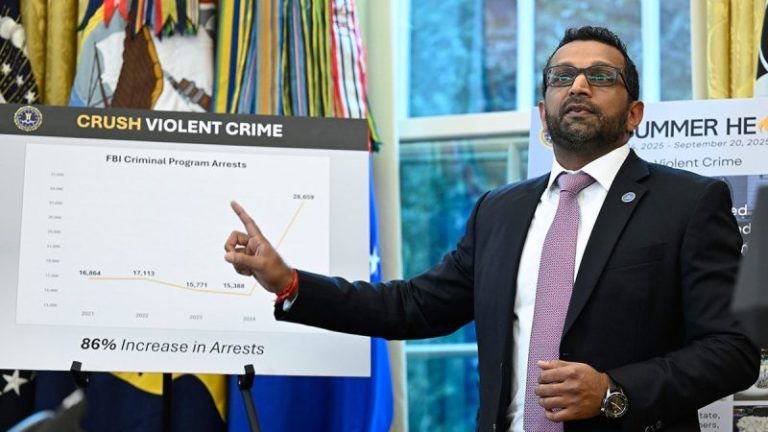
During the news conference, FBI Director Kash Patel announced ‘Operation Summer Heat,’ which the FBI created to target violent criminals, yielded 8,700 arrests of violent offenders in three months.

More than 2,200 guns and 421 kilograms of fentanyl seized during the operation—enough fentanyl to kill 55 million Americans, according to Patel.

To date, he said the FBI has seized 1900 kilograms of fentanyl—enough lethal doses to kill 127 million Americans alone to date.

‘If you look at the past four years of the Biden administration, [there were] 16,000, 17,000, 15,000, 15,000 … arrests year over year of violent felons in this country,’ Patel said. ‘You have 28,600 arrests of violent felons in just seven months alone because of your leadership and the dedication of the men and women at the FBI who want to go out there and do the job they were prevented from doing. … This number is historic by every metric.’

Patel also highlighted the FBI’s efforts to find missing children, claiming 5,400 were located since January.

‘That is a 30% increase year to date over the last administration,’ he said. ‘Violent crimes against children arrests alone are up 10% [and] gang arrests are up 210% in the last seven months alone. … Mr. President, you said we have to go after the worst of the worst. … This is just the beginning.’

This post appeared first on FOX NEWS

Questcorp Mining Inc. (CSE: QQQ,OTC:QQCMF) (OTCQB: QQCMF) (FSE: D910) (the ‘Company’ or ‘Questcorp’) is pleased to further update investors on its maiden drilling program at the La Union gold and silver project in Sonora, Mexico, which continues on track and on budget. The program is now two-thirds complete with initial and second holes now completed at four of the five main targets. This update follows the company’s Aug. 6, 2025, announcement marking the start of the program and Aug. 19, Sept. 10 and Sept. 24 news releases chronicling the progress of the program.

Saf Dhillon, President and Chief Executive Officer, states: ‘The drilling had started of a little slower and then was paused for unusually heavy rains. The initial plan was to drill 4 to 6 holes but, the Riverside team and their subcontracted drillers have been making substantial progress and we’re now at 7 completed holes with plans for another 2 to 5. In total, four of the five target zones have been drill tested with at least one hole.’

Two holes have now probed the Union mine target beneath historic workings, cutting through the Clemente and Caborca formations – both key host units for past mining at Union, encountering the distinctive microconglomeratic carbonate unit that historically hosted mineralization at the bottom of the Union mine.

Two holes have been completed at Famosa, testing the dip and strike extension of the mineralization in the historic workings as well as the foot wall and hanging wall of a steeply west-dipping major structural feature. Riverside select grab sampling from the Famosa dump retuned gold grade highlights of 59.4 g/t gold along with 833 g/t silver.

Two holes tested the North Union target and one tested the El Cobre target again probing beneath the historic workings for chimney and manto mineralization.

Additional holes are planned for all four of these targets, with one hole also planned for the El Creston Target.

Figure 1. Drill progress to 2025-Oct-09. Geologic map with the tenure of the Union internal concession shown in pink. Manto and chimney type CRD targets are shown as red polygons. Riverside now controls all mineral tenures on this map. 

To view an enhanced version of this graphic, please visit:
https://images.newsfilecorp.com/files/10197/270509_719d25609410fb43_001full.jpg

Questcorp cautions investors grab sample by their very nature are select samples and may not be indicative of mineralization on the property.

Initial drilling is also planned for newly generated targets to the west of the known mineralization trend. The target is feeder zones along pre-mineral fault structures.

Once this initial campaign is completed, follow-up work will integrate assay results, ongoing surface programs, additional induced polarization (IP) surveys, and refined geological interpretations based on stratigraphy and structure observed in drilling.

Figure 2. Cross section looking west with conceptual drill targets and schematic drillhole traces. Assays from Riverside’s sampling of rock dump materials from the two mine areas are labeled in black. Red areas are interpreted as manto and chimney target bodies that are now well defined and drill ready. Assays shown on figures 1 and 2 have been previously released and disclosed as summarized below the geochemical QA/QC and in published NI 43-101 Report that Questcorp published 2025 on Sedar+. 

To view an enhanced version of this graphic, please visit:
https://images.newsfilecorp.com/files/10197/270509_719d25609410fb43_002full.jpg

Qualified Person & QA/QC:

The technical content of this news release has been reviewed and approved by R. Tim Henneberry’, P.Geo (BC) a Director of the Company and a Qualified Person under National Instrument 43-101.

Rock samples from previous exploration programs discussed above at the Project were taken to the Bureau Veritas Laboratories in Hermosillo, Mexico for fire assaying for gold. The rejects remained with Bureau Veritas in Mexico while the pulps were transported to Bureau Veritas laboratory in Vancouver, BC, Canada for 45 element ICP/ES-MS analysis using 4-acid digestion methods. A QA/QC program was implemented as part of the sampling procedures for the exploration program. Standards were randomly inserted into the sample stream prior to being sent to the laboratory.

About Questcorp Mining Inc.

Questcorp Mining is engaged in the business of the acquisition and exploration of mineral properties in North America, with the objective of locating and developing economic precious and base metals properties of merit. The company holds an option to acquire an undivided 100-per-cent interest in and to mineral claims totalling 1,168.09 hectares comprising the North Island copper property, on Vancouver Island, B.C., subject to a royalty obligation. The company also holds an option to acquire an undivided 100-per-cent interest in and to mineral claims totalling 2,520.2 hectares comprising the La Union project located in Sonora, Mexico, subject to a royalty obligation.

ON BEHALF OF THE BOARD OF DIRECTORS,

Saf Dhillon
President & CEO

Questcorp Mining Inc.
saf@questcorpmining.ca
Tel. (604-484-3031)

Suite 550, 800 West Pender Street
Vancouver, British Columbia
V6C 2V6.

Certain statements in this news release are forward-looking statements, which reflect the expectations of management regarding completion of survey work at the North Island Copper project. Forward-looking statements consist of statements that are not purely historical, including any statements regarding beliefs, plans, expectations or intentions regarding the future. Such statements are subject to risks and uncertainties that may cause actual results, performance or developments to differ materially from those contained in the statements. No assurance can be given that any of the events anticipated by the forward-looking statements will occur or, if they do occur, what benefits the Company will obtain from them. Except as required by the securities disclosure laws and regulations applicable to the Company, the Company undertakes no obligation to update these forward-looking statements if management’s beliefs, estimates or opinions, or other factors, should change.

To view the source version of this press release, please visit https://www.newsfilecorp.com/release/270509

News Provided by Newsfile via QuoteMedia

This post appeared first on investingnews.com

The gold price continued to rise in Q3, breaking through key milestones to set new all-time highs.

Much like the first half of the year, the yellow metal was supported by ongoing factors like central bank buying, geopolitical tensions and uncertainty caused by US trade and tariff policies.

And it wasn’t just the price of gold that soared — higher margins and a more positive outlook for the sector helped drive increases in gold stocks. Read on for a look at gold’s Q3 activity and the outlook for Q4.

What happened to the gold price in Q3?

Gold has gained nearly US$1,400 since starting the year at US$2,658 per ounce on January 2.

By the beginning of Q3, gold had climbed to US$3,338.86, and it remained rangebound at that level for most of July and August. However, it climbed above the US$3,400 mark on July 22 and then again on August 6.

Gold price, July 9 to October 10, 2025.

The price started to gain traction at the end of August, after US Federal Reserve Chair Jerome Powell signaled a change in policy during his remarks at the Jackson Hole Economic Policy Symposium. By September 2, the gold price had broken through US$3,500 for the first time, and by September 8 it had climbed above US$3,600.

As the month wore on, gold continued its unprecedented climb. It broke through US$3,700 on September 22, US$3,800 on September 29 and reached its quarterly high of US$3,858.41 on September 30.

The price continued on its upward trajectory as the fourth quarter began, rising above US$3,900 on October 6, and finally setting a new record high of US$4,040.42 on October 8.

What’s driving gold demand?

Although there was a dip in central bank gold purchases in July, with just 10 metric tons added to reserves, the World Gold Council (WGC) reported that the buying trend that has developed over the past few years remains firm.

In August, central banks once again increased their gold acquisitions, purchasing a total of 19 metric tons. Overall, central banks bought 415 metric tons of gold in H1, bringing the 2025 total to 444 metric tons as of the end of August.

Although it appeared to pause its gold buying in August, the National Bank of Poland has been the top purchaser of gold in 2025, adding 67 metric tons. It has vowed to have 20 to 30 percent of its international reserves in gold.

The WGC notes that seven central banks boosted their reserves in August. Kazakhstan was the leading buyer, adding 8 metric tons to its holdings and bringing its year-to-date increase to 32 metric tons. Turkey, Bulgaria, China, Uzbekistan, Ghana, Indonesia and the Czech Republic each added 2 metric tons. Russia was the only seller in August, divesting itself of 3 metric tons of gold; the WGC suggests its reduction was owed to its coin-minting program.

It wasn’t just central banks buying gold. Western investors helped drive record exchange-traded fund (ETF) inflows of US$26 billion for the third quarter, with North American markets accounting for US$16.1 billion.

Total assets under management surged to US$472 billion, a 23 percent increase over the second quarter, with holdings rising to 3,838 metric tons, just shy of the 3,929 metric tons recorded in November 2020.

Why are investors interested in gold?

Mind Money CEO Julia Khandoshko suggested that geopolitics is a driving force behind gold’s record-breaking run, noting that tensions are high as the world becomes increasingly divided into “risk” and “stability” zones.

While geopolitics may be a primary factor, it’s far from the only one.

The third quarter saw declining yield curves, a weakening US dollar and a 25 basis point interest rate cut from the Fed in September, all of which added tailwinds to the gold price. Looking forward, the expectation is that the Fed will make further rate cuts before the end of the year, which could further fuel a rising gold price.

‘The history of the last hundred years shows that gold grows confidently at low rates. Combine this with stubborn inflation, and we can say with confidence that it will create more space for gold’s price rise,” Khandoshko stated.

Additionally, there is an expectation that a weaker US dollar will help to keep the price of gold elevated. So far this year, the US Dollar Index has declined 8 percent.

“The US dollar is a critical component to what happens to gold, because gold is denominated in US dollars, so the weaker the US dollar, the stronger the commodity price. What we’re expecting to see over the next 12 to 24 months is continued devaluation of the US dollar, which means gold should continue to be stronger going forward,” he said.

Among the recent drags on the dollar is fear of a prolonged shutdown of the US federal government after lawmakers failed to reach an agreement to continue funding government agencies and employees.

In the aftermath of the shutdown, the US Dollar Index posted its worst week since July. In an October 3 Reuters article, Thierry Wizman, monetary strategist with Macquarie, suggests that a prolonged shutdown could have a significant impact on trust in the federal government and further impact the strength of the greenback.

Gold price forecast for 2025

Hodaly sees the factors behind gold’s price rise remaining in place for the foreseeable future.

“We are expecting this could go much higher, at least 10 to 20 percent higher in the near term,’ he said.

‘Nothing has changed with the demand outlook for gold and the projected weakness of the US dollar, and that’s what’s going to drive the commodity price higher,’ added the executive.

Gold equities are also expected to benefit as the rising price boosts their margins and share prices.

Leading producers such as Agnico Eagle Mines (TSX:AEM,NYSE:AEM), Newmont (NYSE:NEM,ASX:NEM) and Barrick Mining (TSX:ABX,NYSE:B) have seen their share prices rise by over 100 percent in 2025.

The junior space has also been impacted, with PPX Mining (TSXV:PPX,OTC Pink:SNNGF) posting a year-to-date gain of 642 percent as of October 1, and San Lorenzo Gold (TSXV:SLG,OTC Pink:SNLGF) increasing 629 percent.

With gold now trading above US$4,000, the sector could attract renewed interest and offer new opportunities for investors. Those seeking to include gold or gold stocks in their portfolios might consider options ranging from the relative safety of ETFs and established producers to riskier assets at the development or exploration stages.

Securities Disclosure: I, Dean Belder, hold no direct investment interest in any company mentioned in this article.

This post appeared first on investingnews.com

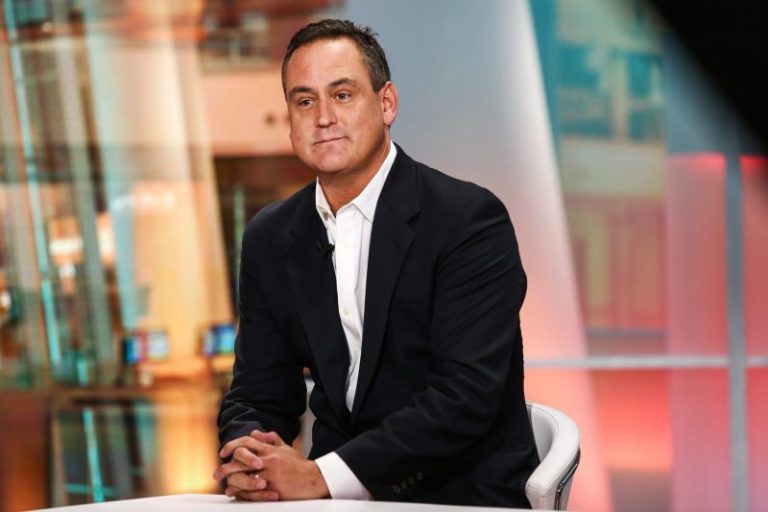
LendingTree CEO and founder Doug Lebda died in an all-terrain vehicle accident over the weekend, the online loaning platform said Monday.

In a company announcement, LendingTree confirmed that Lebda unexpectedly died on Sunday and that its leadership “deeply mourns his passing” while extending condolences to the executive’s loved ones.

“Doug was a visionary leader whose relentless drive, innovation and passion transformed the financial services landscape, touching the lives of millions of consumers,” LendingTree’s board of directors said in a statement. “His passion will continue to inspire us as we move forward together.”

Scott Peyree, LendingTree’s chief operating officer and president, has now been appointed CEO effective immediately. And lead independent director Steve Ozonian will also step into Lebda’s role as chairman of the board, the company said.

Shares of Charlotte, North Carolina-based LendingTree fell more than 2% by early afternoon trading on Monday.

Lebda founded LendingTree in 1996 — to “simplify the loan shopping process” after experiencing his own frustrations when getting his first mortgage, LendingTree’s website notes. The platform launched nationally in 1998 and became a public company in 2000. It was later acquired by internet conglomerate IAC/InterActiveCorp, before spinning off on its own again in 2008.

Today, LendingTree’s central online loaning marketplace helps users find and compare loans for mortgages, credit cards, insurance needs and more. LendingTree, Inc. also owns brands across the financial sector — including CompareCards and Value Penguin.

In addition to his multiple-decade career at LendingTree, Lebda also co-founded a financial services platform for children and families called Tykoon in 2010. He previously worked as an auditor and consultant for PriceWaterhouseCoopers.

“All of my ideas come from my own experiences and problems,” Lebda told The Wall Street Journal in a 2012 interview.

This post appeared first on NBC NEWS

It has been a turbulent yet inspiring year for Koreans. A declaration of martial law last winter plunged the nation into uncertainty, but what followed was not chaos – it was the reaffirmation of a people’s unshakable faith in democracy. 

The ‘Revolution of Light,’ culminating in the peaceful election of a new government, reminded the world that the Republic of Korea’s constitutional order rests not on the will of any ruler, but on the collective conscience of its citizens. 

Some observers abroad have mistaken the intensity of Korea’s political transition for fragility or deviation from democratic norms. In truth, such intensity is the very pulse of democracy itself. Our debates are often fierce, our elections passionately contested, yet our institutions endure. That resilience – born of experience, sacrifice, and civic discipline – is Korea’s greatest democratic asset.

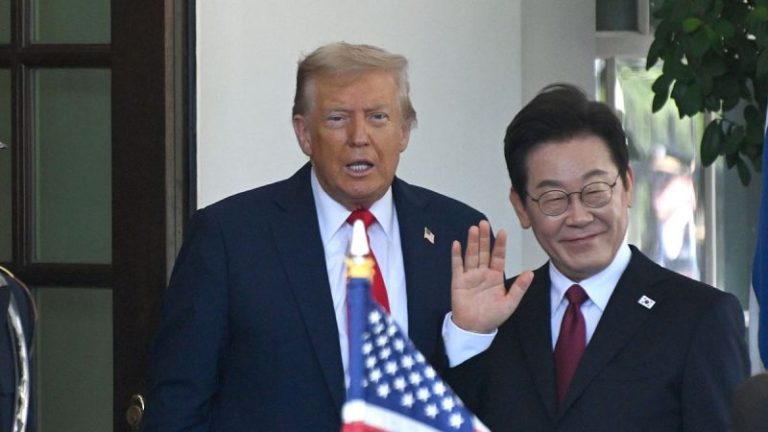
Since taking office, President Lee Jae Myung has acted swiftly to reinforce the foundations of democracy at home and to renew the Republic of Korea’s partnership with the United States. In word and deed, President Lee has recognized the vital importance of the ROK-U.S. alliance and strengthened pragmatic cooperation with President Donald Trump, and put our interlocking security and economic objectives, and shared values at the heart of his agenda. 

This approach reflects Korea’s confidence as a mature democracy and responsible global partner. President Lee views the alliance not merely as a legacy of the past, but as a living partnership, adapting to new challenges – from regional security and economic cooperation to advanced future technology.

This vision was clear at their August summit, where the two leaders spoke with candor and mutual respect, underscoring their shared determination to build what they called a ‘Future-Oriented Comprehensive Strategic Alliance.’ President Trump’s remark, ‘We’ve gotten along very well,’ captured the new tone of trust shaping this alliance. 

President Lee and the whole of the Korean government have meticulously ensured that even as we focus on restoring our democratic system, we not flail for one second in our responsibilities as friend and ally.  This makes certain commentaries – portraying Korea’s new leadership as undemocratic, illegitimate or even hostile to religion – so bewildering and saddening. Such claims, often repeated in online forums and even on opinion pages, bear little resemblance to facts and hinder our joint efforts for real solutions. 

Let’s set the record straight: The government of the Republic of Korea was democratically elected. President Lee prevailed in a fair and transparent vote recognized around the world for meeting the highest election standards. Neither Korea’s independent judiciary nor its opposition parties objected to the result. 

Since then, the principles of the rule of law have been scrupulously observed. Ongoing legal proceedings concerning the previous administration’s declaration of martial law and other alleged abuses of power are being conducted by independent prosecutors appointed by the National Assembly – not by the Presidential Office. These legal proceedings demonstrate the rule of law, not the erosion of it.

Equally unfounded are recent claims that the new government is ‘anti-Christian.’ Such narratives appear to arise from ongoing investigations into bribery allegations involving church funds, but for people familiar with Korea, the notion of prejudice is demonstrably absurd.

Christianity, along with Buddhism and other faiths, has played an integral role in Korea’s social and cultural life. Christian missionaries helped establish many of the nation’s leading educational and medical institutions, countless Christians sacrificed their lives for Korea’s independence from Japanese colonial rule. 

Today, a large share of Korean population identifies as Christian, with millions of both Protestants and Catholics contributing to the fabric of Korean society. These individuals, like people of all faiths, continue to play a vital role in civic life, community service and the pursuit of national unity.

President Lee himself is a man of Christian faith. He and his administration have the deepest respect for freedom of religion and expression, which our Constitution enshrines. They, like all Koreans, are unambiguously proud of the legacy of Christianity and believe freedom of religion in the Republic of Korea rivals that of any place in the world.

To portray legitimate, lawful efforts to restore democratic order as a campaign against Christianity is not only misleading, but it undermines Christian legacy and respect for religious freedoms that are central to Korea’s democratic values.

As Koreans committed to democracy, vigorous debate and even disagreement are more than welcomed. It is what the new Korean government strove so vigorously to safeguard these past four months. But mischaracterizing all that has occurred does nothing to advance mutual understanding or produce real solutions for the Koreans and Americans alike.

The Republic of Korea and the United States have sustained our alliance through eight decades of bravery and sacrifice. Today’s challenges require nothing less. Under President Lee’s government, Americans can be assured that they have a friend and partner who shares core values and is committed to the success of both of our nations. 

Look no further than their summit on Aug. 25 where the two leaders ushered in the era of a ‘Future-oriented Comprehensive Strategic Alliance’ – one that looks confidently toward a more secure, democratic and prosperous future for both nations. Korea’s story is not one of uncertainty but of conviction: that a free people, tested by history, can renew both their democracy and their alliance with courage and grace. 

This post appeared first on FOX NEWS

President Trump continues to be hailed as a global peacemaker for freeing the Hamas hostages and brokering a ceasefire between Israel and the terrorist group.

By assembling a coalition of countries to stop the two-year-old war, the president melded threats and diplomacy to end – at least for now – the bloody conflict that began with the heinous Hamas massacre of Oct. 7. 

Despite warning signs that Hamas may be unwilling to surrender its weapons, the guns have gone silent and the moving videos of freed hostages embracing their loved ones keep coming. 

Trump has drawn praise from leading Democrats (the Clintons), virtually all the media (which he thanked), and the likes of Jimmy Kimmel, James Carville and Bill Maher.

Then he came home.

Government employees aren’t being paid under the two-week-old shutdown that Trump engineered, in the sense that he refused to seriously negotiate with Democrats worried about the prospect of soaring Obamacare premiums.

The president, as he threatened to do, has cut or frozen almost $28 billion for projects largely based in Democratic-led cities and states, according to a New York Times analysis. That includes giant transportation projects in New York and Chicago.

Trump imposed a new round of layoffs on the Department of Education, targeting the Office of Civil Rights and the Special Education unit – which, following earlier firings, will be down to about six staffers, a 95% reduction since he took office.

He refused to take questions from ‘ABC fake news,’ but called on one of its female reporters, turned to a chuckling JD Vance and said, ‘I just like to watch her talk.’ He then said, ‘Good job. Thank you, darling,’ ignoring what she had asked.

What a stark contrast.

Why is the man capable of such steely leadership abroad insisting on being such a divisive figure at home?

He fervently believes that keeping an iron grip on his MAGA base is how he got elected and crucial to his political health. When Democrats attack his actions, it thrills most of his Republican supporters.

There were also those two horrifying assassination attempts last year.

Trump often complains that he is a victim – of relentlessly unfair media coverage, left-wingers calling him a Nazi and a dictator and lawfare investigations that produced four indictments against him.

As he sees it, he is counterpunching – simple as that. And he definitely has a major point.

Of course, no president has ever ordered the Justice Department to prosecute his political opponents, as with the indictments of James Comey and Letitia James. That shatters any remaining notion of DOJ independence.

Trump even took issue with a glowing Time cover story on the ceasefire – ‘His Triumph’ – because he didn’t like the picture, in which the lighting washed out part of his hair. 

And then there’s the handling of scandals.

One case of blatant partisanship, on both sides, is the Politico disclosure of group chats by Young Republican groups that drip with racist, anti-Semitic and violent content.

In 2,900 pages of leaked documents, the participants – all fervent Trump supporters – described Black people as monkeys and ‘the watermelon people.’ They talked about sending their opponents to the gas chambers that would reflect ‘the Hitler aesthetic,’ where they would be killed. A woman who is New York’s national committee member said: ‘I’m ready to watch people burn now.’

These are mainly not college kids, but party operatives, government staffers and one state senator, who under the rules, must be under the age of 40. Three participants have been ousted from their political jobs.

The national federation, which has 15,000 members, said: ‘we are appalled by the vile and inexcusable language … Such behavior is disgraceful, unbecoming of any Republican.’

I bring this up because of the reaction at 1600 Pennsylvania Avenue.

A White House spokesperson told Politico that ‘Only an activist, left-wing reporter would desperately try to tie President Trump into a story about a random groupchat he has no affiliation with.’ To be sure, this cannot be blamed on the president in any way.

But, it does reflect how fringe views have infiltrated at least a small minority of younger party members.

What’s striking is the way in which the vice president dismissed the ugliness. 

Vance focused instead on Jay Jones, the Democratic candidate for Virginia attorney general, who was revealed to have texted a colleague in the legislature about his fantasies of killing the then-speaker, Todd Gilbert. ‘Two bullets to the head,’ Jones wrote. Chilling.

‘This is far worse than anything said in a college group chat,’ Vance said, ‘and the guy who said it could become the AG of Virginia.’

Trump also weighed in, saying that Jones wanted to see a ‘Republican legislator in Virginia shot in the head and to see his children murdered… pretty amazing.’

Now let me say it is beyond disgustingly pathetic that top Virginia Democrats haven’t pulled their support for Jones, and that he hasn’t been driven out of the race. It’s indefensible.

But it’s also a classic case of whataboutism, with each party’s leaders – there are some exceptions – focusing on the other side’s misconduct. 

Vance went a bit further yesterday, saying, ‘the reality is that kids do stupid things. Especially young boys, they tell edgy, offensive jokes.’ Again, they’re not just boys.

In the Middle East, Trump was trying to bring combatants together. In America, he is the chief combatant, doing whatever it takes to wield and expand his power.

Many politicians strive for unity, if only to win more converts to their side. That has never been Trump’s style, dating back to his days as a real estate developer and then as a candidate. His default setting is to fight.

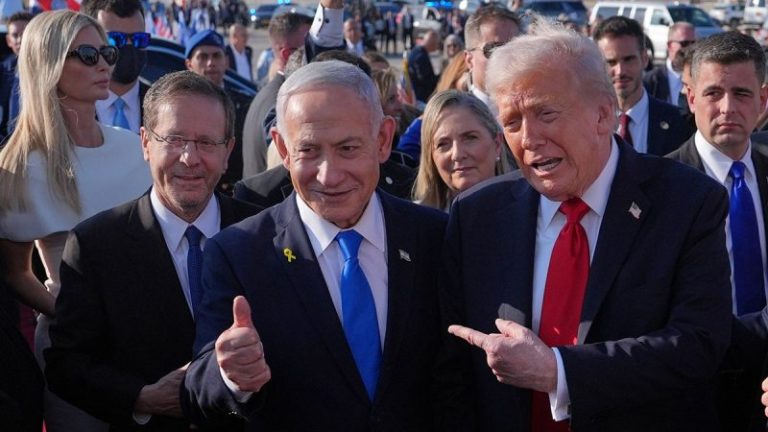
Right now, Bibi Netanyahu loves Donald Trump. So do those who voted for him in a sweeping election victory. But the president has shown little interest in winning over his detractors.

This post appeared first on FOX NEWS
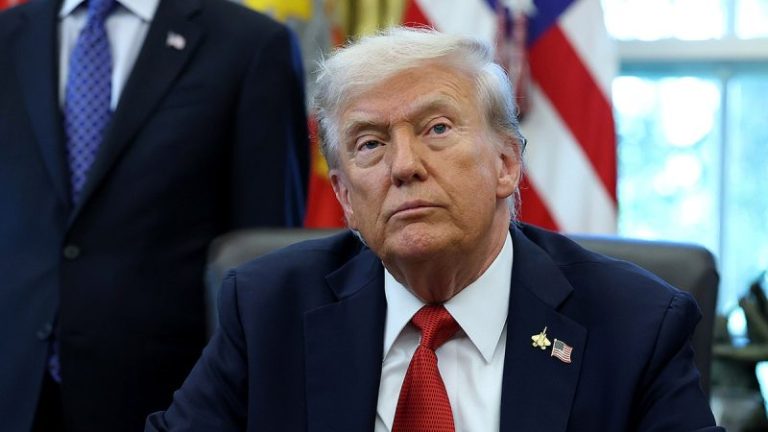
President Donald Trump on Wednesday signed a directive ordering the Department of War to keep paying U.S. troops despite the ongoing government shutdown, bypassing Congress after lawmakers failed to reach a funding deal for weeks.

The White House said the move is necessary to protect ‘military readiness’ as the budget standoff stretched into its third week. The order, issued as National Security Presidential Memorandum-8 (NSPM-8), directs the department to use available fiscal year 2026 funds to cover military pay and allowances.

‘The current appropriations lapse presents a serious and unacceptable threat to military readiness and the ability of our Armed Forces to protect and defend our Nation,’ the memo states.

Trump cited his Article II powers as commander-in-chief in issuing the order, which covers active-duty troops and reservists on service orders. The directive instructs officials to use only funds that are legally tied to military pay, in coordination with the Office of Management and Budget (OMB).

More than one million service members were expected to miss paychecks starting this week if Congress didn’t act. Trump’s move marks a break from past administrations, which often waited for bipartisan deals instead of intervening directly.

Rep. Nick LaLota, R-N.Y., told Fox News Digital that ‘Trump’s mid-month action was welcome news to the military community. But now that same community is anxious about what happens at the end of the month, where mortgages and rents and car payments all become due.’

‘Democrats were wrong to try to use troop pay as leverage to accomplish their political goals. And it would be wrong, it would be just as wrong, for a Republican to hope that that lack of pay would be a catalyst to get Democrats to acquiesce,’ LaLota said. ‘[Trump is] protecting the troops when Congress won’t.’

The Pentagon has not said which specific accounts will be used. Reports from Roll Call and Reuters indicate the administration has identified roughly $8 billion in unobligated defense funds as potential options.

Critics warn the move could face legal challenges under the Antideficiency Act, which bars spending money not appropriated by Congress. But White House officials argue the law permits spending that has a ‘reasonable, logical relationship’ to the purpose of the original funds: in this case, keeping troops paid.

The directive follows Trump’s Oct. 11 order to keep troop payments flowing during the shutdown. The White House’s latest move Wednesday with Congress still in gridlock could shape government shutdowns for generations to come.

Fox News Digital’s Elizabeth Elkind contributed to this report.

This post appeared first on FOX NEWS
Investor Insight

Prismo Metals’ high-grade silver and copper assets in Arizona, anchored by the Silver King project, offer investors exposure to near-surface polymetallic mineralization and large-system copper potential in a tier-one US jurisdiction, guided by an accomplished technical team. Prismo also retains strategic silver-gold leverage through its Palos Verdes joint program with Vizsla Silver in Mexico, creating a balanced portfolio designed for discovery and growth.

Overview

Prismo Metals (CSE:PRIZ,OTCQB:PMOMF,FSE:7KU) is a North American exploration company focused on advancing high-grade silver, gold and copper discoveries in Arizona, one of the world’s most productive and mining-friendly jurisdictions. The company’s projects, Silver King, Ripsey and Hot Breccia, position Prismo at the forefront of exploration in the Arizona Copper Belt, an area that hosts some of the largest copper deposits on Earth.

The historic Silver King mine produced nearly 6 million ounces of silver during the 1880s.

At the center of Prismo’s focus is the Silver King project, a historic silver mine adjacent to BHP and Rio Tinto’s giant Resolution Copper operation. Along with the nearby Ripsey Mine and Hot Breccia project, these assets form a complementary pipeline targeting both bonanza-grade gold and district-scale copper systems.

In Mexico, Prismo continues to advance its Palos Verdes project through a strategic partnership with Vizsla Silver, Prismo’s largest shareholder, providing investors exposure to one of the richest silver-gold districts in the Americas.

Prismo’s business strategy combines technical excellence, modern exploration technologies and disciplined capital allocation to advance near-term drilling and long-term discovery growth across its portfolio.

Company Highlights

  • Arizona-focused Exploration: Advancing a portfolio of high-grade silver, copper and gold projects – Silver King, Ripsey and Hot Breccia – in the heart of the Arizona Copper Belt.
  • Exceptional Grades and Momentum: Sampling at Silver King returned 619 g/t silver and 511 g/t silver, as well as 757 g/t silver, 1.5 percent copper, 6.7 percent lead, and 11.5 percent zinc from a newly identified polymetallic vein. An expanded 1,000-meter Phase 2 drill program is planned.
  • Strategic Land Position: Projects are surrounded by major producers, including BHP/Rio Tinto’s Resolution Copper and Freeport’s Christmas Mine, offering unmatched geological and infrastructure advantages.
  • AI-driven Copper Discovery: Hot Breccia, a large-scale copper-gold target, combines historic Kennecott and Phelps Dodge drilling with new ZTEM geophysics and AI-based drill targeting for a 5,000 m program.
  • Partnership Strength: In Mexico, Prismo maintains silver-gold exposure through its Palos Verdes project in collaboration with Vizsla Silver, which is also Prismo’s largest shareholder holding 6.1 percent ownership.
  • Tight Share Structure: With only 83.6 million shares outstanding, a market cap of $12.1 million (as of October 14th, 2025) and 28.7 percent insider and advisor ownership, Prismo’s management is closely aligned with shareholders

Key Projects

Silver King

The 125-hectare Silver King project lies entirely within the Resolution Copper claim block, about 3 km from the main Resolution shaft and 1 km from the historic Magma mine. Discovered in 1875, it produced roughly 6 million ounces of silver between 1875 and 1928 at grades up to 61 ounce per ton (oz/t) silver. Small-scale production in the 1990s returned up to 644 oz/t silver and 0.53 oz/t gold.

Recent sampling by Prismo confirmed strong silver-copper-lead-zinc mineralization, including 619 grams per ton (g/t) silver and 511 g/t silver from the Silver King shaft area, and 757 g/t silver, 1.5 percent copper, 6.7 percent lead, and 11.5 percent zinc from a newly identified polymetallic vein. The assay results for both silver and copper demonstrate the high-grade nature of the system.

Following these recent results, Prismo plans a second-phase drill program totaling approximately 1,000 meters to test new polymetallic and copper-bearing targets as well as a large replacement-style zone. The company has submitted a plan of operations for drilling to the US Forest Service, with additional site permits in progress.

Ripsey Mine

Located 20 km west of Hot Breccia and south of the Ray mine, the Ripsey mine covers 30 hectares of patented claims and hosts a historic gold-silver-copper vein system traced over 400 meters along strike and 160 meters vertically. The property saw limited production in the early 20th century and has never been explored with modern methods.

View of open stope on the Ripsey vein near the main shaft

Sampling by Dr. Craig Gibson returned values up to 15.9 g/t gold and 275 g/t silver over 0.75 meters, confirming strong near-surface mineralization with significant expansion potential. Further surface exploration at Ripsey is planned..

Hot Breccia

The Hot Breccia Project, spanning 1,420 hectares, provides Prismo with large-scale copper-gold optionality in the heart of Arizona’s Copper Belt. The project is located 40 km south of Resolution Copper and 35 km north of the San Manuel-Kalamazoo deposit. It hosts the same productive units as Freeport’s nearby Christmas mine, which historically produced high-grade copper skarn ore.

Historic drilling by Kennecott and Phelps Dodge intersected copper-rich skarn mineralization, including 77 ft of 0.54 percent copper, 60 ft of 1.4 percent copper and 4.65 percent zinc, and 25 ft of 1.73 percent copper. A 2023 ZTEM survey and subsequent AI analysis identified a large conductive anomaly at depth, consistent with a porphyry copper system.

Located near major infrastructure, including highways, power, water and the Hayden smelter, Hot Breccia is Prismo’s largest-scale copper discovery opportunity.

Palos Verdes

The Palos Verdes project provides Prismo with strategic exposure to silver and gold in Mexico’s prolific Panuco-Copala district, where Vizsla Silver (TSXV:VZLA) is advancing a billion-dollar silver resource. Prismo’s concession sits at the northeastern end of the district and is fully surrounded by Vizsla’s ground.

Drill site for hole PV-24-34 of the current drill program

To date, Prismo has drilled approximately 6,052 meters across 33 holes, identifying a near-surface, high-grade ore shoot within the Palos Verdes vein. Results include 102 g/t gold and 3,100 g/t silver (11,520 g/t silver equivalent over 0.5 m), comparable to some of the best intercepts in the district.

Future exploration will focus on deeper drilling and potential extensions of the vein system into adjacent Vizsla concessions, as guided by the joint Prismo-Vizsla technical committee chaired by Dr. Peter Megaw and Dr. Craig Gibson.

Management Team

Alain Lambert – CEO and Co-founder

Alain Lambert is a lawyer with over 35 years of experience financing and advising small and mid-sized companies across technology, manufacturing and natural resources. He has participated in private and public financings exceeding $1 billion and built an extensive network of investors, bankers, analysts and IR professionals. Lambert has served as a director and on audit and governance committees for several public and private companies. He holds an LL.B. from the University of Montréal and a diploma in administration from College Jean-de-Brébeuf, Montréal.

Gordon Aldcorn – President

Gordon Aldcorn brings more than 20 years of experience in capital markets and junior public company development. Over the past five years, he has focused on the corporate management of copper and gold exploration projects, with a strong track record of advancing early-stage assets. Committed to responsible mineral exploration and long-term stakeholder engagement, Aldcorn now leads Prismo Metals through a pivotal growth phase, advancing its high-potential projects in Arizona and Mexico.

Craig Gibson – Co-founder and Chief Exploration Officer

Dr. Craig Gibson has extensive experience in the minerals industry. He received his Bachelor of Science (1984) in Earth Sciences from the University of Arizona and Master of Science (1987) and PhD (1992) in Economic Geology and Geochemistry from the Mackay School of Mines, University of Nevada, Reno. He co-founded Prospeccion y Desarrollo Minero del Norte, S.A. de CV (ProDeMin) based in Guadalajara, Mexico, in 2009. ProDeMin is a consulting firm providing a broad spectrum of exploration-related services to the mining industry and has been involved in several major precious metal discoveries in Mexico. Gibson is also a director of Garibaldi Resources, a Vancouver-based junior exploration company; a certified professional geologist of the American Association of Professional Geologists; and a qualified person under NI 43-101.

Carmelo Marelli – CFO and Corporate Secretary

Carmelo Marrelli is the principal of the Marrelli Group, comprising Marrelli Support Services, DSA Corporate Services, DSA Filing Services, Marrelli Press Release Services, Marrelli Escrow Services, and Marrelli Trust Company. The Marrelli Group has delivered accounting, corporate secretarial and regulatory compliance services to listed companies on various exchanges for over 20 years. Marrelli is a chartered professional accountant (CPA, CA, CGA), and a member of the Institute of Chartered Secretaries and Administrators, a professional body that certifies corporate secretaries. He received a Bachelor of Commerce degree from the University of Toronto. Marrelli acts as the chief financial officer to several issuers on the TSX, TSX Venture Exchange and CSE, as well as non-listed companies, and as a director of select issuers.

Martin Dupuis – Director

Martin Dupuis has over 25 years of experience covering all stages of a project’s life, from exploration through feasibility and engineering studies, construction, mine expansion and operations. Dupuis serves as Vizsla Silver’s chief operating officer. He was instrumental in the oversight and delivery of the company’s maiden resource estimate. Before joining Vizsla Silver, Dupuis was director of geology for Pan American Silver, technical services manager for Aurico Gold, and chief geologist at several other operations.

Louis Doyle – Director

Louis Doyle has over 30 years of experience in capital markets and public companies. Since 2016, he has served as executive director of Québec Bourse and has advised private companies seeking Canadian exchange listings. Previously, he was vice-president, Montréal at the TSX Venture Exchange (1999–2015), where he oversaw business development and listings in Québec and Atlantic Canada, chaired the listing committee, served on the policy committee, and led the national mentorship program. Doyle also holds directorships with two other public companies.

Peter Megaw – Advisor and Significant Shareholder

Dr. Peter Megaw is best known as co-founder of MAG Silver and Minaurum Gold. He and his team are credited with MAG Silver’s Juanicipio discovery in the famous Fresnillo District, for which he received the Thayer Lindsley Award in 2017. He received his doctorate from the University of Arizona and has more than 35 years of experience exploring silver and gold in Mexico. Megaw is a certified professional geologist by the American Institute of Professional Geologists and an Arizona registered professional geologist. He is the author of numerous scientific publications on ore deposits and is a frequent speaker at academic and international exploration conferences. Megaw also received the Society of Mining Engineers 2012 Robert M. Dreyer Award for excellence in applied economic geology.

Steve Robertson – Advisor

Steve Robertson brings 35 years of mining industry experience, with a focus on precious metals and copper exploration in North America. He has co-founded and managed multiple exploration companies, including Infinitum Copper, where as CEO he led the public listing and project acquisitions in Sonora, Mexico, and Arizona, USA. Previously, he founded Sun Metals, where his team made a significant copper-gold discovery and completed two corporate mergers.

This post appeared first on investingnews.com

Josef Schachter of the Schachter Energy Report shares his outlook for oil and natural gas, including when he thinks the next buying opportunity will be for stocks.

He also discusses his upcoming Catch the Energy conference.

Securities Disclosure: I, Charlotte McLeod, hold no direct investment interest in any company mentioned in this article.

This post appeared first on investingnews.com