Author

admin

Browsing

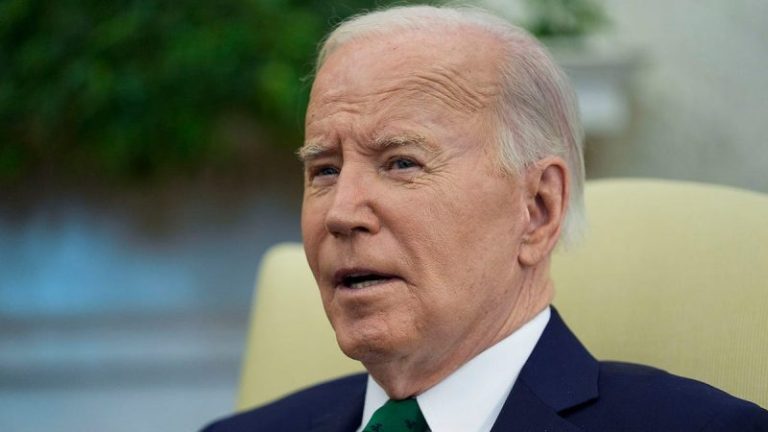
Rep. Abe Hamadeh, R-Ariz., revealed to Fox News Digital that he is one of three Republicans in Congress who was surveilled by the Biden administration’s ‘Quiet Skies’ program, a program that has been shut down due to overreach concerns.

Earlier this week, Senate Homeland Security and Governmental Affairs Committee Chair Rand Paul, R-Ky., convened a hearing examining alleged Biden administration abuse of the program, which was terminated by DHS in June, and revealed that three current Republican members of Congress were surveilled or monitored either as a sitting member or while seeking elected office.

GOP Rep. Abe Hamadeh tells Fox News Digital he was informed that he was one of those members of Congress and was surveilled in December 2022.

‘It sadly doesn’t surprise me,’ Hamadeh explained. ‘At the time, if you remember, I mean banks were shutting down accounts if they promoted conservative viewpoints, if they were selling ammo or guns and the banks were being pressured by the Biden administration. You had social media companies censoring political voices that they didn’t agree with. So it shows you the depths that the federal government, how much sway they have, not just within the bureaucracy of the government, but also with private organizations and private actors as well.

Hamadeh called the timing of his surveillance ‘interesting’ because ‘during the time period that I was challenging the results of my election in 2022 when I was running for attorney general, where that race was decided by 280 votes out of 2.5 million.’

Hamadeh continued, ‘You know, this is a very legitimate challenge. This is something that both sides of the aisle have done routinely. So you don’t know if that was a factor. And I would assume so, because at the time it was such a hostile environment with President Biden when he was in power. I mean, my God, they were calling MAGA fascists. They were calling us threats to democracy constantly.’

Hamadeh also called it ‘peculiar’ that he is a former U.S. Army Reserve intelligence officer with top secret clearance who traveled overseas both on deployment and in his personal capacity. 

The Department of Homeland Security (DHS) announced in June it would be ending the Quiet Skies program, which left some Americans subject to additional screenings at airport security.

The department says the agency was overly politicized to either benefit or hurt specific people and ran a bill of roughly $200 million annually. According to DHS, the program kept a watchlist as well as a list of people exempted. The department says Quiet Skies has not prevented any terrorist attacks but will continue to use other methods to assure safe air travel.

‘It is clear that the Quiet Skies program was used as a political rolodex of the Biden Administration — weaponized against its political foes and exploited to benefit their well-heeled friends. I am calling for a Congressional investigation to unearth further corruption at the expense of the American people and the undermining of US national security,’ DHS Secretary Kristi Noem said in a statement.

The TSA’s ‘Quiet Skies’ program was established in 2010 to identify passengers for enhanced screening on some domestic and outbound international flights.

Paul said earlier this year that he received records confirming that federal air marshals surveilled now-Director of National Intelligence Tulsi Gabbard during domestic flights last year, ‘reporting back information related to her appearance and even how many electronics she was observed using.’ 

‘I’m glad to see that the Senate, Senator Rand Paul got to the bottom of it and also that Department of Homeland Security has now effectively terminated the Quiet Skies program as well,’ Hamadeh told Fox News Digital. 

‘Also, it’s odd that there’s only three Republican members of Congress that were targeted. I mean, I’m assuming, there’s Democrats who have a lot of interesting travel here that I serve with as well. I’m sure that there are things that would flag them. So it makes you question what the Biden administration, who they were focusing on, who they were targeting specifically. I mean look at Tulsi Gabbard. I mean what? What a complete 180 for now to have her be running the intelligence agencies as the director of national intelligence. And it goes to show you what we were fighting.’

In a press release earlier this week, Paul commended Noem for ending the program but said the work is ‘not done.’

‘We must make sure that this program does not come back under another name. Every official who directed or approved surveillance of Americans for protected speech must be removed from office. Full transparency must become the rule rather than requiring a year of investigation,’ Paul said. ‘The result will be a process that respects the Constitution, ends real life shadow bans against Americans and gives all of us the assurance that our government is focused on protecting us, not on chasing political ghosts.’

Fox News Digital reached out to Biden’s office for comment.

Fox News Digital’s Cameron Arcand contributed to this report
This post appeared first on FOX NEWS

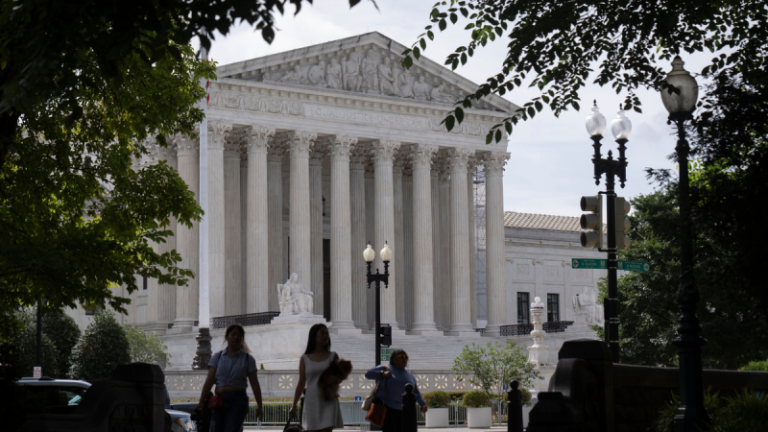
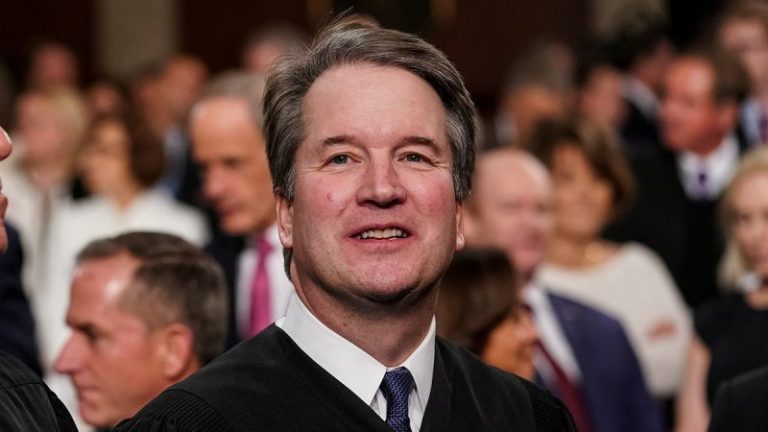
A judge is set to sentence Nicholas Roske on Friday for attempting to assassinate Supreme Court Justice Brett Kavanaugh in the weeks leading up to the high court’s landmark Dobbs decision.

The Department of Justice has asked for 30 years in prison, while Roske’s attorneys have asked for eight years.

In a sentencing memorandum, prosecutors said Roske showed up at Kavanaugh’s house on June 8, 2022, armed with a pistol, ammunition, a knife, a crowbar and tactical gear, intending to kill the conservative justice and three other justices.

The potential impact of Roske’s conduct was ‘immeasurable and staggering,’ prosecutors said.

‘By targeting and planning to kill ‘at least one,’ but ‘shooting for 3’ justices of the Supreme Court, the defendant sought single-handedly and irrevocably to alter an entire branch of the United States government through violence,’ they wrote.

Roske’s attorneys argued in their own memorandum that three decades in prison, which included terrorism and other enhancements, did not fit the crime.

Roske pleaded guilty in April to one count of attempting to murder a Supreme Court justice, which carries a maximum sentence of life in prison.

The defense attorneys noted how Roske called 911 soon after arriving at Kavanaugh’s house and ‘self-reported her plans, intentions, and actions’ instead of moving forward with attacking Kavanaugh.

Roske’s lawyers also said Roske suffered severe depression and that their client’s ominous online searches about mass shootings and various justices, which the DOJ factored into its sentencing recommendation, were not indicative of an intent to murder multiple justices.

‘As any internet user knows, Googling and doom-scrolling, even in dark corners of the internet, does not equate to criminal intent,’ the defense attorneys wrote. ‘A user’s internet content is voluminous, intensely personal, and can easily be taken out of context.’

Two weeks prior to the sentencing hearing, Roske’s attorneys also notified the court that while their client’s name had not formally changed, Roske wanted to begin going by the name ‘Sophie’ and female pronouns. 

‘Out of respect for Ms. Roske, the balance of this pleading and counsel’s in-court argument will refer to her as Sophie and use female pronouns,’ the footnote stated.

Roske’s sentencing comes at a time when judges have repeatedly raised alarms about threats they have received from ideologically-driven suspects across the political spectrum.

The attempted assassination in 2022 occurred just two weeks before the Supreme Court handed down its landmark decision overturning Roe v. Wade, an expected decision that had drawn protesters to the Supreme Court building and conservative justices’ houses for weeks leading up to it.

Last year, an Alaska man named Panos Anastasiou was indicted on charges of sending hundreds of messages to Supreme Court justices that included threats to murder them. 

Anastasiou stands accused of making specific threats toward six justices of shooting, strangling, ‘lynching’ and beheading them.

This is a developing story. Check back for updates.

This post appeared first on FOX NEWS

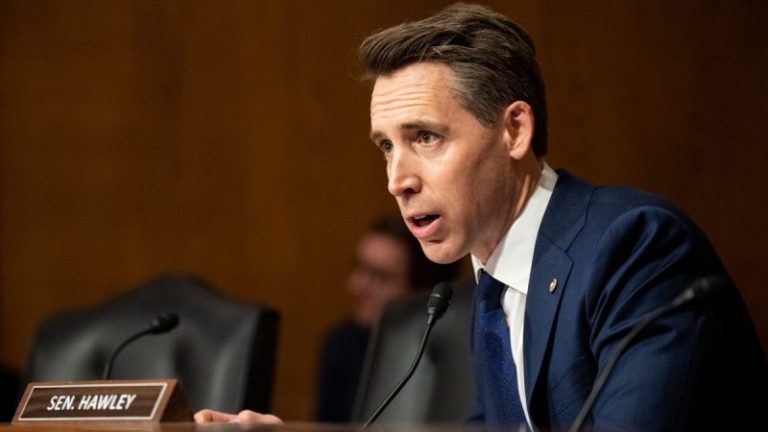
Sen. Josh Hawley, R-Mo., accused the Food and Drug Administration (FDA) of endangering women’s health, saying the agency approved another chemical abortion drug without the thorough safety review it had promised.

Hawley argued the move shows both regulatory failure and the influence of a company that refuses to define ‘woman’ in its materials.

‘This is shocking. FDA has just approved ANOTHER chemical abortion drug, when the evidence shows chemical abortion drugs are dangerous and even deadly for the mother. And of course 100% lethal to the child,’ he wrote on X on Thursday afternoon.

Hawley added, ‘FDA had promised to do a top-to-bottom safety review of the chemical abortion drug, but instead they’ve just greenlighted new versions of it for distribution. I have lost confidence in the leadership at FDA.’

Evita Solutions describes its mission as to ‘normalize abortion’ and make it ‘accessible to all.’ On its website, the company says it ‘believes that all people should have access to safe, affordable, high-quality, effective, and compassionate abortion care, regardless of their race, sex, gender, age, sexuality, income, or where they live.’

It adds, ‘We know that you can make the best choice for your body.’

According to the FDA, Evita received approval in a Sept. 30 letter obtained by Reuters.

In an interview with Fox News Digital, Hawley said the FDA’s decision was even more troubling given that its promised safety review has barely begun.

‘I just, I can’t figure out what’s happening at the FDA. I’m totally baffled by it,’ Hawley said.

Fox News Digital has reached out to the FDA and Evita Solutions for comment on the matter.

In another post, Hawley blasted the FDA for partnering with a company that ‘doesn’t even believe there is such a thing as a ‘woman.’’

Evita Solutions now joins GenBioPro in producing the generic version of Mifepristone, the abortion pill originally made by Danco Laboratories. Mifepristone blocks progesterone, a hormone needed to sustain pregnancy, and is followed by misoprostol to complete the process.

The approval comes as abortion drugs face mounting opposition from conservative lawmakers, religious organizations, and pro-life groups.

Religious groups like Inspire Investing and Alliance Defending Freedom have campaigned against the drug, while the Restoration of America Foundation (ROAF) has pressed lawmakers for accountability.

Last month, ROAF called on the Senate Finance Committee to hold Health and Human Services Secretary Robert F. Kennedy Jr. accountable at a hearing, demanding answers about the removal of safety protocols for the abortion pill Mifepristone.

In a letter obtained by Fox News Digital, ROAF warned that the rollback leaves women more vulnerable and shifts costs to taxpayers. The group said the Biden-era changes endanger women by allowing abortion pills to be prescribed via telehealth and sent through the mail.

Hawley said the FDA should restore the safeguards put in place under the Trump administration.

‘What needs to happen is the FDA needs to get in line with the president’s policy and put back into place the safety regulations President Trump had. Ditch the Biden approach and go back to President Trump’s approach,’ Hawley said.

Under the Biden administration, the FDA for the first time allowed telehealth prescribing and mail-order delivery of abortion pills. Previously, the agency required Mifepristone to be dispensed in person to screen for complications such as ectopic pregnancy.

Fox News Digital’s Jasmine Baehr and Reuters contributed to this report.

This post appeared first on FOX NEWS

A federal judge appointed by Ronald Reagan has made headlines this year for penning some of the most blistering opinions against President Donald Trump’s executive orders — including in one case where he was criticized by two Supreme Court justices for failing to adhere to the high court’s emergency guidance. 

U.S. District Judge William Young, a Reagan appointee, has spent nearly four decades on the federal bench. He most recently authored a scathing, 161-page opinion on Tuesday in a case involving Trump’s attempts to deport and crack down on pro-Palestinian protesters and activists on college campuses.

Young said the Trump administration’s actions were illegal and an unconstitutional violation of free speech protections under the First Amendment. He also used the decision to criticize, at some length, Trump’s broader conduct, which he described as ‘bullying.’

Trump, Young argued, is a president who fundamentally misunderstands the country he was elected to serve. Young described Trump as focused largely on ‘hollow bragging’ and on ‘retribution’ at all costs.

‘Yet government retribution for speech (precisely what has happened here) is directly forbidden by the First Amendment,’ Young quipped.

It’s not the first time Young has raised eyebrows for his public dressing-down of the commander in chief. 

Young in June ruled that the Trump administration acted illegally when it slashed funding for research grants at the National Institutes of Health, siding with the grant recipients and ordering the funding be restored. He also used the opinion to describe the cuts as ‘appalling’ evidence of what he said was ‘racial discrimination’ and ‘discrimination against the LGBTQ community.’

‘That’s what this is,’ Young said at the time, adding that, in his decades on the federal bench, he had ‘never seen government racial discrimination like this.’

‘I would be blind not to call it out,’ he said, adding later, ‘Have we no shame?’

The Trump administration appealed Young’s injunction to the First Circuit Court of Appeals, which declined to stay the ruling while the case continued to play out.

However, the Supreme Court voted 5-4 in August to lift the injunction — and two justices took that opportunity to chastise Young, at least to some degree, for the manner in which he went about issuing the opinion.

Justices Neil Gorsuch and Brett Kavanaugh chastised Young for failing to adhere to an emergency ruling the court granted in April, which allowed Trump to follow through with slashing tens of millions of dollars in education grants for funding so-called diversity, equity, and inclusion initiatives. 

 ‘When this Court issues a decision, it constitutes a precedent that commands respect in lower courts,’ Justices Gorsuch and Kavanaugh said in the August opinion.

Justice Ketanji Brown Jackson, in writing the dissent, appeared to sympathize with Young’s view, noting at one point: ‘Calvinball has only one rule: There are no fixed rules,’ she said. ‘We seem to have two: that one, and this administration always wins.’

Young, for his part, apologized for the error. But it appears to have done little to quell his desire to speak out on what he argued Tuesday is Trump’s apparent disregard for free speech protections. 

‘I fear President Trump believes the American people are so divided that today they will not stand up, fight for, and defend our most precious constitutional values so long as they are lulled into thinking their own personal interests are not affected,’ Young said Tuesday, before adding: ‘Is he correct?’

This post appeared first on FOX NEWS

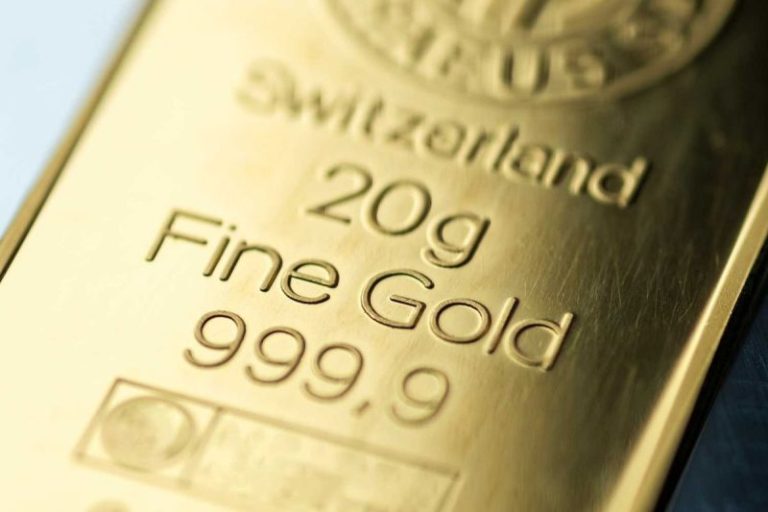
Gold’s momentum has price predictions heading upwards of US$4,000 per ounce by the year’s end.

Rising by more than 44 percent since the start of the year, in 2025 the price of gold has hit highs once unthinkable. Aggressive central bank buying, US Federal Reserve rate decisions, ongoing geopolitical conflicts and US trade policy uncertainty have weakened the US dollar and escalated federal debt concerns. The resulting increase in demand for safe-haven assets is pushing investors toward gold, from physical bars to gold exchange-traded funds.

This week, the US government shutdown drove the price of gold even higher, approaching the US$3,900 level as it reached US$3,896.30 early in the morning of Wednesday (October 1) before pulling back.

Let’s take a look at what’s driving the gold price in the final stretch of 2025.

US monetary policy and dollar weakness

Gold traditionally has had an inverse relationship to the dollar, and has benefited greatly this year as the dollar has weakened. Many agree that this trend is set to continue feeding the gold price in the months ahead.

While China has been the focal point of gold buying this year, the World Gold Council’s Joe Cavatoni said western investors looking for risk diversification are helping to drive the latest surge in the gold price.

In his view, the Fed has how begun signaling to investors that economic deterioration — and a possible move into a stagflationary environment — is imminent.

Global conflict stoking central bank buying

Strong central bank buying is another key catalyst for gold’s record price streak.

Although the rate at which the world’s central banks are scooping up the precious metal has slowed somewhat in 2025 compared to the last few years, governments are still set to be net buyers this year.

For a fourth year in a row, Cavatoni sees central banks continuing to buy gold despite higher prices, although he noted that they may make price-sensitive adjustments to buy more strategically. According to the World Gold Council’s latest annual central bank survey, conducted in June, 95 percent of the 73 respondents expect to increase their gold holdings over the next 12 months. At the same time, 73 percent expect to lighten their US dollar reserves.

Countries are building up their strategic reserves of gold as security. Just look at the top two buyers of gold recently: China and Poland. Both are at the center of rapidly escalating geopolitical conflicts.

China has responded to escalating US trade tensions by taking a defensive stance economically, and that has included significantly boosting its gold reserves by 36 metric tons over nine months as of this past July.

Poland is the largest net purchaser of gold this year at 67 metric tons. No doubt, the European nation views the metal as a critical safeguard against escalating hostilities with neighboring Russia.

“Everybody has to build up their gold reserves, because the road that all these countries are on is the road of increasing global stress,” explained Chambers, adding that global leaders understand that “paper is no good when you’re fighting a war.’ This is driving the gold price higher as demand comes up against supply.

“There’s only 3,200 tonnes of it mined every year,” he said, “and the price is only going to go one way.”

Is gold heading to US$4,000 in 2025?

However, both Gareth Soloway of VerifiedInvesting.com, and Steve Barton of In It To Win It said gold is likely to trade sideways and even pull back to as low as US$3,500 before making another go at the US$4,000 target.

So will it get there this year?

Nothing is for certain, but there are a few signals gold investors should watch. The World Gold Council’s Cavatoni said he’s keeping a close eye on what the money markets are doing as interest rates start to move, as well as investor sentiment in western markets, the US in particular.

“Pay attention to how people are responding to that risk and uncertainty that we talked to, and economic conditions that are getting clearer, and I think you’ll find that this case for gold is well supporting the price predictions you’re hearing from analysts in the markets,’ he suggested.

Securities Disclosure: I, Melissa Pistilli, hold no direct investment interest in any company mentioned in this article.

This post appeared first on investingnews.com

Feeling the weight of the Trump Administration’s tariff policy, Switzerland’s government is offering to encourage Swiss gold refiners to invest in the US gold refining industry.

The Swiss are suffering under one of the highest Trump tariff rates globally. In effect since August 7, 2025, US officials say the 39 percent tariff on Swiss imports is necessary to address an estimated US$48 billion trade deficit.

The tariff targets many of the European nation’s most iconic industries, such as chocolate, luxury watches, coffee machines and even gold.

Back in late July, the US Customs and Border Patrol posted a ruling indicating that the tariffs on Swiss imports would include 1 kilogram and 100 ounce gold bars. Spot gold prices subsequently surged by more than 3 percent, from US$3,290 to US$3,398, and December futures reached an all-time high of US$3,549 per ounce of the metal.

In response, traders halted imports of Swiss gold bars. However, in September, Trump issued an exemption for gold bullion products.

Switzerland’s economic ministry, known as the State Secretariat for Economic Affairs (SECO), is concerned the tariff’s could weaken the country’s economic growth outlook. ‘An updated economic scenario from SECO shows that, as a result of higher US import tariffs, the Swiss economy is likely to grow more slowly than previously expected, particularly in 2026,’ the ministry stated.

Swiss make a golden offer to lower tariff rates

This week, Bloomberg is reporting that Swiss officials are getting creative when it comes to tempting Trump into lowering tariff rates. Switzerland is home to the world’s largest gold refining hub, and is a central part of the circular gold trade that flows through London and New York.

One of the proposals for getting a tariff break involves incentivizing Swiss refiners to produce the 1 kilogram gold bullion bars for the New York market on site in the US. Currently the larger gold bars favored in London are melted down and shipped to Switzerland for refining and then the newly made smaller bars are shipped to New York.

Christoph Wild, president of the Swiss Association of Precious Metals Producers and Traders, told Bloomberg this change would go a long way in addressing current inefficiencies. Swiss refiners are considering such investments in the “mid-term to long-term”, according to Wild.

Ideally, it would involve expanding current operations and ensuring there’s enough US demand to make that a viable prospect for Swiss refiners. However, he acknowledged that this might not be feasible without “some subsidies from the Swiss government or the US government”.

For those Swiss refiners without existing facilities in the US, such as Switzerland’s largest gold refiner, Valcambi SA, investing in new operations from the ground up might not be a sound business decision.

The Swiss government representatives’ proposal was a part of a larger set of concessions that included energy, agriculture and financial services.

The negotiations with US US Treasury Secretary Scott Bessent and Trade Representative Jamieson Greer are ongoing and the Trump Administration has yet to respond to questions about the Swiss delegation’s offer.

Securities Disclosure: I, Melissa Pistilli, hold no direct investment interest in any company mentioned in this article.

This post appeared first on investingnews.com

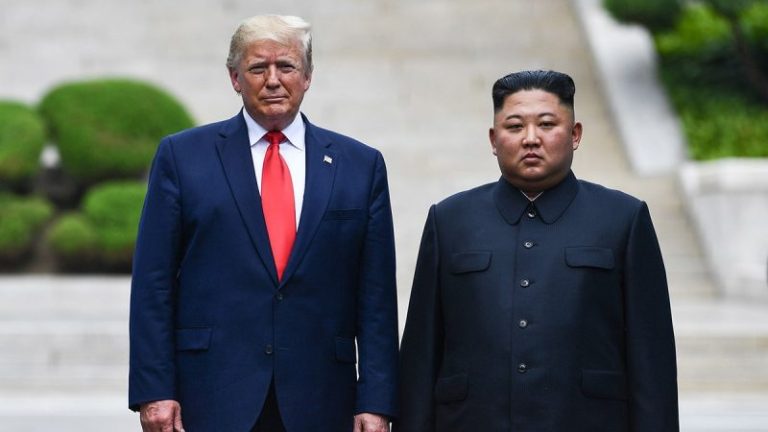
President Donald Trump is open to talks with North Korean leader Kim Jong Un ‘without any preconditions,’ a White House official said, as South Korea’s unification minister warned Pyongyang’s missiles could reach the U.S. mainland.

‘President Trump in his first term held three historic summits with North Korean Leader Kim Jong Un that stabilized the Korean Peninsula. U.S. policy on North Korea has not changed,’ a White House official told Fox News Digital. ‘President Trump remains open to talking with Kim Jong Un, without any preconditions.’

South Korean Unification Minister Chung Dong-young used blunt language in Berlin this week, telling reporters, ‘North Korea has become one of the three countries capable of attacking the U.S. mainland,’ according to the Yonhap News Agency. ‘What needs to be acknowledged should be acknowledged rationally.’

The White House did not respond to Fox News Digital’s request for comment on Chung’s claim.

Yonhap also reported that Chung said Pyongyang’s ‘strategic position is different’ than in 2018, when Trump and Kim held their first summit in Singapore. 

‘Acknowledging this reality should be the starting point’ in dealing with the regime, Chung told reporters.

But experts say North Korea has long held the capability to reach the U.S. mainland with intercontinental ballistic missiles. 

‘They’ve tested ICBMs for a long time,’ said Bob Peters, senior research fellow for strategic deterrence at the Heritage Foundation.

‘The question, then, for a long time, is, do they have a warhead that can go underneath a nose cone on an ICBM that goes by definition, exo atmospheric, comes down and then hits a target with some semblance of accuracy and then detonate and produce a nuclear yield,’ Peters added. ‘That’s been the real question — do they have that capability? That’s not what it sounded like the South Korean minister said.’

Meanwhile, Kim has said dialogue with the U.S. is possible, but on his terms. 

‘If the United States drops the absurd obsession with denuclearizing us and accepts reality, and wants genuine peaceful coexistence, there is no reason for us not to sit down with the United States,’ state media quoted Kim as saying.

A meeting with Kim would make Trump’s fourth sit-down with the dictator, at a time when his nation has once again grown increasingly hostile to U.S. interests. 

In July, the White House said Trump ‘remains open to engaging with Leader Kim to achieve a fully denuclearized North Korea.’ But North Korea asserted it would not meet the U.S. president if he was going to demand denuclearization. 

On Monday, North Korean Vice Foreign Minister Kim Son Gyong told the United Nations General Assembly that his country will never give up its nuclear program, Reuters reported.

Trump is scheduled to travel to Asia later this month for an economic leaders’ summit with South Korean President Lee Jae-myung. A senior U.S. official said no Demilitarized Zone meeting with Kim is currently on the agenda.

Reports have suggested Trump may meet Chinese President Xi Jinping on the sidelines of the Asia-Pacific Economic Cooperation summit, Oct. 30-Nov. 1, though plans are still being finalized. 

In a call last month, Xi invited Trump and first lady Melania Trump to visit China. Trump returned the invitation. 

The same official said progress on nuclear talks depends on China. 

‘The first thing that would need to happen is for the Chinese to acknowledge and be more transparent about its own programs,’ the official said.

U.S. estimates put China’s nuclear arsenal at about 600 warheads in 2024, with projections of 1,000 by 2030. North Korea is believed to possess roughly 50 warheads, with enough fissile material for up to 90.

Pyongyang last year declared an ‘irreversible hegemonic position’ after test-firing its Hwasong-19 intercontinental ballistic missile, which North Korea has claimed can strike the American mainland.

Trump is strengthening deterrence even as he keeps the option of ‘talks without preconditions’ open.

This post appeared first on FOX NEWS